
Ctrl K
1848–1880
**John Bell Pottery** operated in Waynesboro, Pennsylvania, from 1848 to 1880, producing some of the finest examples of American utilitarian and decorative earthenware and stoneware of the nineteenth century. Established by master potter John Bell (1800–1880), the workshop continued a family tradition that traced its roots to German eighteenth-century techniques brought to the Shenandoah and Cumberland Valleys. Bell himself had apprenticed under his father, Peter Bell, in Hagerstown, Maryland, before relocating and refining his skills through work in Chambersburg and Winchester.
The pottery specialized in redware and stoneware vessels—pitchers, jars, crocks, and butter tubs—along with occasional sculptural figures such as lions. Bell pioneered the use of tin glaze in America, achieving a bright white surface that mimicked more expensive imported wares while retaining the robust character of local clay bodies. His forms combined practical utility with lively decorative details, often featuring incised or molded ornament and vibrant glazes that set Bell family production apart from contemporaries.
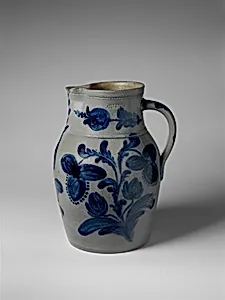
A signature work from the pottery’s active years is the stoneware pitcher now in the Metropolitan Museum of Art, made between 1848 and 1880 in Waynesboro. Other notable pieces include elaborately decorated presentation jars and the celebrated lion figures that have become icons of American folk ceramics. Bell’s sons, including John William Bell, eventually joined the operation, ensuring continuity of the family enterprise.
Today John Bell Pottery is recognized as a cornerstone of Pennsylvania and Shenandoah Valley ceramic history. Its output is prized by museums and collectors for technical innovation, regional character, and enduring folk-art appeal, with examples regularly featured in exhibitions and commanding strong auction results. The single work in the virtual museum’s collection stands as a tangible reminder of this distinguished American pottery tradition.