
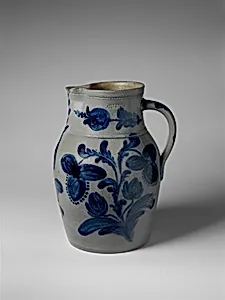
Pitcher
1848–80
Medium
Stoneware
Dimensions
13 1/4 in. (33.7 cm)
Classification
Pitcher
Culture
American
Department
The American Wing
Museum
Metropolitan Museum of Art, New York, NY
Credit
Gift of Mrs. Robert W. de Forest, 1933
Accession Number
34.100.167
Rights
Public Domain
Tags
Art Historical Context
This elegant stoneware pitcher, crafted John Bell Pottery between 1848 and 1880, exemplifies the sturdy yet refined utilitarian art of mid-19th-century America Standing at 13¼ inches tall, it hails from the heartland pottery traditions, where stoneware—fired at high temperatures for exceptional durability—was a staple for everyday household items like water pitchers. The medium's earthy resilience made it ideal for practical use, while its smooth, often glazed surface invited decorative flair. Adorned with floral motifs (as suggested by its tags), the pitcher reflects the era's fondness for nature-inspired designs, blending functionality with subtle artistry. John Bell's workshop in Ohio contributed to the burgeoning American ceramics scene, producing pieces that bridged folk craft and emerging industrial aesthetics during a time of westward expansion and domestic innovation. Such vessels were prized in rural and urban homes alike, symbolizing self-reliance and regional pride. Today, this gift to the Metropolitan Museum of Art from Mrs. Robert W. de Forest in 1933 graces The American Wing, offering visitors a tangible link to 19th-century life. Its presence underscores the cultural importance of pottery as an accessible art form, celebrating the skilled hands that shaped America's material heritage.
About the Artist
John Bell Pottery · 1848–1880
**John Bell Pottery** operated in Waynesboro, Pennsylvania, from 1848 to 1880, producing some of the finest examples of American utilitarian and decorative earthenware and stoneware of the nineteenth century. Established by master potter John Bell (1800–1880), the workshop continued a family tradition that traced its roots to German eighteenth-century techniques brought to the Shenandoah and Cumbe...