Ctrl K
1738–1815
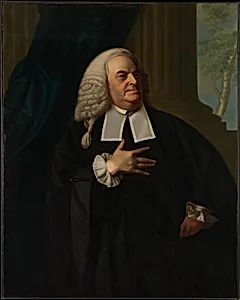
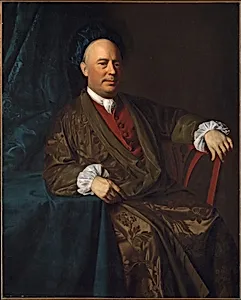
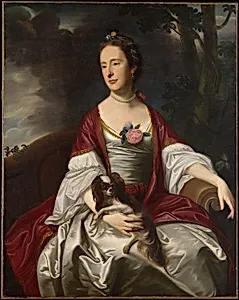
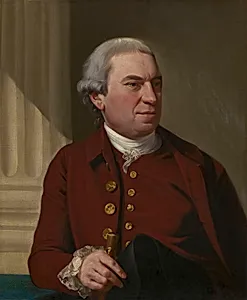
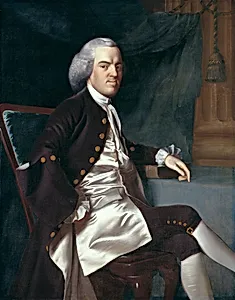
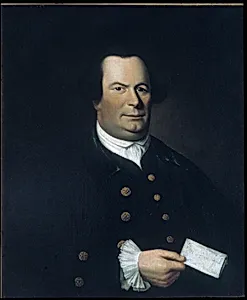
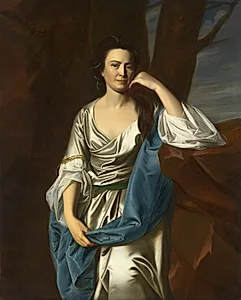
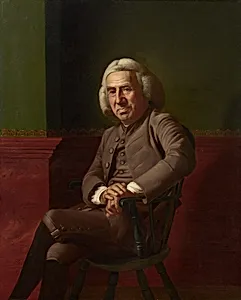
John Singleton Copley (1738–1815) was the greatest American painter of the colonial era and one of the finest portraitists in the English-speaking world. Born in Boston, Massachusetts, he was largely self-taught, learning from mezzotint reproductions of European paintings and from his stepfather Peter Pelham, an engraver. By his early twenties, Copley had established himself as Boston's leading portraitist, producing remarkably penetrating likenesses of New England's merchants, clergymen, and civic leaders.
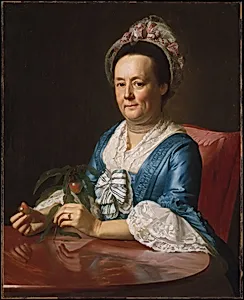
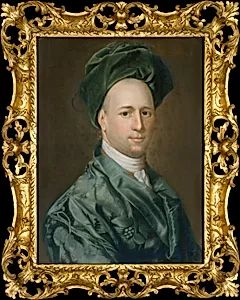
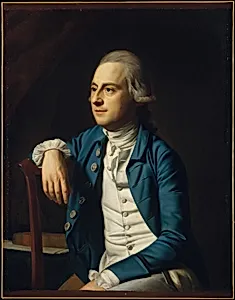
Copley's colonial portraits are distinguished by their intense realism, psychological acuity, and masterful rendering of materials — the sheen of satin, the texture of lace, the grain of mahogany. Works such as "Boy with a Squirrel" (1765), which he sent to London for exhibition, won the admiration of Benjamin West and Sir Joshua Reynolds and established his international reputation. His portrait of Paul Revere (c. 1768), depicting the silversmith in his shirtsleeves holding a teapot, is one of the most iconic images in American art.
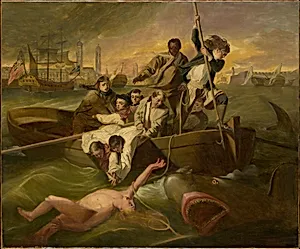
In 1774, on the eve of the American Revolution, Copley left Boston permanently for Europe, settling in London after a study tour of Italy. There he transitioned from portraiture to ambitious history paintings, producing "Watson and the Shark" (1778) — a sensational depiction of a shark attack in Havana Harbor — and "The Death of the Earl of Chatham" (1781), which pioneered the depiction of contemporary historical events at heroic scale.
Copley was elected a full Royal Academician in 1779, but his later career in London was marked by declining critical fortunes and financial difficulties. Despite this, his combined body of American and British work places him among the most important Anglo-American painters of the eighteenth century. His paintings are held by the Museum of Fine Arts, Boston, the National Gallery of Art, the Metropolitan Museum of Art, and the Tate.