Ctrl K
1742–1811
John Skippe, also known as Skipp, was an English amateur artist born on 7 July 1741 in Ledbury, Herefordshire, as the son of John Skipp of Upper Hall. His family had deep roots in the area, with ancestors supporting local causes in the seventeenth century. He matriculated at Merton College, Oxford, in 1760 at age eighteen. After university, Skippe traveled through northern Italy, where he produced numerous drawings after the old masters. A notable series of his careful studies from Andrea Mantegna’s frescoes in the Church of the Eremitani at Padua, executed in 1773, is preserved in the print room of the British Museum.
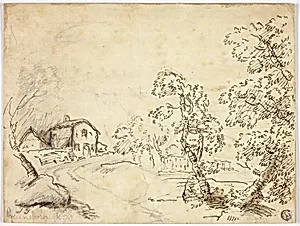
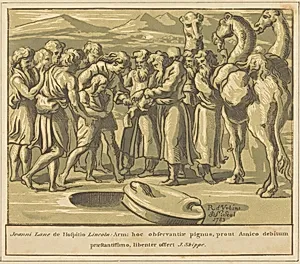
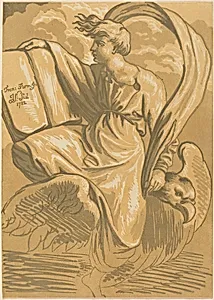
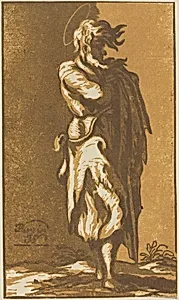
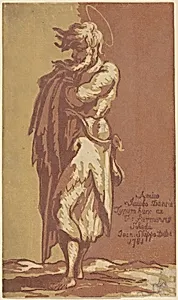
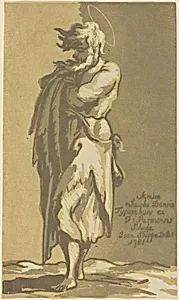
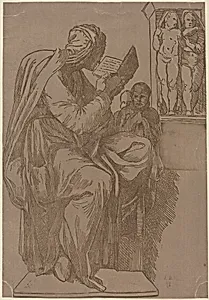
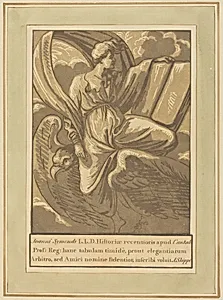
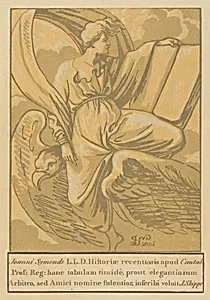
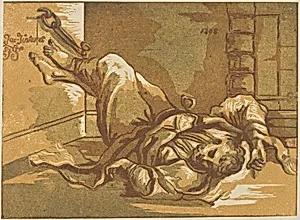
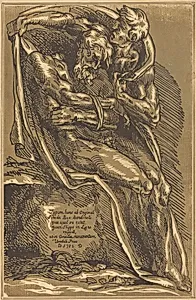
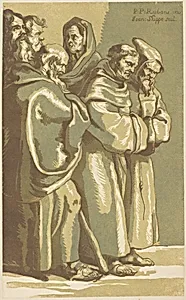
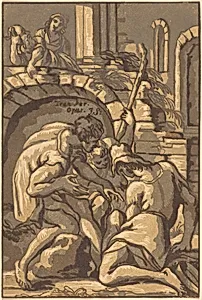
Skippe is best remembered for his chiaroscuro wood engravings, created primarily in the 1780s in imitation of early Italian masters such as Ugo da Carpi. These multi-block color prints, often after works by artists including Rubens, Parmigianino, and Palma Giovane, demonstrate a refined technique that surpassed the efforts of contemporaries like John Baptist Jackson. Examples include *A Group of Monks and a Woman* (after Rubens, 1780s), *Joseph Sold into Slavery* (1783), *Saint John the Evangelist* (1782), and *Man in Chains* (1808). He also produced drawings in bistre of landscapes and sacred subjects that occasionally entered collections under mistaken attributions to earlier masters. Skippe remained an amateur throughout his career, focusing on reproductive printmaking rather than original painting.
He died unmarried on 14 October 1812. Skippe’s prints and drawings are held in major institutions, including the National Gallery of Art in Washington, D.C., which houses a significant group of his chiaroscuro woodcuts, and the Victoria and Albert Museum. His work preserves a distinctive late-eighteenth-century engagement with Renaissance techniques and continues to interest collectors and scholars of old master prints.