Ctrl K
1768–1839
Joseph Anton Koch, born on July 27, 1768, in the remote Tyrolean village of Elbigenalp, Austria, grew up tending his family's sheep amid the dramatic Alpine landscapes that would later define his art. At age 15, Bishop Umgelder recommended him for formal training, leading to studies at the Catholic seminary in Dillingen, with a court sculptor in Augsburg, and finally at the prestigious Hohe Karlsschule in Stuttgart from 1785 to 1791, a strict military academy where he honed his skills but drew revolutionary caricatures inspired by the French Revolution. Fleeing punishment, Koch traveled through Switzerland and France before arriving in Rome in 1795 on a stipend. There, he studied under the Neoclassical master Asmus Jacob Carstens, adopting his "heroic" style focused on human figures and grand compositions.
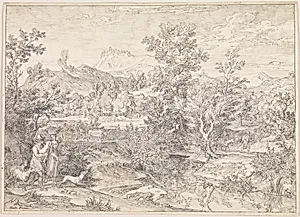
Koch's early work echoed Carstens and the classical landscapes of Poussin and Claude Lorrain, but he pioneered "heroic" landscapes infused with rugged mountains and Romantic sublime, blending Neoclassicism with emerging German Romanticism. In 1812, amid poverty and French occupation, he relocated to Vienna with his wife Cassandra and young child, producing prolifically under influences like Friedrich Schlegel and old German art, which toughened his style. Returning to Rome in 1815, he became a paternal mentor to the Nazarene movement, guiding young artists like Franz Pforr, Peter von Cornelius, Julius Schnorr von Carolsfeld, and Joseph von Führich in painterly realism and fresco technique.
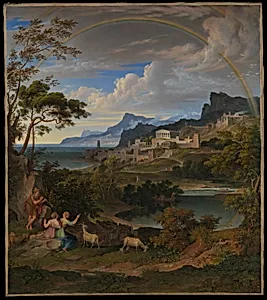
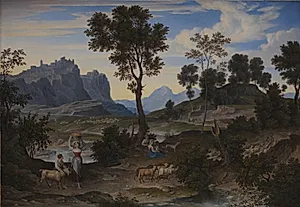
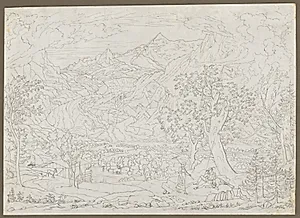
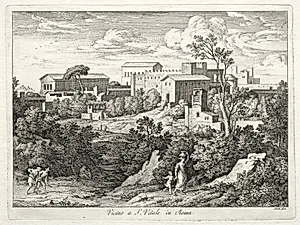
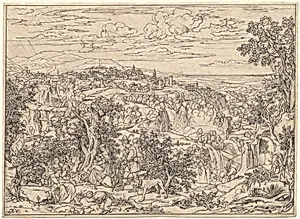
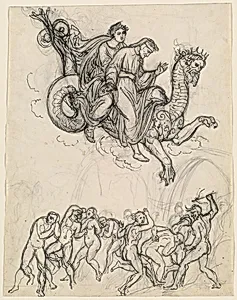
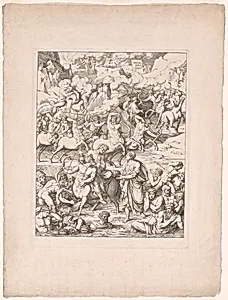
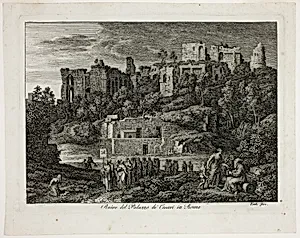
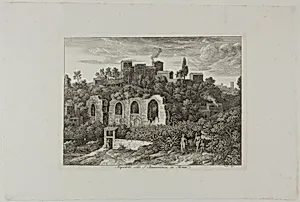
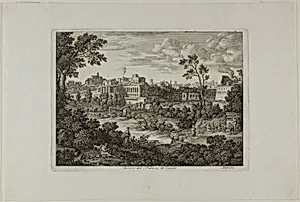
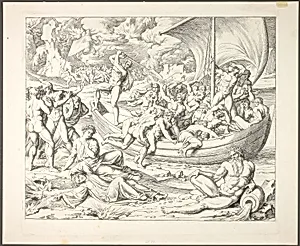
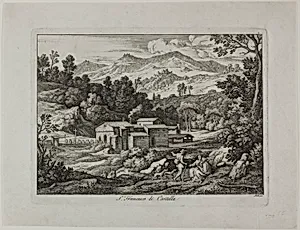
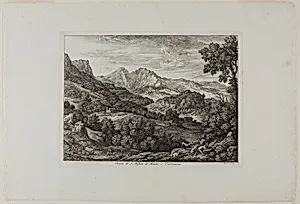
Among Koch's masterpieces are *Heroic Landscape with Rainbow* (1805, revised 1824), evoking Greek antiquity with its luminous arc over craggy peaks; *Schmadribach Falls in the Lauterbrunnen Valley* (1811); *Waterfalls at Subiaco* (1812–1813); and frescoes in Rome's Casino Massimo depicting Dante's *Inferno* (1824–1829), collaborating with Nazarenes. His etchings of Dante, Ossian, and Italian vistas further showcased his versatility. Despite late poverty, Koch's legacy endures as the foremost Neoclassical landscape innovator, profoundly shaping German Romanticism and the Nazarene ethos of spiritual clarity and nature's grandeur in Rome's artist colony.