Ctrl K
1811–1889
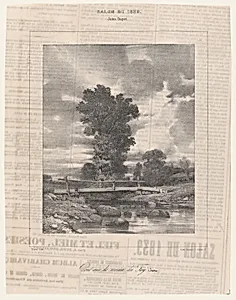
Jules Dupré (1811–1889) was born in Nantes, France, on April 5, the son of a porcelain manufacturer. He began his artistic career in his father's factory before moving to paint porcelain at his uncle's china factory in Sèvres. Lacking formal training or a specific teacher, Dupré debuted at the Paris Salon in 1831, earning a second-class medal three years later. A pivotal trip to England in 1834 exposed him to John Constable's landscapes, inspiring him to capture nature's dynamic movement—storm-driven clouds, wind-tossed foliage—observed around Southampton and Plymouth. He was the brother of artist Léon-Victor Dupré (1816–1879).
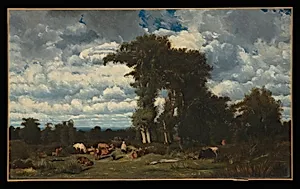
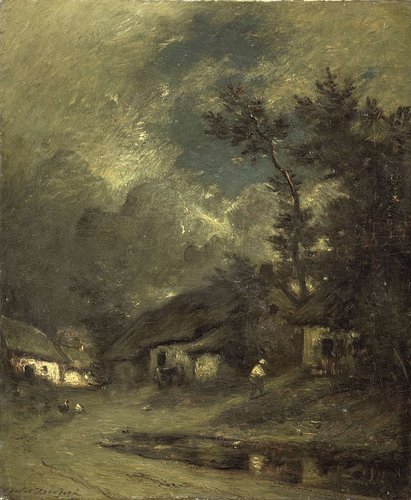
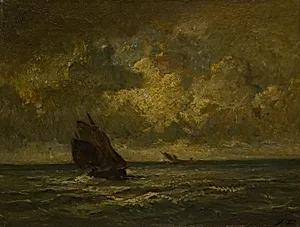
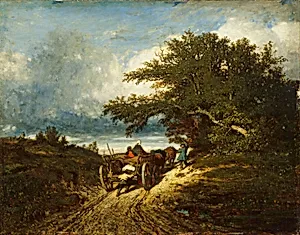
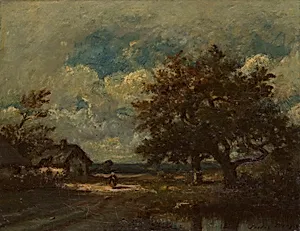
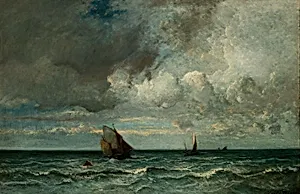
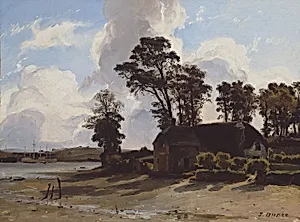
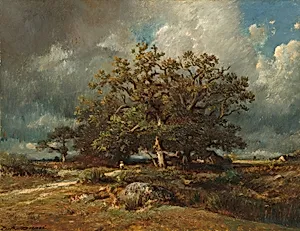
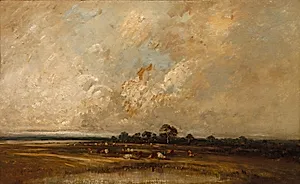
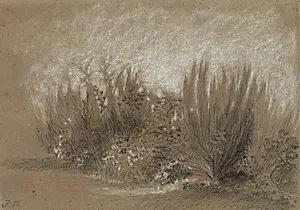
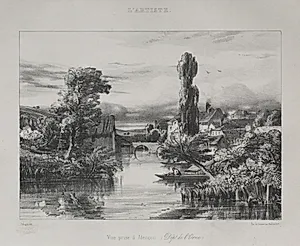
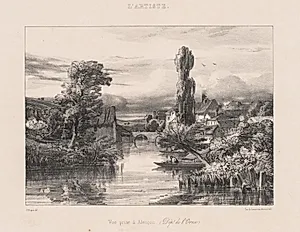
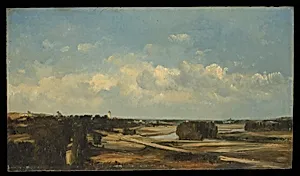
Dupré emerged as one of the chief members of the Barbizon school, a group of landscape painters who rejected academic idealism for direct, realistic depictions of nature near the Fontainebleau forest. Late in life, he joined the Barbizon artists' colony, refining his style toward broader handling and simpler color harmonies. His works emphasized nature's dramatic, tragic poetry through sonorous tones, stormy skies, turbulent seas, and sunset glows, distinguishing his ominous realism from Corot's lyricism or Rousseau's epic scale.
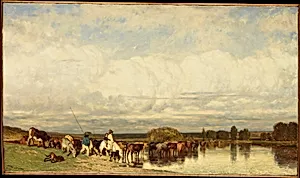
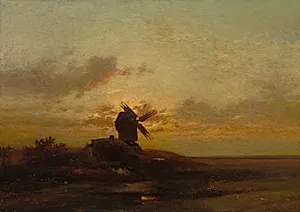
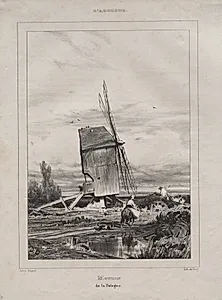
Among his major works are *Morning and Evening* and *The Duck Pond* (c. 1846), both in the Louvre; *Crossing the Bridge* and *Cows Crossing a Ford* (early pieces in the Wallace Collection and Metropolitan Museum of Art, respectively); *The Windmill* (1850s); *On the Road* (1856); and *The Old Oak* (1870, National Gallery of Art). Named an Officer of the Légion d'honneur in 1848, Dupré's contributions solidified landscape painting as a respected genre, paving the way for Realism and Impressionism by prioritizing nature's inherent character over fleeting light effects. He died on October 6, 1889, in L’Isle-Adam, leaving a legacy of moody, immersive vistas that evoke nature's raw power.