
Ctrl K
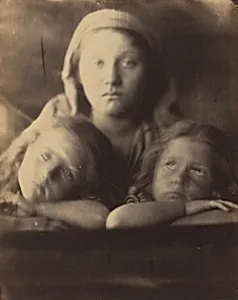
1815–1879
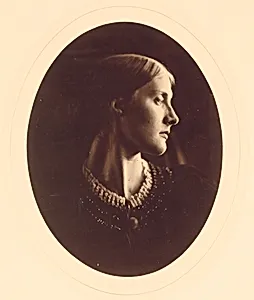
Julia Margaret Cameron (1815–1879), born Julia Margaret Pattle in Calcutta, India, emerged as one of the 19th century's most innovative photographers despite beginning her career at age 48. The daughter of East India Company official James Pattle and French aristocrat Adeline de l'Etang, she was educated in France from 1818 to 1834 alongside her six surviving sisters, renowned for their beauty and unconventional spirit. In 1838, she married jurist Charles Hay Cameron, twenty years her senior; the couple had six children (one adopted) and raised eleven, including orphaned relatives and maid Mary Ryan, a frequent model. While recovering from illness in South Africa in 1836, Cameron met astronomer Sir John Herschel, who became her lifelong mentor and introduced her to photography's invention via correspondence and early prints. The family relocated to England in the late 1840s, settling near intellectual circles at Little Holland House before moving to Dimbola Lodge on the Isle of Wight in 1860, neighbors to poet Alfred Tennyson. There, in 1863, her daughter Julia Jackson—later mother of Virginia Woolf and Vanessa Bell—gifted her a camera, prompting Cameron to convert a chicken coop into a studio. She studied under photographer David Wilkie Wynfield, crediting his soft-focus portraits for her success, while Herschel served as her first teacher in technique.
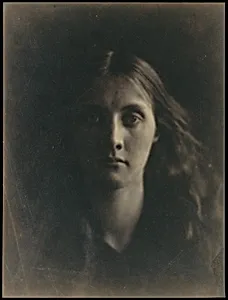
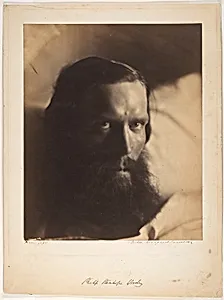
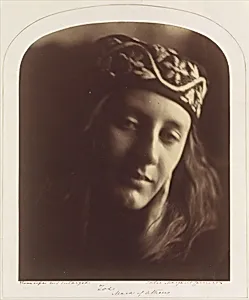
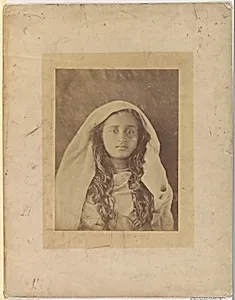
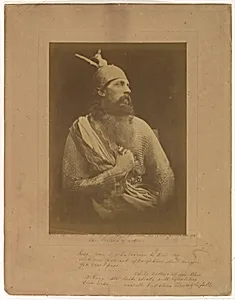
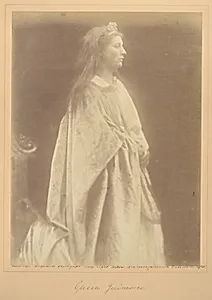
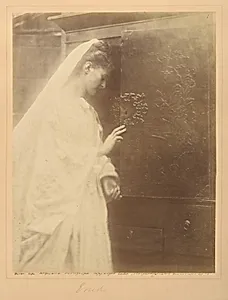
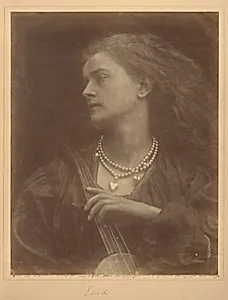
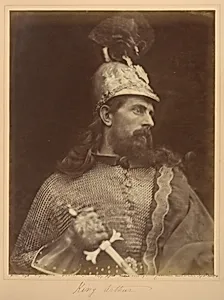
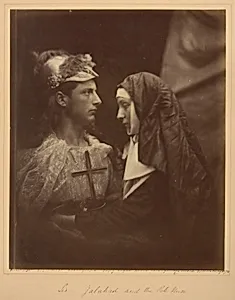
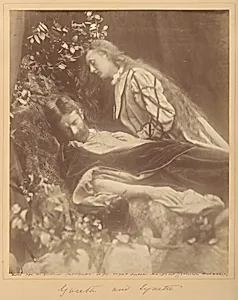
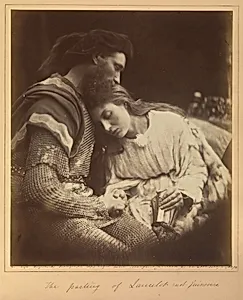
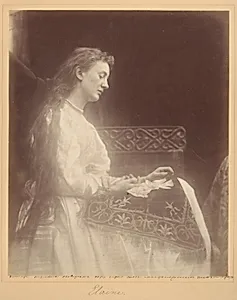
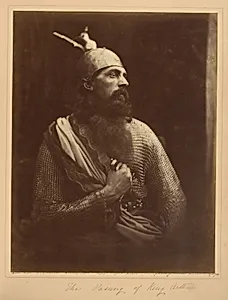
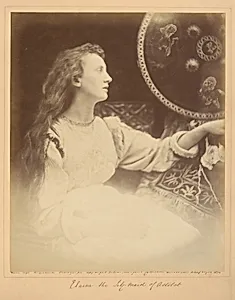
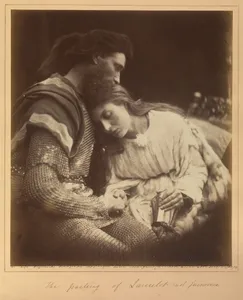
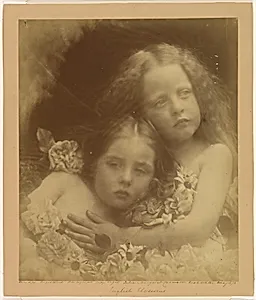
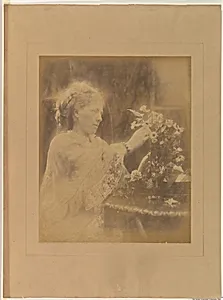
Cameron's style rejected sharp Victorian precision for deliberate soft focus, long exposures, and wet collodion plates, creating ethereal portraits and allegorical tableaux inspired by Pre-Raphaelites, Old Masters like Rembrandt and Raphael, the Bible, Shakespeare, and Tennyson's *Idylls of the King*. She fused the real and ideal, costuming family, servants like Mary Hillier as Madonnas, and luminaries as mythic figures, aiming to "arrest all beauty" and elevate photography to high art. Her works evoked spiritual depth, with chiaroscuro lighting and phrenological ideals emphasizing genius in men and innocence in women.
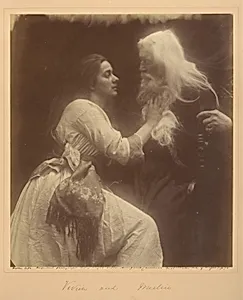
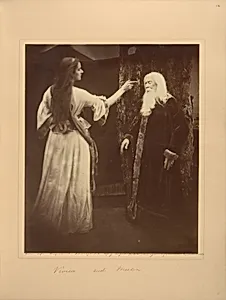
Among her major works are the portrait *Annie Philpot (My First Success)* (1864), *Ellen Terry* (1864), *Sappho* with Hillier (1865), *Sir John Herschel* (1867), *Thomas Carlyle* (1867), *Charles Darwin* (c. 1868), *Alfred Tennyson* (1869), *Alice Liddell* (1872), and *Vivien and Merlin* (1874). She copyrighted images, held a solo exhibition in 1865, won Berlin medals, and sold 80 prints to the South Kensington Museum (now V&A), which named her its first artist-in-residence in 1868. In 1875, failing plantations drew the family to Ceylon, where her output waned until her death. Cameron's legacy endures as a pioneer who imbued photography with poetic vision, influencing Pictorialism, modern portraitists like Diane Arbus and Sally Mann, and proving the medium's artistic potential amid contemporary criticism of her "imperfections."
![[Ceylonese Group by a Tree]](https://images.artheonmuseum.org/met/ph/thumb/ceylonese-group-by-a-tree-260359.webp)
![[Egeria]](https://images.artheonmuseum.org/met/ph/thumb/egeria-260731.webp)
![[Unidentified Child]](https://images.artheonmuseum.org/met/ph/thumb/unidentified-child-271514.webp)