
Ctrl K
1551–1601
**Kano Sōshū (狩野宗秀, 1551–1601)** was a prominent Japanese painter of the Azuchi-Momoyama period and a key figure in the illustrious Kano school. As the younger brother of the celebrated master Kanō Eitoku (1543–1590), Sōshū was born into the heart of one of Japan’s most influential artistic dynasties. He was the son of Kanō Shōei and worked closely within the family workshop in Kyoto, where the Kano lineage had established its dominance in official and temple commissions.
Sōshū trained and practiced in the distinctive Kano tradition, which blended Chinese-inspired ink techniques with vibrant colors and lavish gold leaf on large-scale screens and sliding doors. His style closely echoed his brother’s dynamic compositions, characterized by bold brushwork, monumental forms, and a sense of movement suited to the opulent tastes of samurai patrons. When Eitoku departed Kyoto to decorate Oda Nobunaga’s grand Azuchi Castle, he entrusted Sōshū with leadership of the Kano headquarters, underscoring the confidence placed in his abilities.
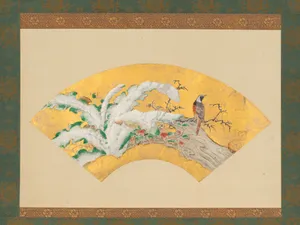
Among Sōshū’s notable works is the 1583 *Portrait of Oda Nobunaga*, a significant historical image that captures the powerful warlord. He also created intimate pieces such as the fan-shaped *Plantain and Bird in Snow*, now in the Metropolitan Museum of Art, demonstrating his skill with delicate natural motifs in ink, color, and gold. Some scholars have suggested his possible involvement in the grand *Cypress Trees* screens, traditionally attributed to Eitoku, based on contemporary diary references.
Sōshū’s legacy lies in sustaining the Kano school’s vitality during a transitional era, bridging the innovative grandeur of his brother’s generation with the continued dominance of the family workshop into the early Edo period. His faithful adherence to Eitoku’s aesthetic ensured the school’s prestige among military elites and temples, helping cement the Kano style as the official visual language of power in Japan for centuries.
All 1 artworks loaded