Ctrl K
1770–1820
Occupations
Katsukawa Shuntei (1770–1820), originally named Yamaguchi Chōjūrō, was a versatile ukiyo-e printmaker of Japan's Edo period under the Tokugawa shogunate. His early life remains sparsely documented, but by the late 1790s, he had entered the prestigious Katsukawa school, studying under the master Katsukawa Shun'ei, who led the school following the death of founder Shunshō. Shuntei's earliest authenticated work dates to 1798, an actor print tied to a kabuki performance, signaling his rapid adoption of the school's signature yakusha-e style—intimate, expressive portraits of theater performers.
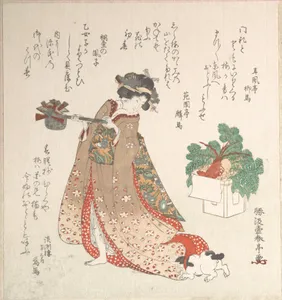
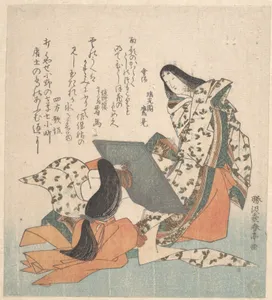
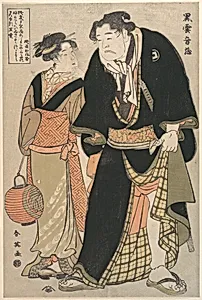
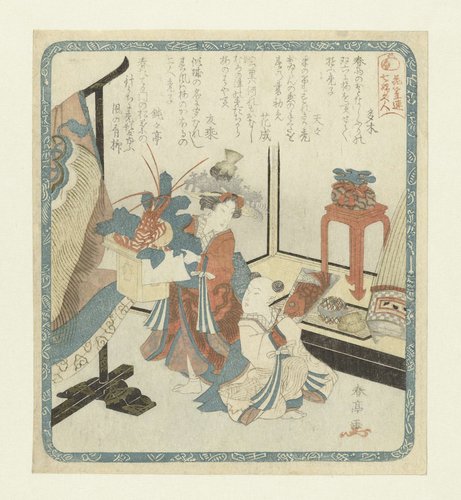
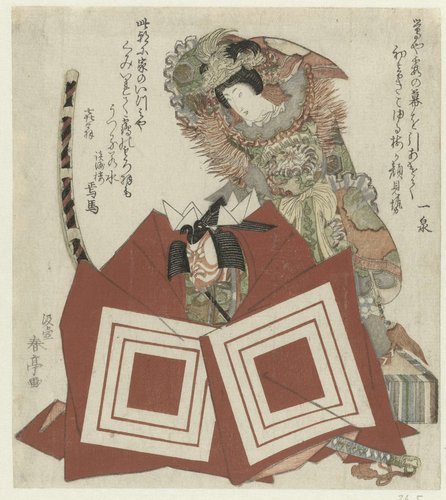
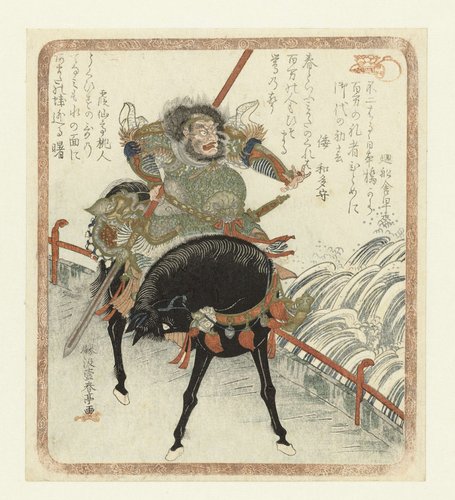
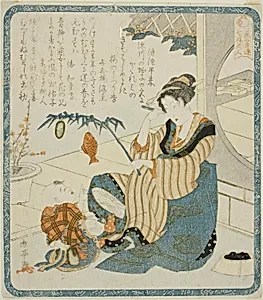
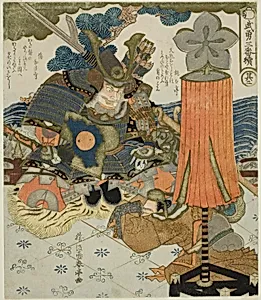
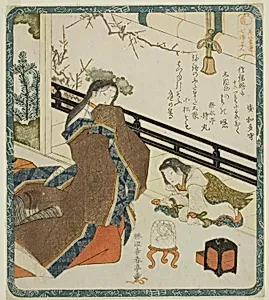
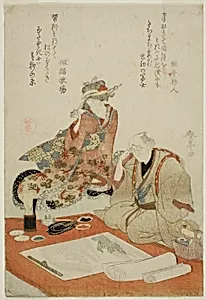
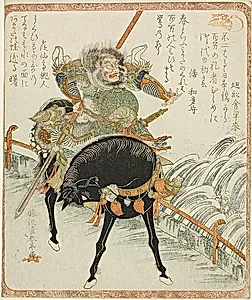
Working firmly in the Katsukawa tradition, Shuntei excelled across ukiyo-e genres, producing yakusha-e, bijin-ga (images of beautiful women), musha-e (warrior prints with panoramic battle scenes), sumo wrestler depictions, and surimono (luxurious private prints). He also illustrated gōkan—popular multivolume novels—during the Bunka era (1804–1818) for publishers like Tsuruya Kiemon and Maruya Bun'emon. What set Shuntei apart was his pioneering landscapes, infused with Western perspective: low horizons, dramatic vanishing points, and atmospheric depth, as seen in views of Edo's Fukagawa and Shinagawa districts or the Eight Views of Lake Biwa. These innovations, active around 1805–1807, bridged Japanese floating-world aesthetics with emerging global influences.
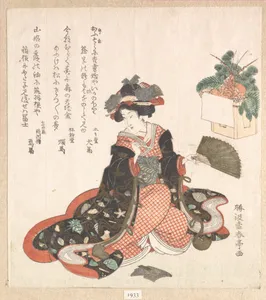
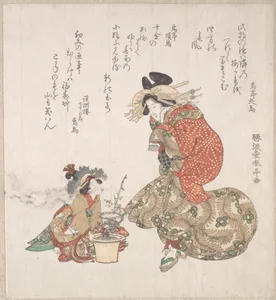
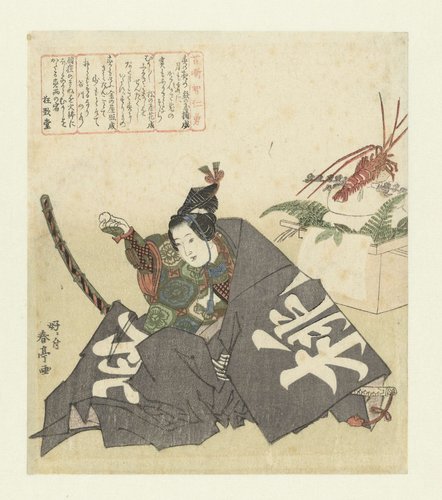
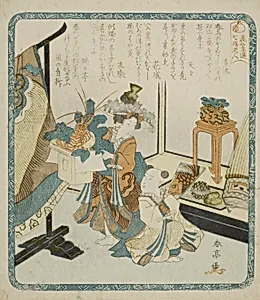
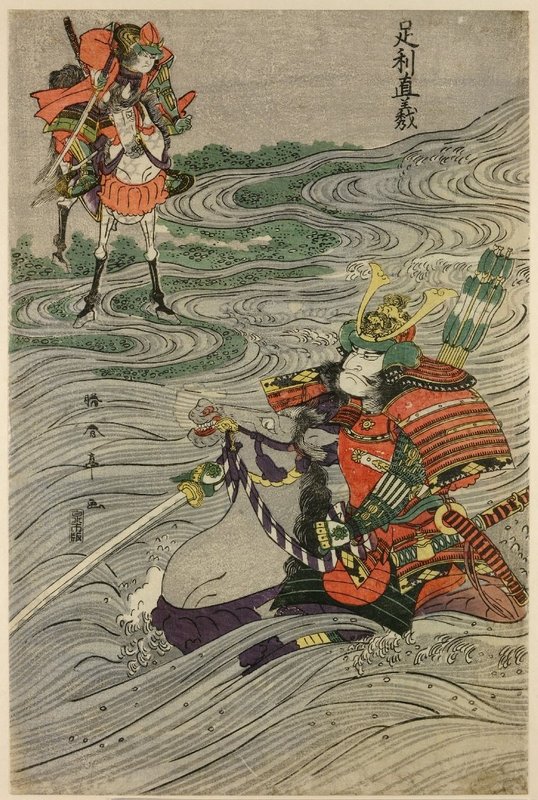
Among his notable works are *Edo Meisho: Masaki no Zu* (1798), a scenic print; *Shinto Mei Zukushi* (1803); the surimono *Yakusha Mitate Kataki-uchi* (1808); *Nanko Akasaka Rojo no Zu* (1809); and *Courtesan and New Year Decoration* (ca. 1816), a delicate bijin scene with festive motifs. Warrior prints like *Kusunoki Masashige Holding a Scroll* (ca. 1815–1820) and episodes from *The Tale of the Heike*, such as *Kumagai and Atsumori*, showcase his dynamic musha-e prowess.
Shuntei's legacy endures in his genre-spanning output and forward-looking landscapes, which anticipated Meiji-era fusions of East and West. Though illness forced his early retirement, his prints—held in collections like the Metropolitan Museum and Art Institute of Chicago—preserve the vibrancy of Katsukawa mastery, influencing later ukiyo-e artists amid Japan's cultural ferment.
Wikidata/Wikimedia Commons
All 17 artworks loaded