Ctrl K
1606–1656
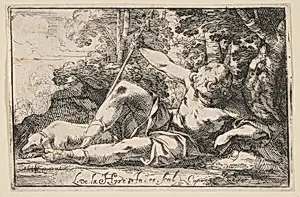
Laurent de La Hyre (1606–1656) was a French painter whose elegant, classical compositions placed him among the finest artists of the first generation of French Baroque painters working in Paris. Born into an artistic family — his father Étienne de La Hyre was also a painter — Laurent received his early training largely through independent study rather than formal apprenticeship under a single dominant master, though he was deeply influenced by the work of the Fontainebleau School and, crucially, by the great Italian and Flemish paintings he was able to study in Parisian collections without ever traveling to Rome.
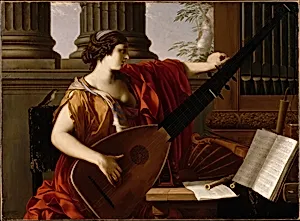
La Hyre's mature style is characterized by clarity, refinement, and a distinctive cool luminosity that sets him apart from both the dramatic chiaroscuro of Caravaggio's followers and the warmer, more sensuous palette of the Rubenistes. His compositions tend toward harmonious balance and an almost sculptural solidity of form, qualities that align him with the Atticist tendency in French painting of the mid-seventeenth century — a circle of artists who prized restraint, order, and classical decorum. He was a founding member of the Académie Royale de Peinture et de Sculpture, established in 1648, an institution that would define French artistic life for the next century and a half.
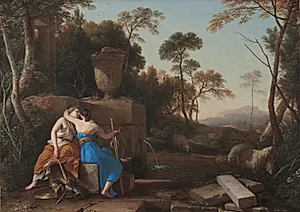
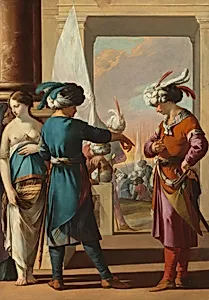
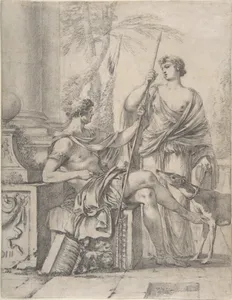
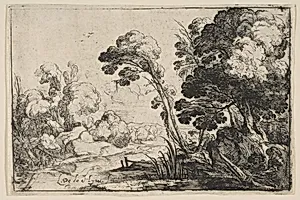
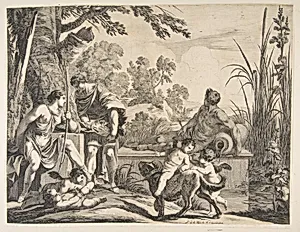
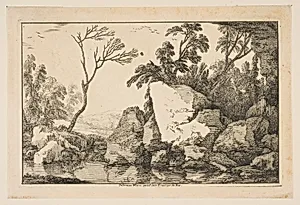
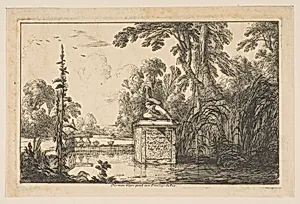
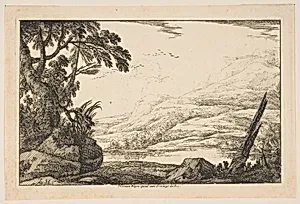
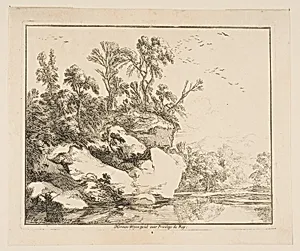
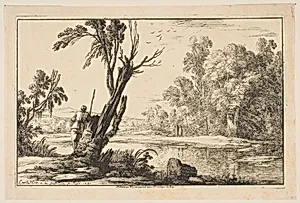
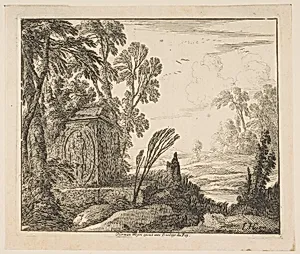
La Hyre worked extensively for Parisian churches and aristocratic patrons, producing altarpieces, narrative paintings drawn from sacred and classical history, and allegorical compositions. Among his most admired works are his luminous landscapes with figures — a genre in which his gifts for light and spatial harmony found particularly free expression — and his series of paintings representing the liberal arts, now distributed among several international collections.
Though somewhat overshadowed in later centuries by the towering reputations of his contemporary Nicolas Poussin, La Hyre has been recognized by modern scholarship as an artist of genuine originality and accomplishment, whose serene, intellectually ordered paintings make him an indispensable figure in the history of French classical painting.