Ctrl K
1909–1960
**Lee Hager (c. 1909–1960)** was an American artist and designer known for his detailed watercolor and gouache renderings of American decorative arts as well as later abstract compositions. Born in New York around 1909, he spent much of his career in the city, where he died in 1960 at age 51 after a long illness.
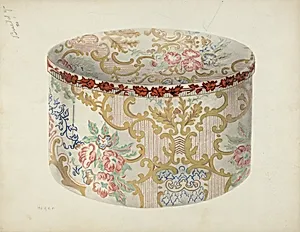
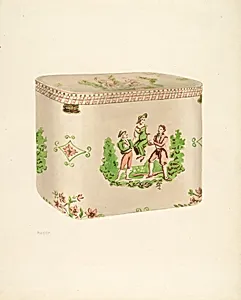
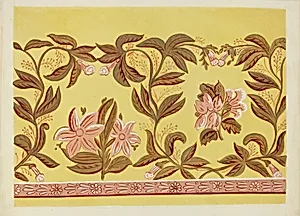
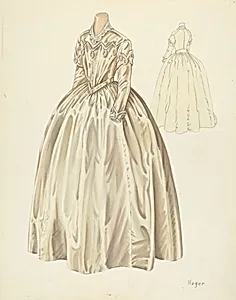
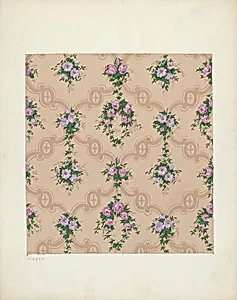
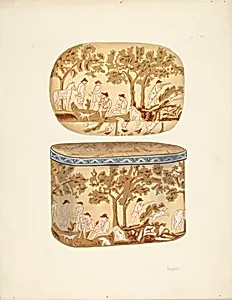
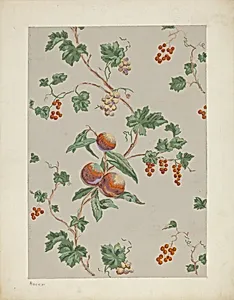
Early biographical details remain limited, with no documented information on formal training or mentors emerging from historical records. Hager contributed significantly to the Index of American Design project during the late 1930s and early 1940s, producing precise studies of historical objects. His works from this period, created between 1935 and 1942, include depictions of wallpapers, bandboxes, a wedding dress, a sunshade, and wallpaper borders, rendered in watercolor, gouache, and graphite on paperboard. These pieces, now held in the National Gallery of Art’s collection, served to document and preserve examples of American folk and decorative design.
In addition to his documentary work, Hager explored abstract and mixed-media approaches in the 1950s, producing untitled compositions that reflect mid-century experimentation with form and color. His dual focus on representational design documentation and abstraction positioned him within broader currents of American art that bridged traditional craft illustration and modernist tendencies. Examples of his abstract pieces have appeared in private sales and gallery contexts.
Hager’s legacy endures through his contributions to major institutional holdings, including the National Gallery of Art and the Smithsonian American Art Museum, where his works help illustrate both the preservation of American material culture and the evolution of 20th-century artistic expression. Though his career was relatively brief, the eight or more pieces associated with public collections underscore his role as a skilled draftsman and versatile creator.