Ctrl K
1833–1922
**Léon Joseph Florentin Bonnat** (1833–1922) was a prominent French painter, renowned portraitist, art collector, and influential professor at the École des Beaux-Arts. Born in Bayonne, he spent his formative years from 1846 to 1853 in Madrid, where his father ran a bookshop. There, while assisting in the family business, he copied engravings after Old Masters and received training under the Spanish painter Madrazo, igniting a lifelong passion for drawing and Spanish art.
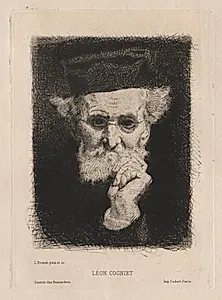
Bonnat later moved to Paris, studying in the studios of history painters Paul Delaroche and Léon Cogniet around 1854. Although he never won the Prix de Rome, a scholarship enabled him to spend three years in Rome (1858–1860), where he befriended artists including Edgar Degas, Gustave Moreau, and Jean-Jacques Henner. His style drew heavily from Spanish masters like Velázquez and Ribera, as well as Titian and Van Dyck, blending rigorous drawing with a focus on overall effect and naturalism. This positioned him as a bridge between academic traditions and more modern approaches, opposing strict neoclassicism while remaining within the academic framework.
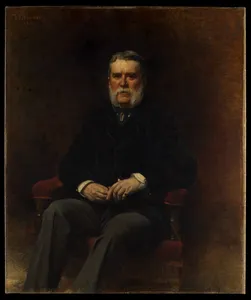
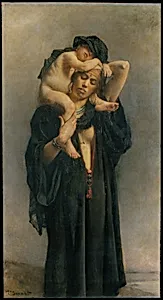
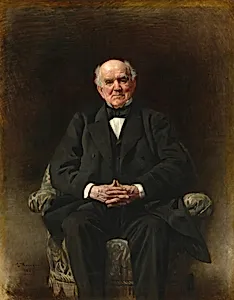
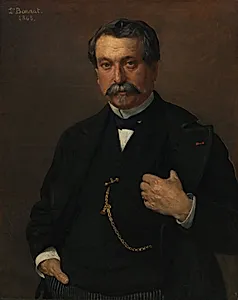
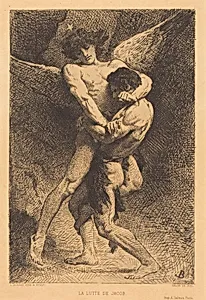
Bonnat excelled as a portrait painter, capturing contemporary celebrities with vivid realism, but he also produced powerful religious works such as *Christ on the Cross* (Musée du Petit Palais), *Job* (Musée Bonnat), and *The Martyrdom of St Denis* for the Panthéon. He received the Légion d’honneur and became a professor at the École des Beaux-Arts in 1882, later serving as its director from 1905. A liberal educator who emphasized simplicity and freedom of expression, he taught numerous notable students, including John Singer Sargent, Thomas Eakins, Gustave Caillebotte, and even Henri de Toulouse-Lautrec.
In his later years, Bonnat’s technique evolved toward greater freedom and color, influenced by Goya. An avid collector, he donated his extensive holdings—including exceptional Old Master drawings—to establish the Musée Bonnat (now Musée Bonnat-Helleu) in his native Bayonne. Never married, he lived much of his life with his mother and sister. Bonnat died in 1922, leaving a legacy as both a skilled academic painter and a mentor who helped shape generations of artists.