Ctrl K
1540–1556
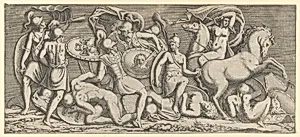
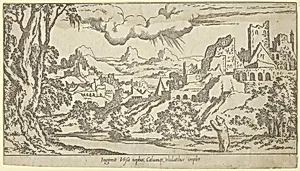
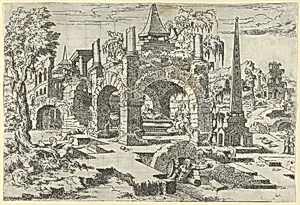
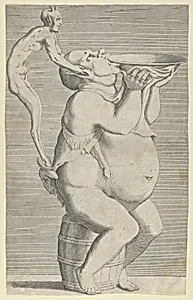
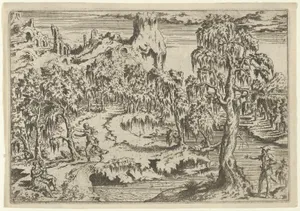
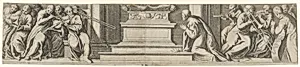
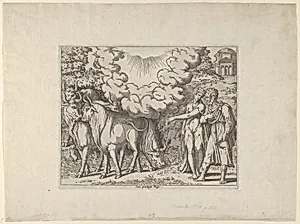
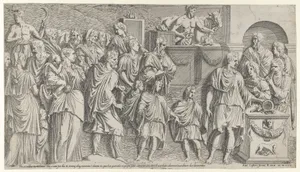
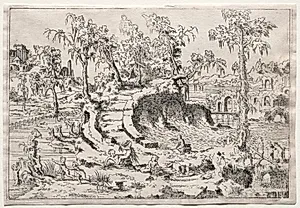
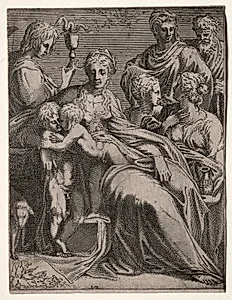
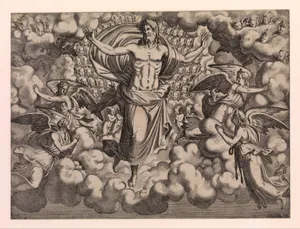
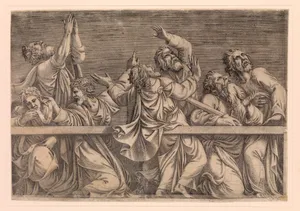
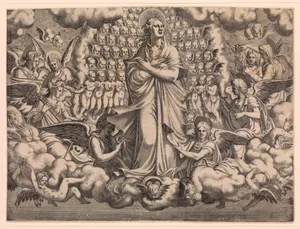
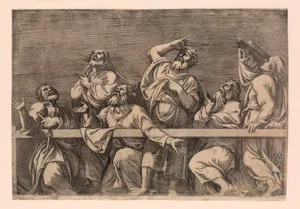
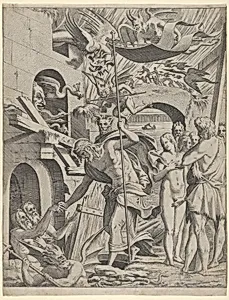
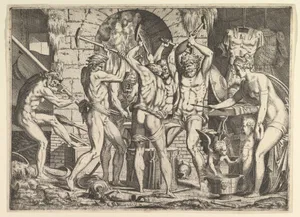
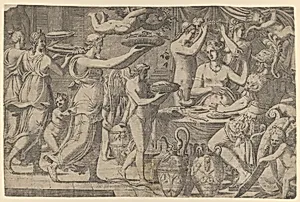
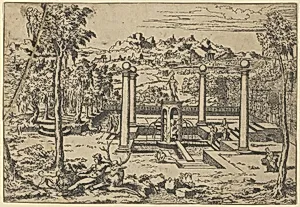
**Léon Davent** (also known as Master L.D. or the monogrammist L.D.) was a French printmaker active in the mid-16th century, best known for his work in both engraving and etching. He played a leading role in the printmaking workshop associated with the First School of Fontainebleau at the Palace of Fontainebleau during the 1540s. His prints, often signed simply “L.D.,” reproduced designs by Italian artists working at the French court, most notably Francesco Primaticcio, whose compositions he rendered with bold, free lines. He also worked after drawings by Luca Penni and others, including Giulio Romano and Parmigianino.
Very little is documented about Davent’s early life or formal training. His dated prints span from 1540 to 1556, when he left a series incomplete, suggesting his death around that time. Scholars believe he may have begun as a goldsmith, a common background for engravers of the period, before turning to printmaking. He appears to have learned etching techniques from the Italian artist Antonio Fantuzzi at Fontainebleau and later collaborated closely with him. Around 1546–47 he seems to have left France, possibly with Penni, producing prints on German paper; by the 1550s he was working in Paris, where in 1555, recorded as “Lion Davant,” he signed a contract to illustrate a book on Levantine costumes by Nicolas de Nicolay.
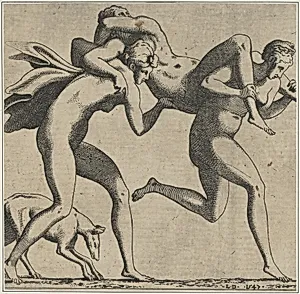
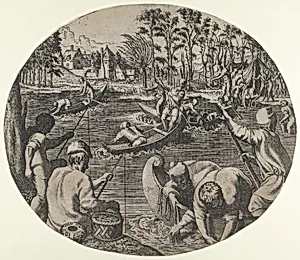
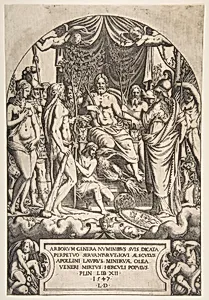
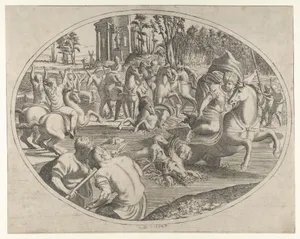
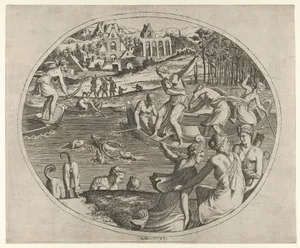
Davent’s output helped disseminate the innovative Mannerist style developed at Fontainebleau across Europe. Among his notable works are etchings after Primaticcio such as *Cadmus Fighting the Dragon*, scenes from the life of Alexander the Great (including *Alexander the Great and Campaspe*), *Nymph Mutilating a Satyr*, *Bellona*, and *Diana at Rest*. He also produced illustrations for books and a striking portrait-like etching of *Michelangelo at the Age of Twenty-Three*. Attributions to him range from roughly 98 to over 200 prints, reflecting both his productivity and the challenges of identifying unsigned or workshop pieces.
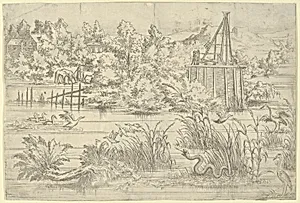
Davent’s technical experiments—particularly his use of all-over gray tones, chiaroscuro effects, and reproductive etching—mark him as one of the most adventurous printmakers of the Fontainebleau circle. The 1974 discovery of his 1555 contract finally confirmed his identity, resolving long-standing scholarly debate. Today his prints are held in major collections worldwide, including the Metropolitan Museum of Art and the National Gallery of Art, preserving the decorative exuberance and mythological subjects of the Fontainebleau school for later generations.