Ctrl K
1804–1873
Leopold Schulz was born on October 25, 1804, in Vienna, the son of a porcelain painter. He pursued formal artistic training at the Academy of Fine Arts Vienna from 1817 to 1826, laying the foundation for a career focused on religious and historical subjects. Schulz died on October 6, 1873, in Heiligenstadt, Lower Austria.
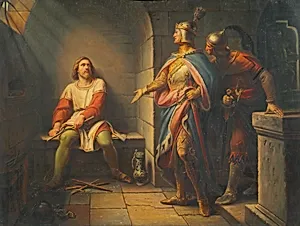
Schulz worked primarily as a church and portrait painter, specializing in historicizing scenes rendered in the style of the Nazarenes. This approach emphasized detailed, idealized compositions drawn from medieval and religious themes, often with a romanticized historical flavor. His output reflected the broader 19th-century Austrian interest in reviving earlier artistic traditions while infusing them with contemporary emotional depth.
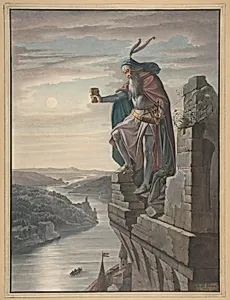
Among his notable works are *The Martyrdom of St Florian* (1837), *The Death of Götz von Berlichingen* (1839), and an *Illustration for Goethe* (1842), executed in watercolor over graphite. These pieces demonstrate his skill in narrative storytelling and meticulous draftsmanship, blending dramatic subject matter with precise technique.
Schulz’s legacy endures through his contributions to Austrian religious and historical painting, with examples preserved in museum collections such as the Metropolitan Museum of Art. His adherence to Nazarene principles helped sustain that movement’s influence in Vienna during the mid-19th century, inspiring later generations of artists interested in spiritually resonant historical imagery.