Ctrl K
1715–1759
Louis-Joseph Le Lorrain (1715–1759) was a versatile French painter and engraver whose career bridged the vibrant artistic scenes of Paris, Rome, and St. Petersburg. Born in Paris on March 19, 1715, he received his early training under the esteemed Jacques Dumont, mastering design and engraving techniques that would define much of his output. After honing his skills in the French capital, Le Lorrain journeyed to Rome, where he gained prominence in artistic circles for his imaginative compositions. He later returned to Paris, joining the Académie Royale de Peinture et de Sculpture, before embarking on further travels that included stints in Sweden and extended years at the Russian imperial court in St. Petersburg.
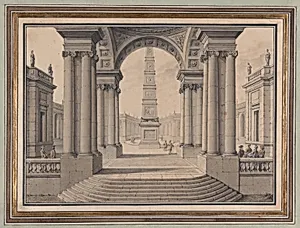
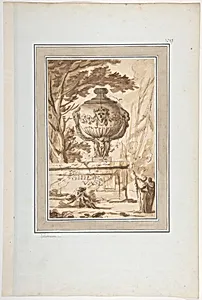
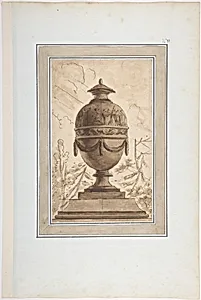
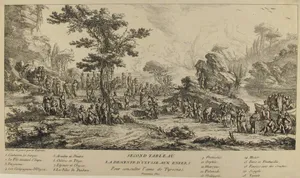
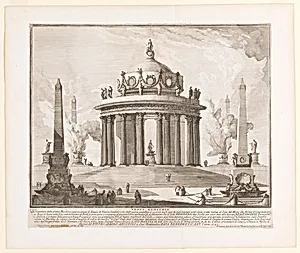
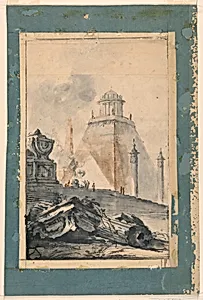
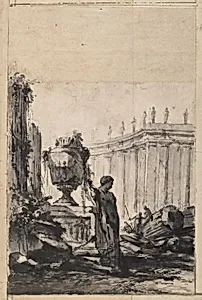
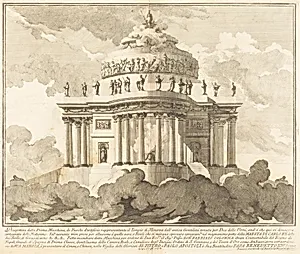
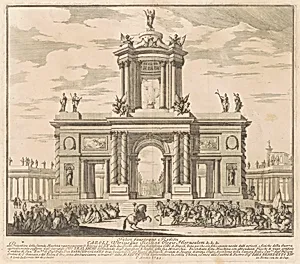
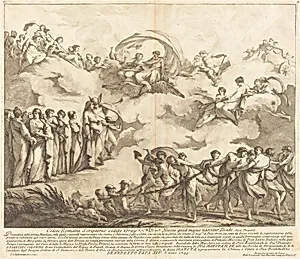
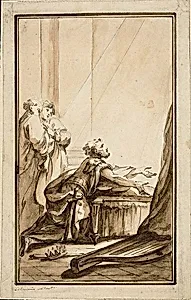
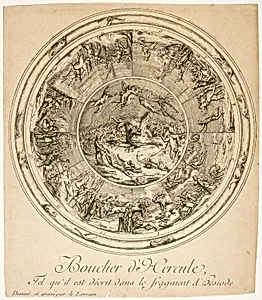
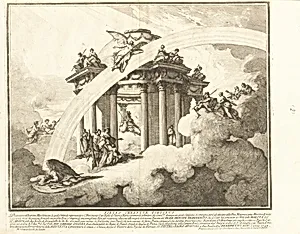
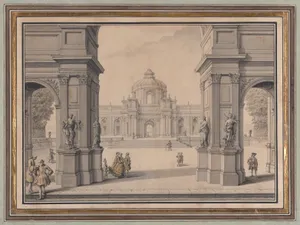
Le Lorrain's style blended rococo fantasy with emerging neoclassical precision, evident in his devotional canvases executed with a vigorous touch and his intricate etchings of architectural capriccios. Specializing in fantastical ruins, obelisks, and ornate vases, he excelled in both oil paintings and reproductive engravings after masters like Jean-François de Troy, including *The Judgment of Solomon*, *Esther and Ahasuerus*, and *The Death of Cleopatra*. His designs for grand ephemeral spectacles, such as the fireworks *macchine* for Naples' Chinea festivals—*The Prima Macchina for the Chinea of 1748* and *The Temple of Minerva* (1746)—captured the theatrical exuberance of the era.
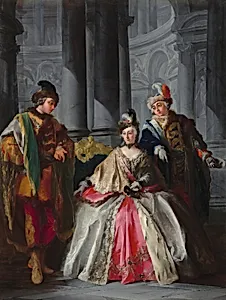
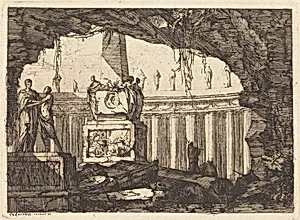
Among his notable paintings are *Three Figures Dressed for a Masquerade* (c. 1740s, National Gallery of Art) and *Tobit Burying the Dead in Defiance of the Orders of Sennacherib*, alongside etchings like *Architectural Fantasy with an Obelisk and Arcade* (1750) and *Temple of Venus* (1747). In Russia, he contributed to opulent projects, including a desk from the "Greek-style cabinet" (1756).
Le Lorrain's legacy endures through his family and pupils; his son, Jean-Baptiste Le Lorrain (b. 1737), apprenticed under him and became a noted engraver, while disciple Fyodor Rokotov rose to prominence in Russian portraiture. Dying in St. Petersburg on March 24, 1759 (or 1760), Le Lorrain left a corpus of over a dozen works in major collections, bridging French elegance with international ornamental innovation.