Ctrl K
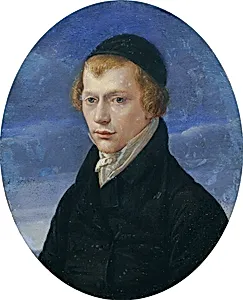
1788–1853
Ludwig Ferdinand Schnorr von Carolsfeld (1788–1853) was a German Romantic painter, engraver, and lithographer who spent most of his life in Vienna, becoming a pivotal figure in the city's artistic circles. Born in Königsberg to artist Veit Hanns Schnorr von Carolsfeld, he trained initially under his father before moving to Vienna at age sixteen. There, he enrolled at the Academy of Fine Arts in 1804, studying under Heinrich Friedrich Füger, a prominent neoclassical portraitist. As part of a student group around Friedrich Overbeck, he helped lay the groundwork for the Nazarene movement's emphasis on spiritual depth and medieval-inspired purity, though he remained loyal to the Academy, eschewing the full rupture that sent his younger brother Julius to Rome with the Lukasbund.
Schnorr von Carolsfeld's early career flourished through influential patrons like Duke Albert of Saxe-Teschen and Archduke John of Austria, for whom he created frescoes and decorations at the Brandhof estate until 1828. He forged ties with Catholic Romantics such as Friedrich von Schlegel and Zacharias Werner, and collaborated with the Olivier brothers and Joseph Anton Koch, blending Romantic naturalism with religious fervor. In 1821, he taught Moritz von Schwind, imparting his balanced approach that tempered Nazarene idealism with classical rigor. Despite opposition from Prince Metternich, he joined the Vienna Academy in 1835 and served as curator of the Belvedere Palace's Imperial collection from 1841.
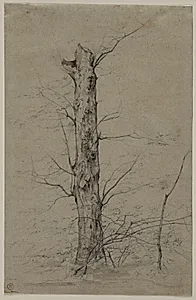
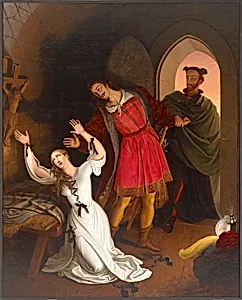
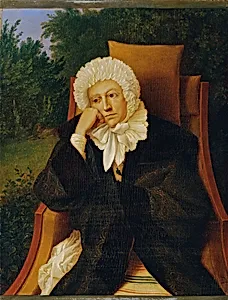
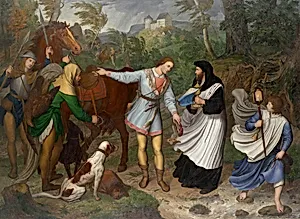
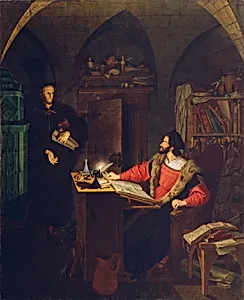
His oeuvre spans portraits, such as those of Beethoven and Ignaz von Gleichenstein (c. 1808), literary scenes like *Faust and Mephisto* (1818) and *Faust and Gretchen in Prison* (Kunsthistorisches Museum), biblical works including *The Three Maries at the Grave of Jesus* (c. 1835) and *The Temptation of Christ*, and landscapes like *View from the Church in Annaberg over the Ötscher* (1842). A 1839 wall painting at Mechitaristenkloster exemplifies his later shift toward luminous nature studies. Schnorr's legacy endures in Vienna, where a street bears his and Julius's name, and in his role bridging Nazarene spirituality with Austrian Romanticism, influencing generations through pupils and imperial commissions.