Ctrl K

**The Lyandros Painter** was an anonymous Athenian red-figure vase painter active during the early Classical period, roughly 470–450 BCE. His conventional name derives from a kalos inscription on one of his works, as identified by the scholar J.D. Beazley. Specializing in kylixes (drinking cups), he produced finely detailed red-figure vessels that reflect the refined aesthetic of mid-fifth-century Attic pottery.
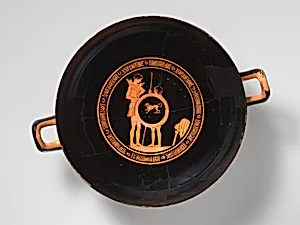
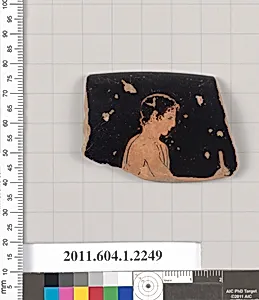
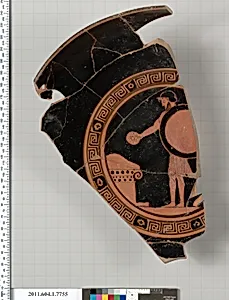
Working in the Attic tradition, the Lyandros Painter favored intimate scenes on the interiors and exteriors of cups, often depicting youths, athletes, and mythological figures with graceful proportions and careful attention to drapery and anatomy. His style bridges the late Archaic and early Classical phases, showing a move toward greater naturalism while retaining elegant outlines typical of red-figure technique. Examples of his attributed output survive in major collections, including a terracotta kylix at the Metropolitan Museum of Art (ca. 450 BCE) showing a youth arming himself with the help of a boy, and fragments featuring Aphrodite enthroned with Erotes.
Although little is known of his personal life or training, the painter’s consistent hand has been recognized across a small but coherent group of vessels. His works demonstrate the high level of specialization among Attic potters and painters who supplied both local and export markets. Today, the Lyandros Painter is appreciated for his contribution to the evolution of red-figure cup decoration, with surviving examples offering insight into Athenian daily life and religious imagery of the period. The four pieces in the present collection further illustrate his distinctive approach to figure drawing and composition.