
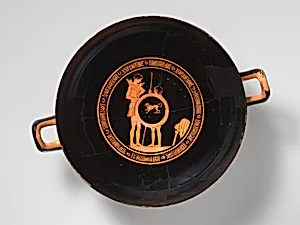
Terracotta kylix (drinking cup)
ca. 450 BCE
Medium
Terracotta
Dimensions
Overall: 3 3/4 x 12 13/16in. (9.6 x 32.5cm); diameter 10 1/8in. (25.7cm)
Classification
Vases
Culture & Period
Greek, Attic · Classical
Department
Greek and Roman Art
Museum
Metropolitan Museum of Art, New York, NY
Credit
Purchase, Christos G. Bastis Gift, 1958
Accession Number
58.11.1
Rights
Public Domain
Tags
Art Historical Context
Behold the elegant *Terracotta kylix* by the Lyandros Painter crafted around 450 BCE during Athens's Classical golden age. This shallow, two-handled drinking cup, typical of symposia—lively male drinking parties—was a staple of everyday Greek social life. Made of terracotta, it measures just under 4 inches tall and 10 inches across, its wide mouth perfect for sipping wine mixed with water, as was custom. Adorning its interior and exterior are dynamic red-figure scenes (a technique where figures are left in the fired red clay against a black-gloss background), showcasing men armed with shields and spears confronting fierce lions. The Lyandros Painter, a skilled Attic artist of the era, captures the tension of combat with precise line work and subtle details, evoking heroic myths or hunting exploits. Such vases bridged utility and artistry, reflecting Athenian ideals of valor, athleticism, and sympotic revelry. Now at the Metropolitan Museum of Art, thanks to the 1958 Christos G. Bastis gift, this kylix offers a vivid window into Classical Greek culture—where even a humble cup told stories of human triumph over nature.
About the Artist
Lyandros Painter
**The Lyandros Painter** was an anonymous Athenian red-figure vase painter active during the early Classical period, roughly 470–450 BCE. His conventional name derives from a kalos inscription on one of his works, as identified by the scholar J.D. Beazley. Specializing in kylixes (drinking cups), he produced finely detailed red-figure vessels that reflect the refined aesthetic of mid-fifth-century...