Ctrl K
1871–1956
Lyonel Feininger (1871–1956) was born in New York City to German-American parents who were accomplished musicians. At sixteen he was sent to Hamburg to pursue musical training, but upon arriving in Germany he turned instead to visual art, enrolling in the Allgemeine Gewerbeschule in Hamburg and subsequently at the Königliche Akademie der Künste in Berlin, where he studied painting. He subsequently built an early career as a newspaper and magazine caricaturist, contributing drawings to publications in Germany and the United States and becoming one of the most inventive illustrators of the Wilhelmine era, including pioneering work in the comic strip format.
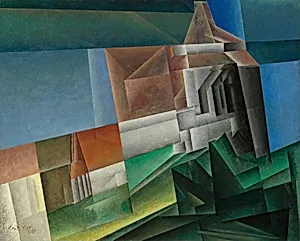
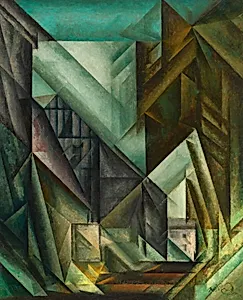
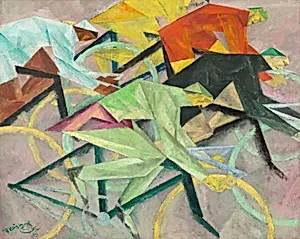
Around 1906 Feininger traveled to Paris, and his sustained engagement with French avant-garde painting—particularly the Orphist chromatic experiments of Robert Delaunay—catalyzed a decisive shift in his work. By the early 1910s he had developed a highly personal pictorial language in which architectural and landscape motifs are decomposed into intersecting planes and shafts of refracted light, combining the structural rigor of Cubism with an atmospheric lyricism and luminous color entirely his own. This achievement attracted the attention of the Blaue Reiter circle, and Feininger was invited to exhibit with the group in Berlin in 1913. In 1924 he joined Alexej Jawlensky, Paul Klee, and Wassily Kandinsky in the exhibition collective Die Blauen Vier (The Blue Four).
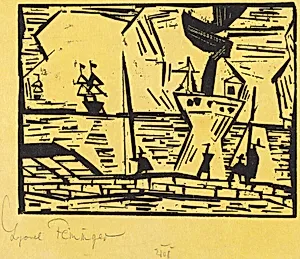
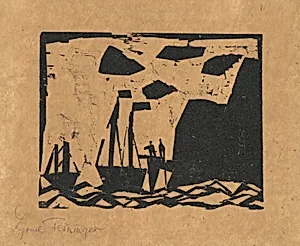
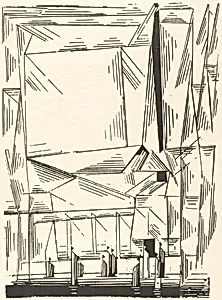
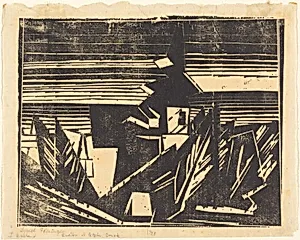
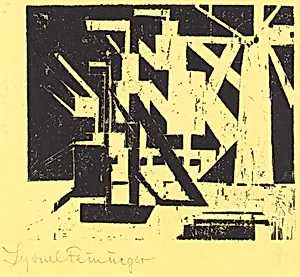
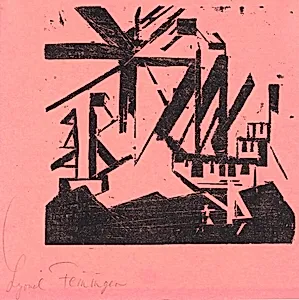
In 1919 Walter Gropius appointed Feininger as one of the founding masters of the Staatliches Bauhaus in Weimar, where he led the printmaking workshop. His woodcut Cathedral served as the frontispiece of the Bauhaus Manifesto published that year, becoming an iconic image of the institution's aspirations. He remained affiliated with the Bauhaus through its successive moves to Dessau and Berlin until the school was forced to close under Nazi pressure in 1933. In 1937 Feininger returned permanently to the United States, where he taught at Mills College in California and Black Mountain College in North Carolina.
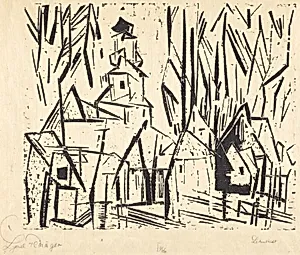
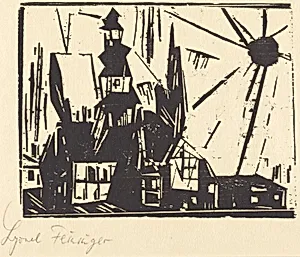
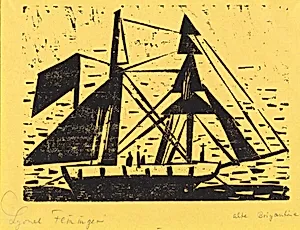
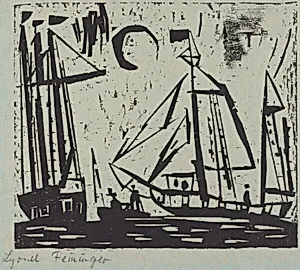
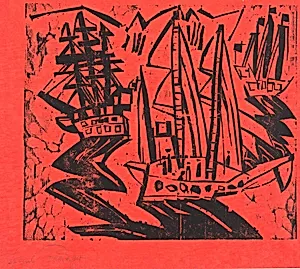
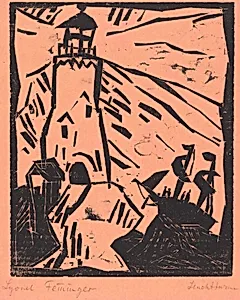
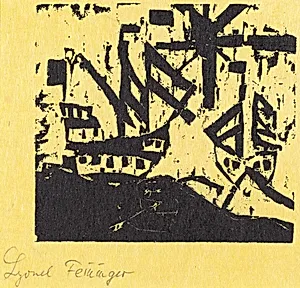
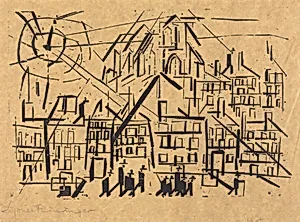
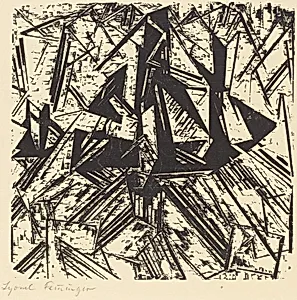
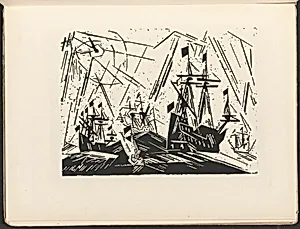
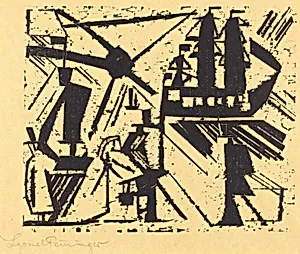
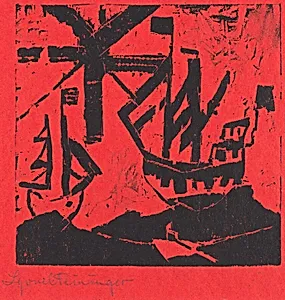
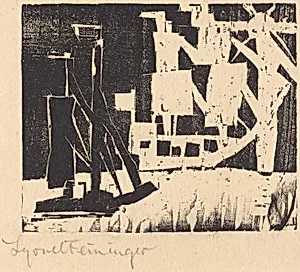
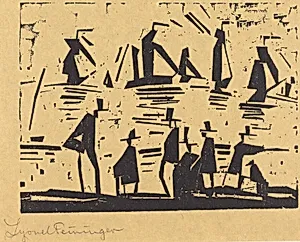
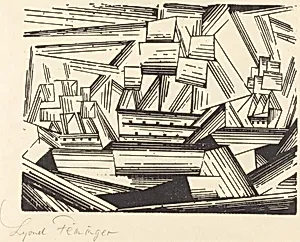
Feininger's mature paintings—of Baltic coastal towns, Gothic churches, and the streets of Halle and Weimar rendered in prismatic layered planes—are among the most distinctive contributions to the tradition of European Expressionism. His prints, watercolors, and drawings reveal an equally refined pictorial intelligence. He continued to work productively in New York until near the end of his life, and retrospective exhibitions have confirmed his standing as one of the essential artists of twentieth-century modernism.