Ctrl K
1881–1955
Hermann Max Pechstein (1881–1955) was born in Zwickau, Germany, the son of a craftsman in the textile industry. He trained as a decorative painter in his home city before enrolling at the School of Applied Arts in Dresden and then transferring to the Royal Academy of Fine Arts, where he studied under the painter Otto Gussmann. His early exposure to the work of Vincent van Gogh proved decisive in directing him toward an expressive, colour-saturated approach to painting that would define his mature output.
In 1906 Erich Heckel invited Pechstein to join Die Brücke, the German Expressionist collective founded in Dresden the previous year by Heckel, Ernst Ludwig Kirchner, Karl Schmidt-Rottluff, and Fritz Bleyl. Pechstein proved one of the group's most energetic contributors, working alongside his colleagues in a shared studio practice and developing the movement's characteristic vocabulary of jagged contour, bold flat colour, and raw emotional directness. After relocating to Berlin in 1908, he was expelled from Die Brücke in 1912 following a dispute over his decision to exhibit independently at the Berlin Secession.
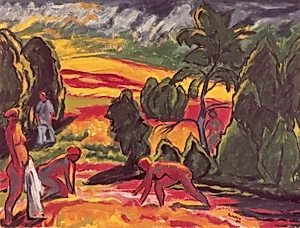
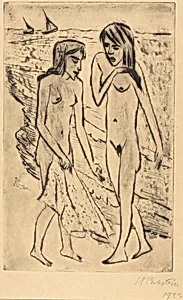
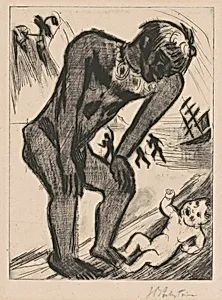
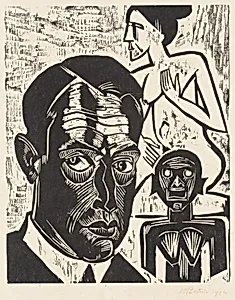
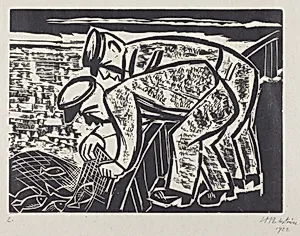
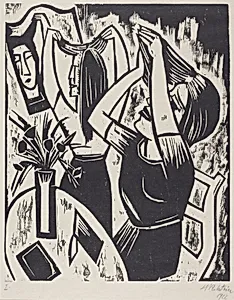
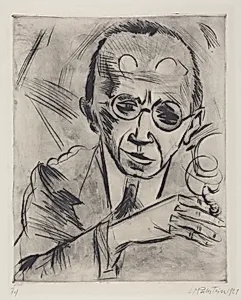
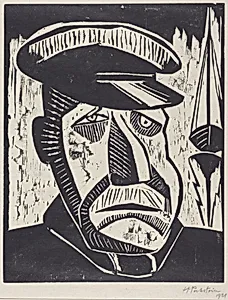
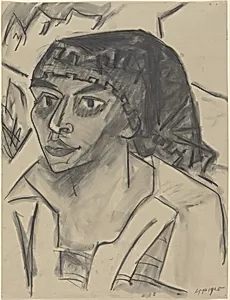
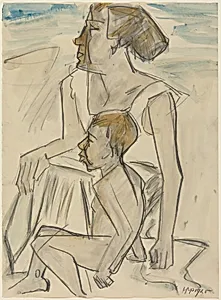
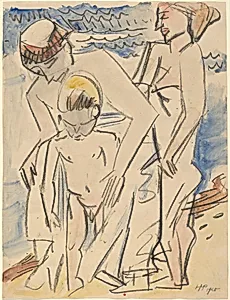
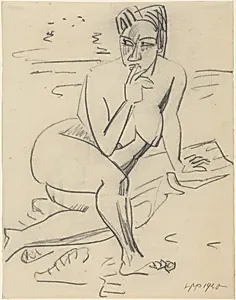
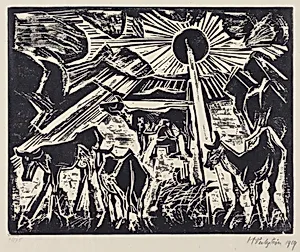
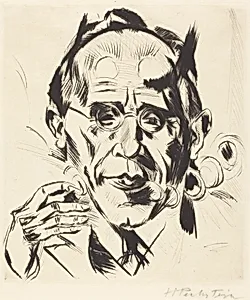
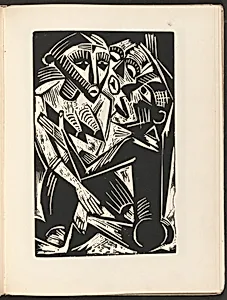
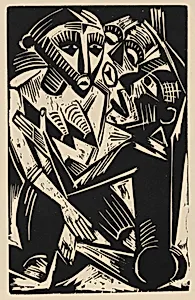
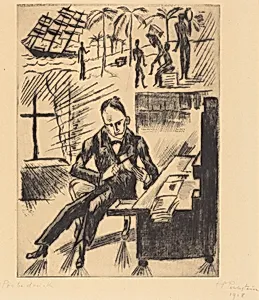
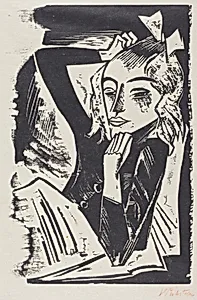
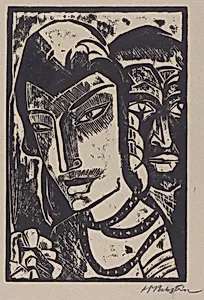
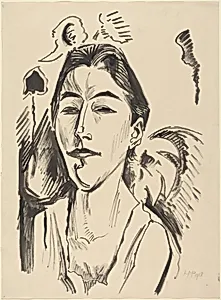
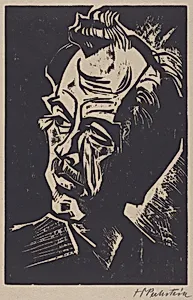
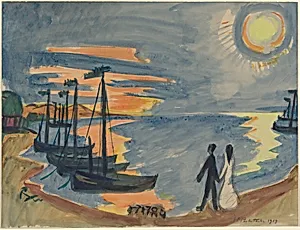
Pechstein's paintings of nudes, bathers, and landscapes are among the most vividly sensuous of the Expressionist generation, combining the influence of Henri Matisse's liberation of colour with an urgency distinctly his own. He was also a prolific printmaker, producing several hundred lithographs, woodcuts, and etchings over the course of his career. Following World War I, during which he served on the Western Front, he became a founding member of the Novembergruppe and pursued a more public role in German artistic life. The Nazi regime declared his work degenerate in 1933, removing more than three hundred of his paintings from German museum collections.
After World War II Pechstein was appointed to a professorship at the Berlin Academy of Arts, where he taught until near the end of his life. Although Die Brücke's collective reputation long overshadowed his individual contributions, scholarly attention in recent decades has restored Pechstein to his rightful place as one of German Expressionism's most inventive and prolific practitioners.