
Ctrl K
1711–1736
Nagata Yūji was a Kyoto-based master of makie lacquerware, active during the Shōtoku (1711–1716) and Kyōhō (1716–1736) eras of Japan's Edo period. Little is known of his early life, which remains sparsely documented, though he later moved to Edo and pursued interests as a tea master. Yūji signed his works—a rarity among lacquer artists of the time—under pseudonyms like Seiseishi (青々子, "child of Seisei") and Masatoki (方祝), directly referencing those of Ogata Kōrin (1658–1716), signaling his deep admiration for the Rinpa school's founder. Though too young to have trained directly under Kōrin, who died shortly after Yūji's activity began, he self-identified as the master's apprentice and emulated his bold, asymmetrical compositions in lacquer.
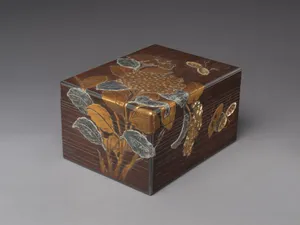
Working in the Rinpa tradition, Yūji innovated with techniques like gold and silver takamaki-e (raised sprinkled designs), hiramaki-e (flat sprinkled designs), greenish-blue lacquers, tin powder reliefs, and inlays of mother-of-pearl and pewter. His oeuvre features nature motifs rendered with vibrant asymmetry, such as the Document Box (Ryōshibako) with Hydrangeas and Butterflies at the Metropolitan Museum of Art, alive with gold makie flora and insects; ceremonial offering stands adorned with stylized motifs at the Minneapolis Institute of Art; a stationery set with black pines and deer; and a grand inkstone case and stationery box deemed his masterpiece by the Kyoto National Museum. Other treasures include sake cups with waves and waterbirds, and a portable dining set evoking Kōrin's influence.
Yūji's confident artistry earned patronage from Kyoto's elite, and his name endured in the mid-19th-century anthology *Makie-shi den*. Long overlooked, his legacy gained fresh recognition with the 2018 Miho Museum exhibition "Discovering Nagata Yūji: Unsung Makie Master," which traced his lineage to descendants like Nagata Shūsui and revealed technical secrets through scientific analysis. Today, Yūji exemplifies Rinpa's evolution in lacquer, bridging Kōrin's genius with innovative Edo-period craft.
All 1 artworks loaded