Ctrl K
1301–1374
Movements
Occupations
Ni Zan (1301–1374), born into a wealthy scholarly family in Wuxi, Jiangsu province, exemplified the reclusive literati ideal during the turbulent Yuan dynasty. Receiving a rigorous Confucian education amid Mongol rule's restrictions on Han Chinese officials, he cultivated poetry, calligraphy, and painting as expressions of personal integrity rather than professional pursuits. No formal teachers or art schools are documented in his training; instead, he developed his skills independently within elite scholarly circles. As famines, floods, and peasant revolts ravaged Jiangsu in the 1340s, Ni Zan distributed his vast estates to the needy and retreated to a houseboat, wandering southern China's rivers and painting for sustenance and solace during the Yuan's collapse.
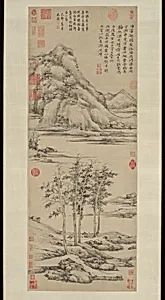
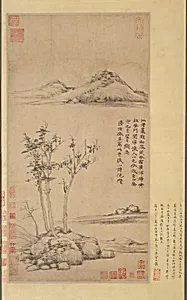
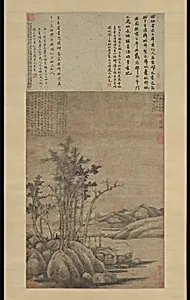
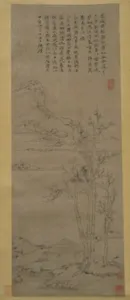
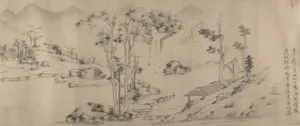
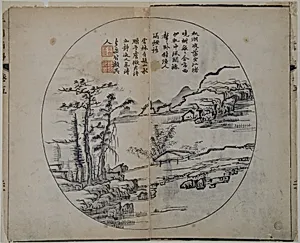
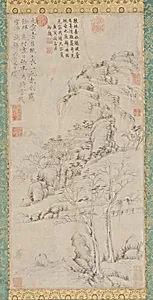
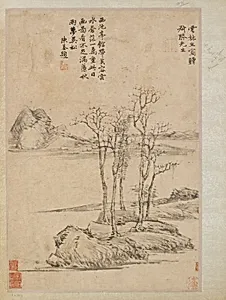
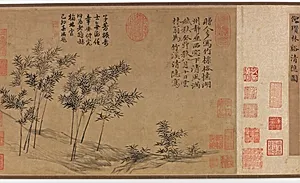
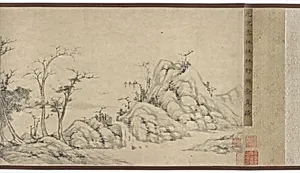
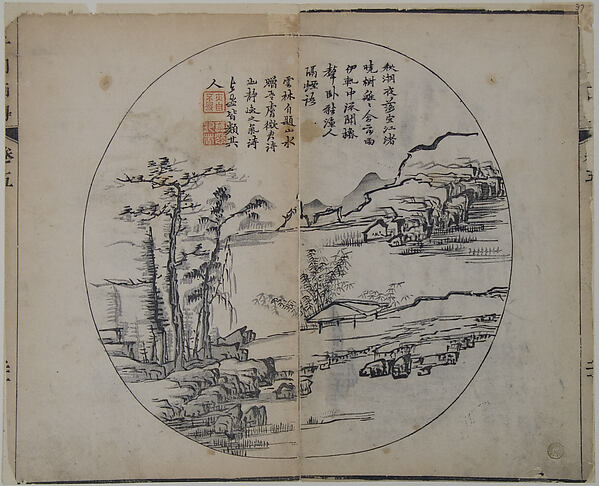
Renowned as one of the Four Masters of the Yuan dynasty alongside Huang Gongwang, Wu Zhen, and Wang Meng, Ni Zan pioneered a revolutionary literati style that rejected the ornate realism of Southern Song academy painting. His ink-monochrome landscapes feature stark, minimalist compositions: sparse, silhouetted trees on distant riverbanks, rustic huts evoking solitude, vast empty expanses of paper suggesting misty waters, and subdued brushwork conveying quiet introspection. Devoid of human figures and intricate details, these works prioritize emotional resonance over literal depiction, as Ni Zan declared in 1364, "I use bamboo painting to write out the exhilaration in my breast." This austere aesthetic influenced the Southern School's emphasis on scholarly amateurism.
Key masterpieces include *Six Gentlemen* (1345, Shanghai Museum), a hanging scroll painted by lamplight that metaphorically portrays six trees as virtuous scholars withdrawing from corrupt society amid Mongol rule.) *Twin Trees by the South Bank* (1353, Princeton University Art Museum) and *Rongxi Studio* (1372, National Palace Museum, Taipei) further exemplify his mature restraint. Late in life, after the Ming restoration in 1368, he revisited old haunts and created *Woods and Valleys of Mount Yu* (1372, Metropolitan Museum of Art), its tender brushwork radiating reclusive contentment shortly before his death in Wuxi.
Ni Zan's legacy endures as a cornerstone of Chinese literati painting, his economical style widely imitated yet challenging to authenticate, inspiring generations to value spiritual detachment over material splendor and technical virtuosity.
Wikidata (CC0); Getty ULAN (ODC-By)
All 10 artworks loaded