Ctrl K
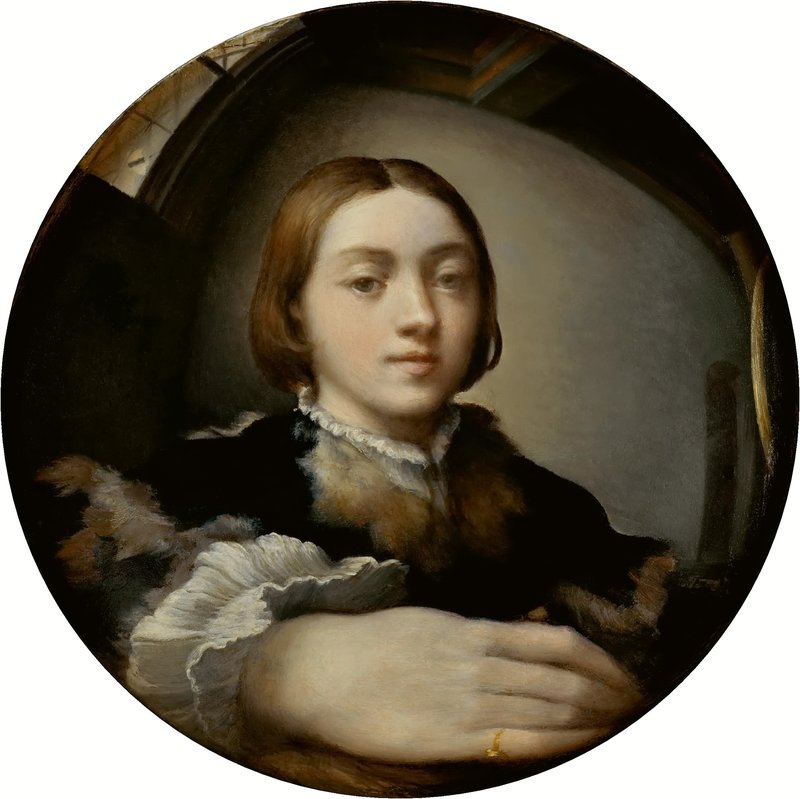
1503–1540
Movements
Occupations
Parmigianino (1503–1540), born Girolamo Francesco Maria Mazzola, was an Italian painter and printmaker who became one of the most influential figures of the first generation of Mannerist artists. Orphaned before his second birthday, he was raised by his painter uncles in Parma and showed extraordinary precocity, completing a major altarpiece by age eighteen. His elegant, sophisticated style—characterized by elongated figures, ambiguous spatial compositions, and a pursuit of what Giorgio Vasari called 'grace'—directly influenced El Greco, Tintoretto, and countless others. Parmigianino's journey to Rome in 1524, where he presented his famous self-portrait painted in a convex mirror, established his reputation among the papal court. After fleeing the Sack of Rome in 1527, he produced masterpieces including the iconic 'Madonna with the Long Neck.' His later obsession with alchemy led to a breach of contract and imprisonment, and he died at only 37, leaving his final works unfinished.
Born January 11, 1503 in Parma as the fourth child of painter Filippo Mazzola and Donatella Abbati.
Orphaned before his second birthday when his father died of plague; raised by mother and painter uncles Pier and Michele Ilario.
In 1515, helped complete a chapel decoration at San Giovanni Evangelista that his uncle had received as a commission.
By age eighteen, completed the Bardi Altarpiece, demonstrating remarkable early mastery of his craft.
Traveled to Rome in summer 1524, bringing three specimens of his work to impress Pope Clement VII.
Presented his famous self-portrait painted on a convex panel from his reflection in a convex mirror, astonishing the Roman court.
Working on the 'Vision of St. Jerome' when interrupted by soldiers during the Sack of Rome in May 1527.
Fled to Bologna, leaving behind works in progress and beginning a new phase of his career.
In Bologna, painted masterpieces including 'Madonna with St. Margaret and Other Saints.'
Returned permanently to Parma in 1531, receiving major commissions for church decorations.
Developed his signature style of elongated figures and sophisticated spatial ambiguity to its fullest expression.
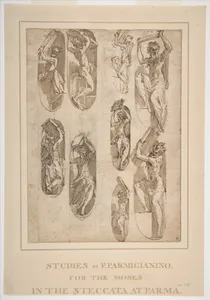
Began work on frescoes for Santa Maria della Steccata, a project that would ultimately lead to his downfall.
Created the iconic 'Madonna with the Long Neck' (1534–1540), left unfinished at his death.
Became obsessed with alchemy, neglecting his commission at the Steccata.
Imprisoned for breach of contract on the Steccata commission, fleeing to Casalmaggiore upon release.
Died of fever on August 24, 1540 at age 37; buried in the church of the Servite Friars with a cypress cross on his chest.
Artheon Research Team
Last updated: 2025-11-28
Biography length: ~850 words
Wikidata/Wikimedia Commons