
Ctrl K
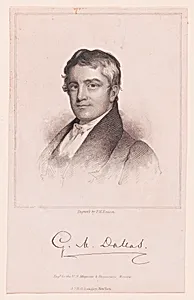
1816–1866
Patrick Henry Reason (born Patrice Rison; March 17, 1816 – August 12, 1898) was one of the earliest African-American engravers and lithographers in the United States. Born in New York City to Michel Rison, a native of Guadeloupe, and Elizabeth Melville, from Saint-Domingue (Haiti), he was one of four children in a family of Haitian and Caribbean descent. He attended New York’s African Free School, where his artistic talent emerged early; at age thirteen, his drawing of the school building served as the frontispiece for Charles C. Andrews’s 1830 history of the institution. Reason was later apprenticed to the English engraver and lithographer Stephen Henry Gimber in New York, gaining formal training in printmaking techniques.
Reason established his own shop and became known for producing portraits and illustrations for abolitionist publications, books, and journals. His notable works include an 1835 engraving of the iconic kneeling female slave figure, a widely circulated symbol of the antislavery movement; an 1840 portrait of Senator Benjamin Tappan; the frontispiece for Henry Bibb’s 1849 autobiography; and other images that appeared in periodicals and slave narratives. He also created a lithograph portrait of Bibb and engraved items such as the coffin plate of Daniel Webster. Working primarily in stipple engraving and lithography, Reason blended neoclassical precision with socially engaged imagery, often supporting the cause of Black equality through his art.
Beyond his studio practice, Reason was an active abolitionist and community leader. With his brother Charles Lewis Reason, he participated in New York’s Philomathean Society and helped establish the Grand United Order of Odd Fellows in America after facing racial exclusion from white fraternal organizations. He designed the society’s membership certificate, served as grand master of Hamilton Lodge No. 710, and composed the Ruth degree for female members. In 1862 he married Esther Cunningham of Leeds, England; the couple had one son, Charles Lewis Reason, who became a physician. In 1869 the family relocated to Cleveland, Ohio, where Reason continued engraving and jewelry work until his death.
Reason’s legacy endures as a pioneering Black printmaker whose technical skill and commitment to abolitionist causes helped shape visual culture in nineteenth-century America. His engravings provided dignified representations of African Americans and advanced the antislavery message at a time when few artists of his background had access to professional training or publication opportunities. Today, examples of his work are held in major collections, including a portrait of George Mifflin Dallas at the Metropolitan Museum of Art, underscoring his place in the history of American graphic arts.