
George Miflin Dallas
1830–66
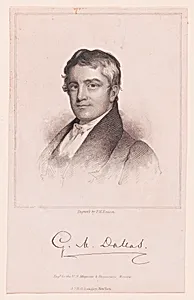
Medium
Intaglio
Dimensions
19 1/4 x 16 1/4 in. (48.9 x 41.3 cm)
Classification
Prints
Department
Drawings and Prints
Museum
Metropolitan Museum of Art, New York, NY
Credit
The Elisha Whittelsey Collection, Elisha Whittelsey Fund,1959
Accession Number
59.500.1372
Rights
Public Domain
Tags
Art Historical Context
This striking portrait of George Mifflin Dallas, created by artist Patrick Reason between 1830 and 1866, captures the dignified presence of its subject through the refined technique of intaglio printmaking. Housed in Metropolitan Museum of Art’s Department of Drawings and Prints, the work measures 19 1/4 by 16 1/4 inches and exemplifies the precision possible with this medium, where the image is incised into a metal plate to produce rich, detailed impressions. As a print, it allowed for wider circulation of the likeness, reflecting the growing interest in portraiture during the nineteenth century. Intaglio processes, such as engraving or etching, were particularly valued for their ability to render fine lines and subtle tonal variations, lending a sense of formality and permanence to depictions of notable figures. Reason’s choice of this method highlights the technical skill involved in translating a human likeness onto the plate, resulting in a composition that emphasizes the subject’s stature through careful attention to facial features and attire. Acquired by the museum through the Elisha Whittelsey Collection in 1959, this work stands as a compelling example of early American printmaking traditions. Its classification as a portrait underscores the era’s fascination with commemorating prominent individuals, inviting viewers to appreciate both the subject’s historical role and the enduring artistry of the printed image.
About the Artist
Patrick Reason · 1816–1866
Patrick Henry Reason (born Patrice Rison; March 17, 1816 – August 12, 1898) was one of the earliest African-American engravers and lithographers in the United States. Born in New York City to Michel Rison, a native of Guadeloupe, and Elizabeth Melville, from Saint-Domingue (Haiti), he was one of four children in a family of Haitian and Caribbean descent. He attended New York’s African Free School,...