Ctrl K
1879–1940
Paul Klee (1879–1940) was born in Münchenbuchsee, near Bern, Switzerland, into a family of musicians; his father was a German music teacher and his mother a trained singer. The musical environment of his childhood left permanent traces on his art, informing his lifelong interest in rhythm, counterpoint, and structural variation. He studied painting in Munich from 1898, absorbing the currents of late Symbolism and Post-Impressionism, and completed an extended study trip to Italy in 1901–02 before returning to Bern to establish himself as an independent artist.
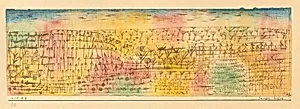
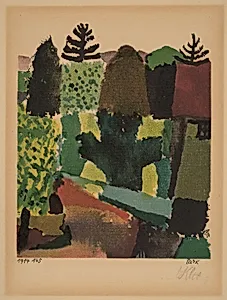
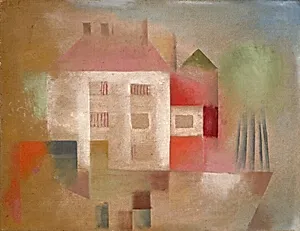
Klee's development accelerated through his connections with the avant-garde. By 1911 he had settled in Munich and joined the circle of Vasily Kandinsky and Franz Marc, exhibiting with their Der Blaue Reiter group in 1912. A journey to Tunisia in 1914 with August Macke and Louis Moilliet proved transformative: the dazzling light of North Africa crystallised his understanding of colour as an autonomous expressive element, leading to the luminous watercolours that established his reputation. During the Weimar years he taught at the Bauhaus from 1921 to 1931, first in Weimar and then in Dessau, producing an extraordinary body of pedagogical writing alongside nearly half of his total artistic output — a catalogue that would ultimately encompass roughly ten thousand works.
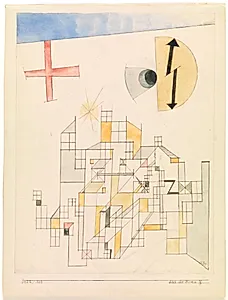
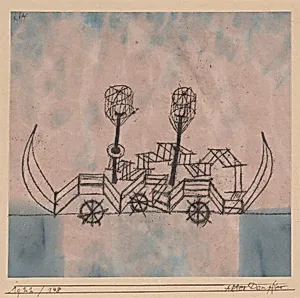
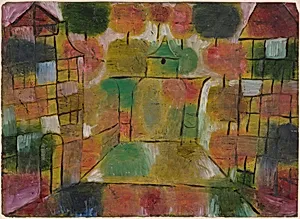
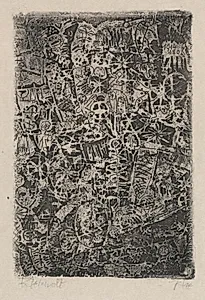
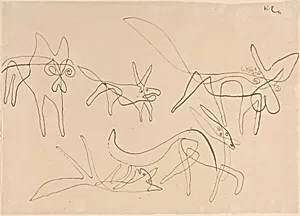
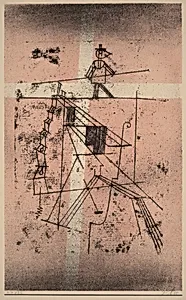
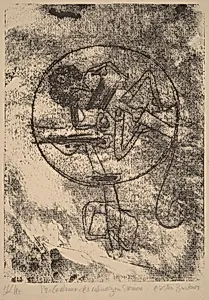
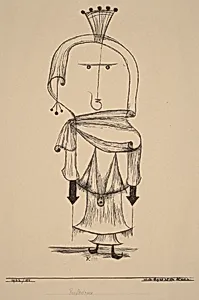
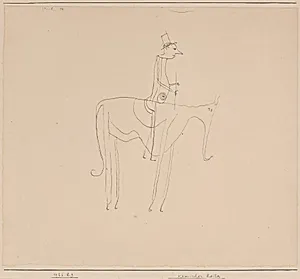
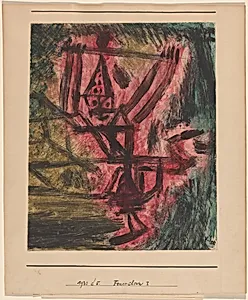
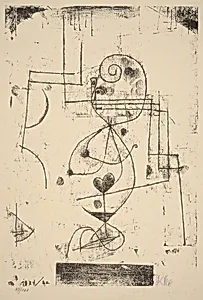
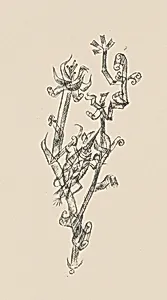
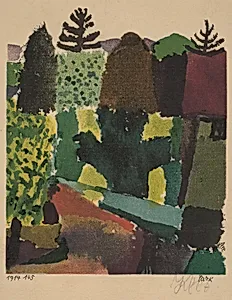
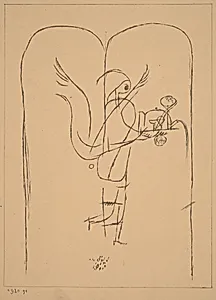
Klee's style defies easy categorisation. Drawing simultaneously on Expressionism, Cubism, and Surrealism while remaining beholden to none, he developed a personal iconography of arrows, grids, figures, and pictographic signs that hovered suggestively between the childlike and the sophisticated. Works such as Twittering Machine (1922) and Ad Parnassum (1932) demonstrate his capacity to fuse technical invention — including the use of transfer drawing and inventive ground preparations — with poetic imagination. From 1931 he taught at the Düsseldorf Academy, but the Nazi seizure of power forced his return to Bern in 1933, and the regime subsequently confiscated more than a hundred of his works from German public collections.
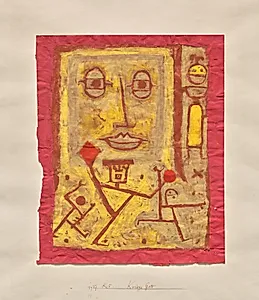
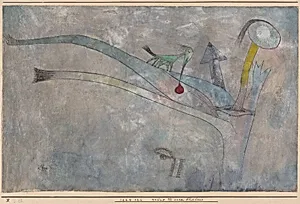
In his final years Klee was diagnosed with scleroderma, a progressive illness that stiffened his hands and altered the character of his late work. Yet the drawings and paintings produced between 1937 and his death in 1940 are among his most powerful: large, hieratic, and stripped of ornament. His influence on twentieth-century art was pervasive, inspiring generations of abstract painters, graphic designers, and educators who found in his writings — particularly the Pedagogical Sketchbook (1925) — a rigorous yet liberating guide to the fundamentals of visual form.