Ctrl K
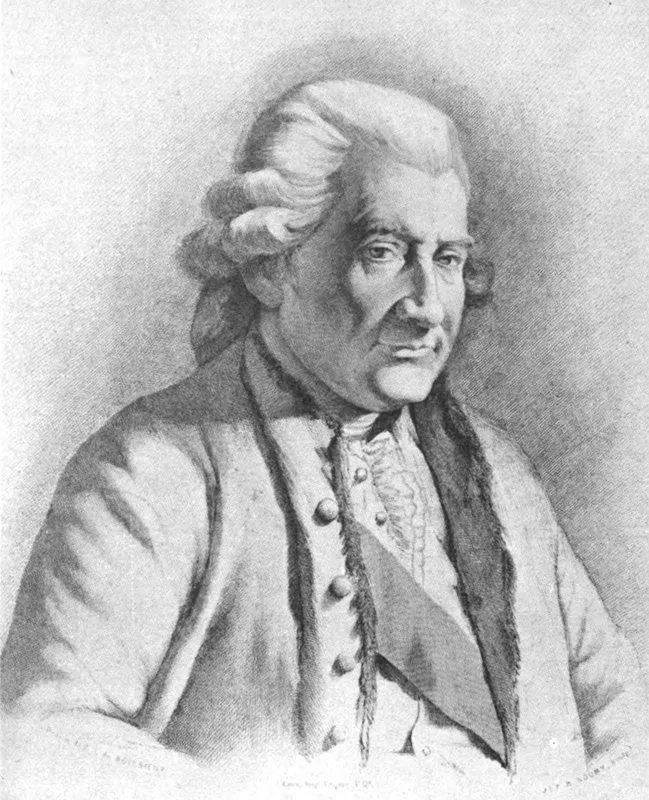
1723–1804
Philippe de Lasalle (1723–1804) was born on September 2 in the small town of Seyssel in the Ain department of France, the son of a local finance official. Orphaned at just one year old, he was raised by relatives and moved to Lyon at age fourteen to live with an uncle. There, he began his artistic training as an apprentice to the painter Daniel Sarrabat, a prominent Lyonnais figure known for instructing silk designers. Lasalle further honed his skills in Paris, studying under the Rococo masters François Boucher and Jean-Jacques Bachelier, a specialist in floral motifs, while working at the prestigious Manufacture des Gobelins and the Savonnerie tapestry works. Returning to Lyon in 1744, he married Élisabeth, daughter of silk manufacturer Charryé, with whom he partnered, solidifying his entry into the city's famed "Grande Fabrique" of silk production.
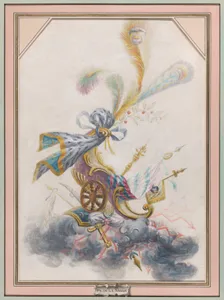
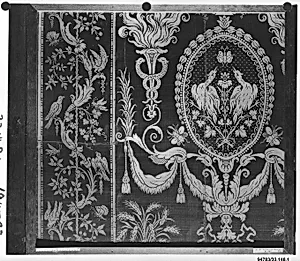
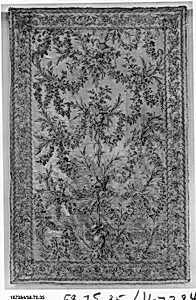
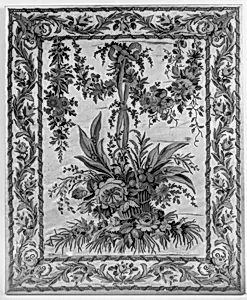
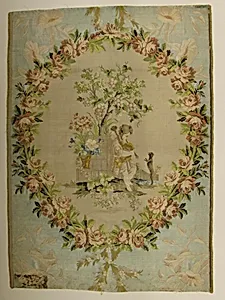
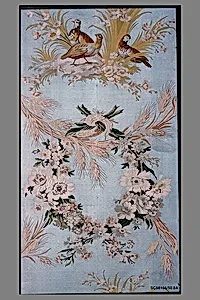
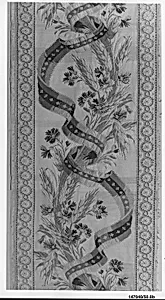
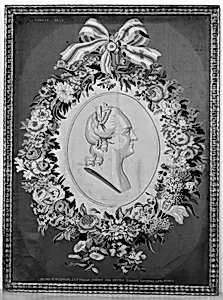
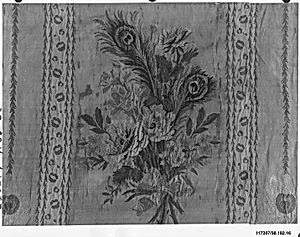
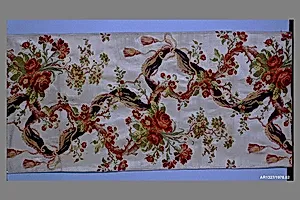
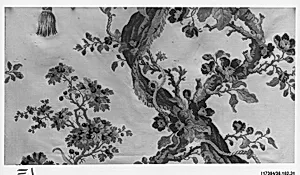
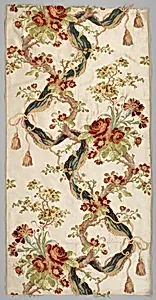
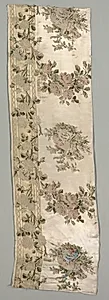
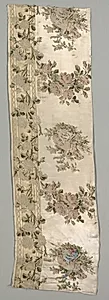
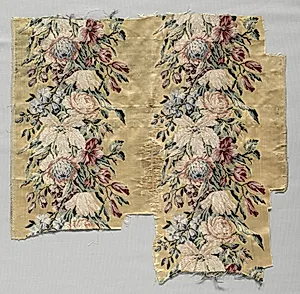
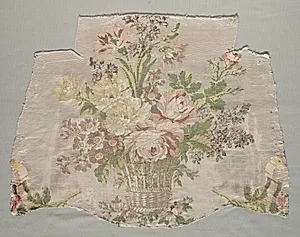
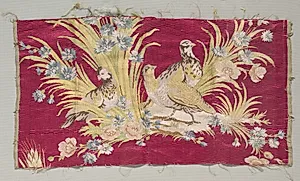
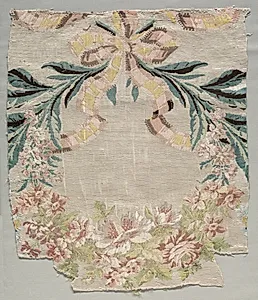
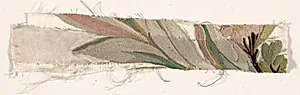
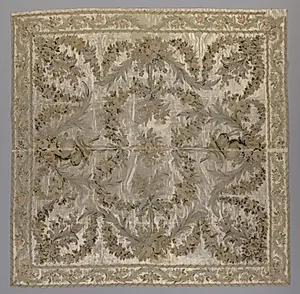
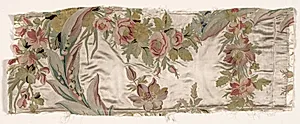
In Lyon, Lasalle emerged as a groundbreaking dessinateur-ornemaniste and fabricant, blending artistry with technical innovation during the height of the French silk industry. Appointed professor of drawing for the silk weavers' apprentices in 1760, he revolutionized weaving techniques, including the mise en carte (translating designs to loom cards), the métier à grande tire, and in 1770, a removable semple device that enabled larger-scale patterns for upholstery and wall hangings without reprogramming looms. His style evolved from the exuberant Rococo florals and birds—rendered realistically with vibrant colors, chenille for velvet effects, and subtle black accents—to the symmetrical, balanced compositions suited to Louis XVI neoclassicism, emphasizing nature motifs like peacocks, partridges, and garlanded bouquets. Major works include the brocaded lampas "Peacock and Pheasants" (1773) and woven portrait of Louis XV (1771) for Catherine the Great of Russia; "Les Perdrix" (1771–72); silks for Marie-Antoinette's apartments, Louis XVI's chamber at Saint-Cloud, and Fontainebleau; and commemorative textiles like the Annexation of Crimea (1783). His innovations extended to the first woven portraits in silk, drawing on Gobelins traditions adapted for Lyon's commercial output.
Lasalle's prestige peaked with royal patronage across Europe, supplying courts in France, Russia, Austria, and Spain. In 1775, Controller-General Turgot awarded him the Order of Saint-Michel and a 6,000-livre pension; Louis XVI later ennobled him. Though the French Revolution and silk industry's collapse curtailed his later years, his legacy endures as a pioneer who married art and industry, elevating Lyon's silks to fine art status. A dedicated room in Lyon's Musée des Tissus displays his works, and a street bears his name, honoring his role in bridging Rococo opulence with neoclassical refinement.