Ctrl K
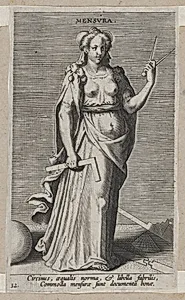
1537–1612
Philips Galle (1537–1612) was a leading Netherlandish engraver, designer, and print publisher whose career bridged the vibrant artistic scenes of Haarlem and Antwerp. Born in Haarlem, he studied under the humanist engraver Dirck Volkertsz. Coornhert, honing his skills in reproductive printmaking. Early on, Galle produced engravings after the Haarlem master Maarten van Heemskerck, capturing the Mannerist elegance of biblical and allegorical subjects. By 1557, he had relocated to Antwerp, entering the workshop of the influential publisher Hieronymus Cock at Aux Quatre Vents, where he engraved for a decade, mastering intricate line work that translated paintings into widely disseminated prints.
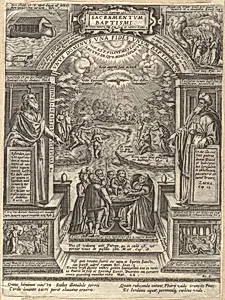
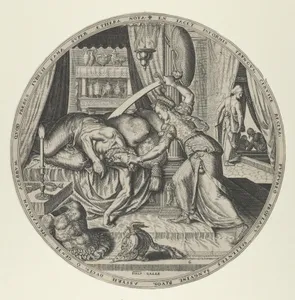
In Haarlem from 1563, Galle established himself as an independent publisher, issuing prints after artists like Johannes Stradanus and Maerten de Vos, including the 1569 series *Counts of Holland and Zeeland* in collaboration with Willem Thibaut. Fleeing the Siege of Haarlem, he settled permanently in Antwerp by 1570, succeeding Cock and becoming a citizen in 1571. There, his workshop flourished, producing over 2,500 prints by 1606. Galle excelled in reproductive engravings after contemporaries such as Anthonie van Blocklandt, Hans Bol, and Pieter Bruegel the Elder—most notably *The Alchemist*—as well as series like *The Seven Sacraments* (1576) after Bol. His precise, atmospheric etchings popularized moral allegories, landscapes, and genre scenes, such as *Man Born to Toil* from *The Reward of Labour and Diligence*.
Galle's legacy endures through his family dynasty and workshop, which trained luminaries like Hendrick Goltzius and the Collaert brothers. Married to Catharina van Rollant in 1569, he fathered five artistic children, including sons Theodoor and Cornelis Galle the Elder, who continued the business; daughters wed engravers Adriaen Collaert and Karel de Mallery. This network sustained Antwerp's dominance in printmaking into the seventeenth century, disseminating Netherlandish art across Europe and influencing reproductive techniques that shaped Baroque engraving.