Ctrl K
1762–1853
Pierre François Léonard Fontaine (1762–1853) was a pivotal figure in French neoclassical architecture, renowned for his masterful interiors, urban planning, and decorative designs that defined the Empire style. Born in Pontoise to architect and fountain designer Pierre Fontaine, he assisted his father on hydraulic projects at the Château de L'Isle-Adam in 1778–1779 before moving to Paris in 1779. There, he studied under Antoine-François Peyre the younger, earning election to the Académie de Beaux-Arts in 1782 and the second Prix de Rome in 1785. Residing at the French Academy in Rome from 1787 to 1790, Fontaine met fellow student Charles Percier, forging a lifelong partnership that began formally in 1794.
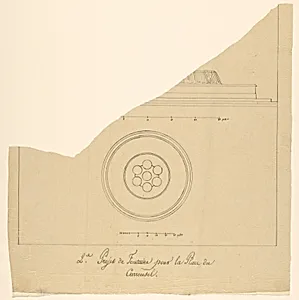
Fontaine and Percier rose to prominence as Napoleon's preferred architects, blending rigorous neoclassicism with opulent Directoire and Empire aesthetics inspired by ancient Rome and Egypt. They restored the Château de Malmaison (1800–1802), refurbished the Palais des Tuileries and Château de Saint-Cloud, and designed the Arc de Triomphe du Carrousel (1806–1808), for which Fontaine won the Grand Prix of Architecture in 1810. Their ambitious Louvre-Tuileries linkage included the Grande Galerie refurbishment (1804–1812) and the western stretch of rue de Rivoli (from 1802). Fontaine handled public commissions adeptly, while Percier focused on conceptual innovations, together revolutionizing furniture, tapestries, and porcelain at manufactories like Gobelins and Savonnerie.
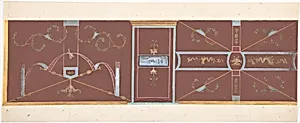
In his later solo endeavors, Fontaine transformed the Château de Neuilly for Louis Philippe I (1820), built the Chapelle expiatoire (1816–1826), and created the Galerie d'Orléans in the Palais-Royal (1829–1831). He published influential works like *Recueil de décorations intérieures* (1812) with Percier, documenting their designs. Serving as architect to Napoleon, Louis XVIII, and beyond, Fontaine's seven-decade career shaped Parisian grandeur and Empire style's spread across Europe. Married late in life, he adopted his wife's daughter and designed Percier's tomb, where both rest in Père Lachaise Cemetery. His legacy endures in neoclassical monuments that embody revolutionary pomp and timeless elegance.