Ctrl K
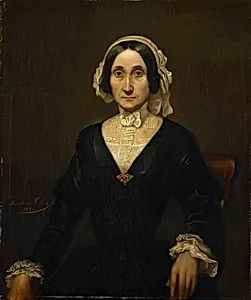
**Raden Saleh Sjarif Boestaman (also known as Raden Sarief Bastaman Saleh)** was a pioneering Romantic painter of Arab-Javanese descent, widely recognized as Indonesia’s first modern artist. Born around 1811 in Terboyo near Semarang in the Dutch East Indies (present-day Indonesia), he came from a noble Hadhrami family. Raised by an uncle who served as regent of Semarang, the young nobleman showed early artistic promise.
His initial training came in Bogor under the Belgian artist A.J. Payen, who recognized his talent and helped secure a Dutch government scholarship. In 1829, Saleh traveled to Europe, where he studied in The Hague under portraitist Cornelis Kruseman and landscapist Andries Schelfhout. He remained in the Netherlands until 1839, then spent years traveling across Europe, including time at the court of Ernest I, Duke of Saxe-Coburg and Gotha, and visits to Paris where he encountered the work of Horace Vernet. These experiences immersed him in the Romantic movement, blending European techniques with his own cultural perspective.
Saleh excelled in dramatic animal scenes, historical subjects, and landscapes. Among his most celebrated works are *The Arrest of Pangeran Diponegoro* (1857), which reinterprets a pivotal moment from the Java War with a distinctly Javanese viewpoint; *Deer Hunt* (1846); and powerful depictions of wildlife such as *Lion Attacking a Horse* (1840) and tiger hunts. He also produced portraits of European nobility and colonial officials, as well as Javanese scenes like erupting Mount Merapi. After returning to the Dutch East Indies in 1852, he served as conservator of the colonial art collection and court painter while continuing to create works that fused Western Romanticism with local themes.
Upon his return, Saleh married twice—first to Constancia von Mansfeldt, with whom he built a striking Neogothic residence in Cikini (now part of a Jakarta hospital), and later to Raden Ayu Danudirja. He died in Bogor on 23 April 1880. His legacy endures as the founder of modern Indonesian painting, bridging Javanese traditions and European Romanticism while inspiring generations of artists. His paintings remain in major collections and continue to symbolize cultural exchange and national identity.