Ctrl K
1825–1892
Randolph Rogers (1825–1892) was a prominent American Neoclassical sculptor whose career bridged the worlds of popular genre sculpture and grand public commissions. Born on July 6, 1825, in Waterloo, New York, the son of a carpenter and millwright, Rogers grew up in Ann Arbor, Michigan, after his family relocated westward in pursuit of opportunity. Showing early aptitude for drawing and wood engraving—evidenced by his published woodcuts in the local *Michigan Argus*—he worked odd jobs, including at a bakery, as a cook for his older brother's flour mill crew, and in a dry-goods store. In 1847, at age 22, he moved to New York City seeking engraving work but found none; instead, his talent for sculpting busts impressed his dry-goods employers, who funded his pivotal journey to Europe. Arriving in Florence in 1848, Rogers studied under the esteemed Neoclassical master Lorenzo Bartolini, honing his skills in the rigorous tradition of idealized human forms and classical anatomy.
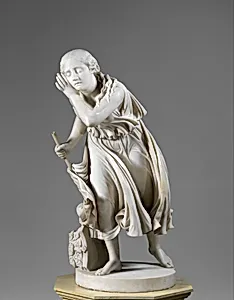
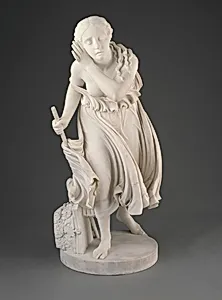
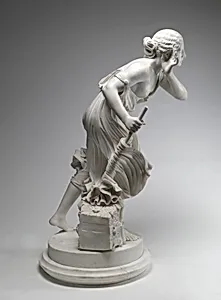
Settling permanently in Rome by 1855, Rogers embraced the Neoclassical style, characterized by its polished marble surfaces, dramatic poses, and allusions to antiquity, while infusing it with sentimental narratives appealing to Victorian tastes. He gained international acclaim with *Nydia, the Blind Flower Girl of Pompeii* (1859–1860), a marble statue inspired by Edward Bulwer-Lytton's novel *The Last Days of Pompeii*, depicting a sightless girl guiding her charge through catastrophe; replicas proliferated in American homes and institutions, including the University of Michigan Museum of Art. Rogers's oeuvre expanded to monumental works, such as the bronze *Columbus Doors* (1871–1881) for the U.S. Capitol, featuring reliefs of the explorer's life in a style evoking Lorenzo Ghiberti's Baptistery doors, and numerous Civil War memorials, including statues honoring Union generals like George Gordon Meade.
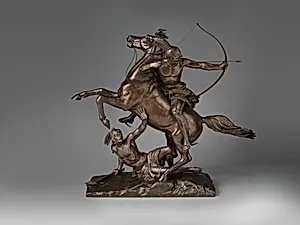
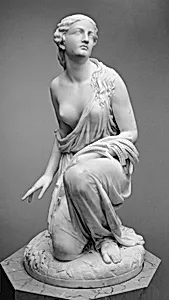
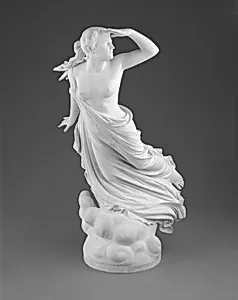
Rogers's legacy endures as an expatriate artist who democratized sculpture, producing affordable plaster and bronze reductions alongside elite commissions, thus shaping public taste in 19th-century America. His workshop in Rome became a hub for aspiring sculptors, and his works—over 100 reductions alone—populate museums like the Smithsonian American Art Museum and the National Gallery of Art. Dying in Rome on January 15, 1892, Rogers left a testament to Neoclassicism's adaptability, blending European refinement with American optimism.