Ctrl K
1656–1690
Raymond Lafage (1656–1684) was a French Baroque draughtsman, etcher, and engraver renowned for his dynamic mythological and religious compositions. Born in Lisle-sur-Tarn on October 1, 1656, he began as an autodidact before studying in the atelier of Jean Pierre Rivalz in Toulouse. This training grounded him in the French academic tradition while allowing his independent spirit to flourish.
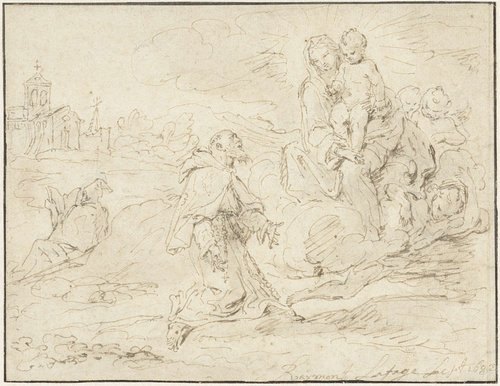
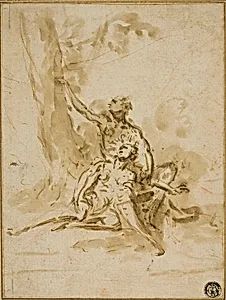
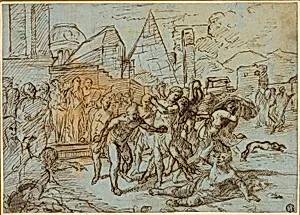
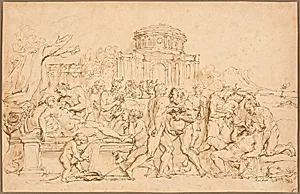
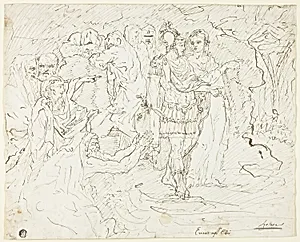
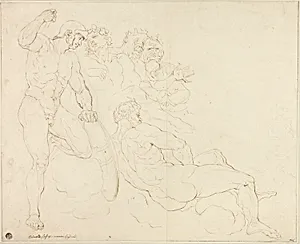
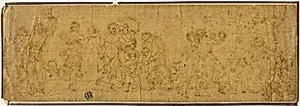
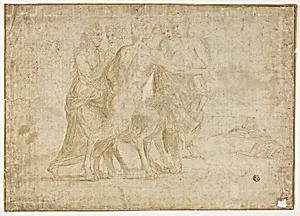
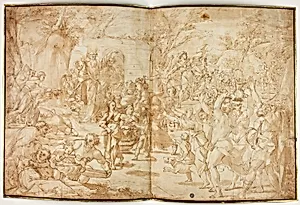
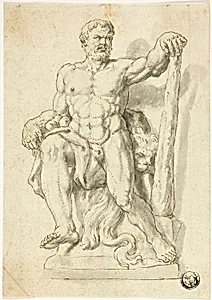
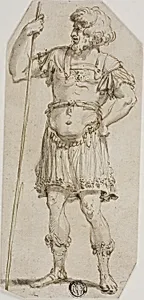
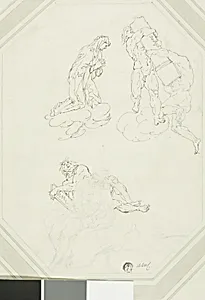
In 1679–1680, Lafage traveled to Rome, where he won a prize in drawing at the Accademia di San Luca, sharpening his command of classical forms and dramatic lighting. He later journeyed to the Netherlands alongside the engraver Jan van der Bruggen. Though his attempts to establish himself in Paris proved unsuccessful, he remained active outside official circles. In 1683, the city of Toulouse commissioned him to design ten scenes from its history for the Hôtel de Ville, works later executed by other artists. His surviving drawings and prints, such as *The Martyrdom of Saint Lawrence* and scenes of bacchanals or biblical subjects like *Moses and the Brazen Serpent*, showcase fluid pen work, energetic figures, and a taste for theatrical narrative typical of the Baroque.
Lafage died in Lyon on November 4, 1684, at the age of twenty-eight. His legacy endures through a dedicated museum in his birthplace of Lisle-sur-Tarn and a commemorative bust sculpted by Jan van der Bruggen. Collectors and institutions continue to prize his graphic output for its vitality and technical brilliance, preserving his reputation as one of the most gifted French draughtsmen of the late seventeenth century.