Ctrl K
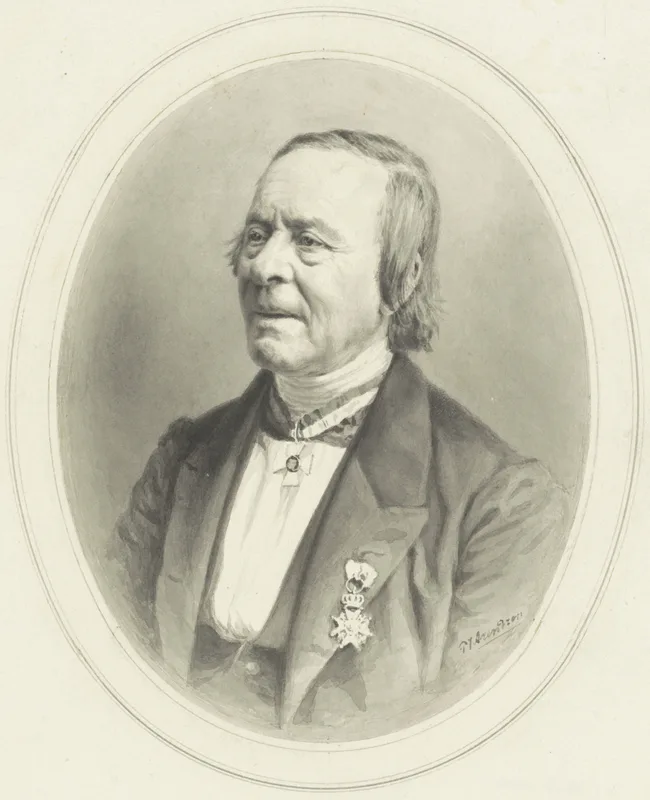
1793–1868
Movements
Occupations
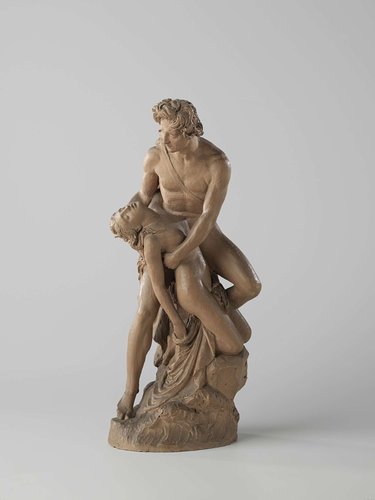
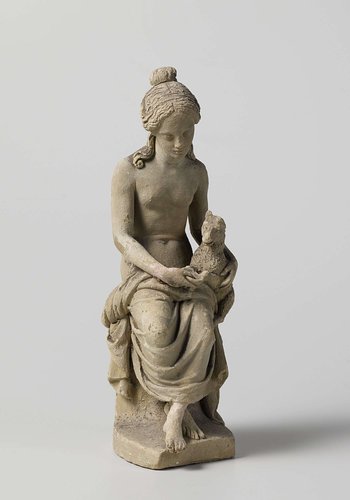
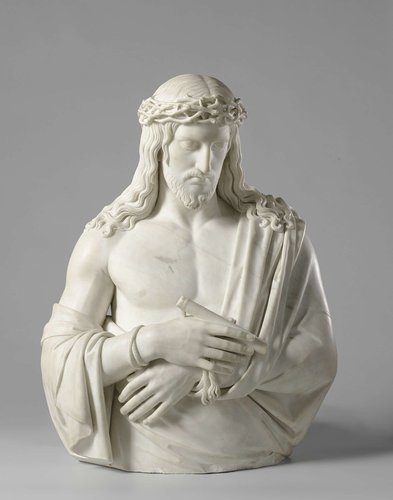
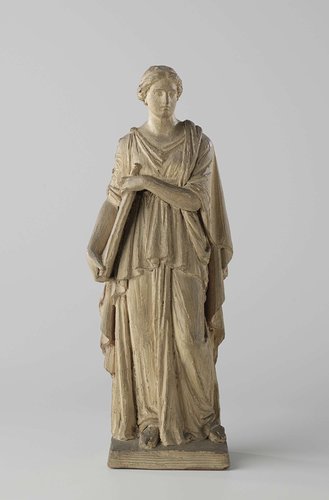
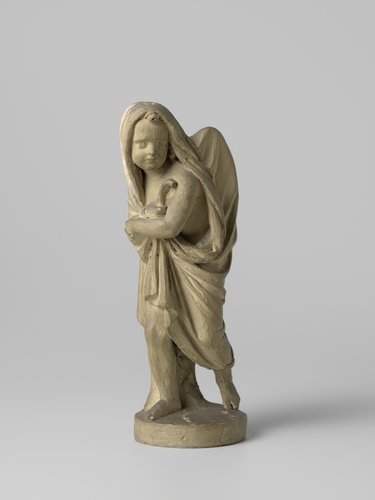
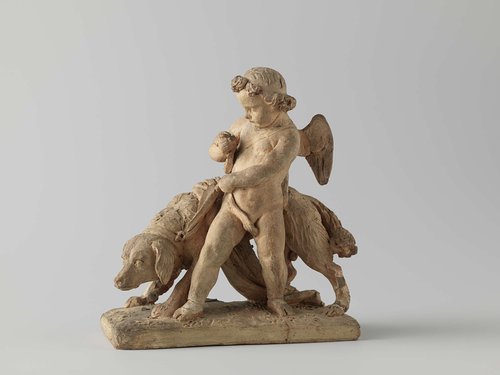
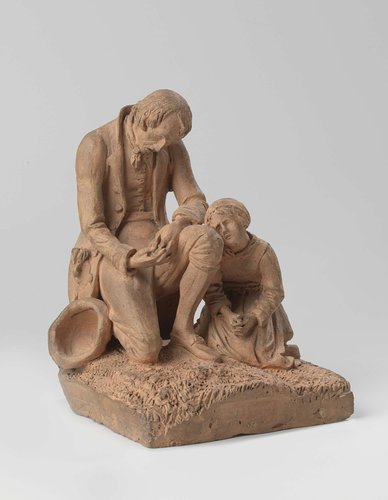
Louis Royer (1793–1868), also known as Lodewyk Royer, was a Flemish sculptor who became the preeminent figure in Dutch sculpture during the first half of the nineteenth century. Born in Mechelen on June 19, 1793, Royer trained in the Flemish academic tradition before pursuing advanced studies in Paris and Rome, where he absorbed the neoclassical aesthetic that would characterize his mature work. After establishing himself in Amsterdam in 1820, he received royal patronage from King William I of the Netherlands and became court sculptor, creating portrait busts of the entire Dutch royal family. His appointment as director of the Royal Academy of Art in Amsterdam in 1840 cemented his institutional influence over Dutch sculpture for a generation. Royer's artistic significance resided in his role as the primary sculptor of Dutch national identity during a crucial period of nation-building. Following the establishment of the United Kingdom of the Netherlands in 1815, there was enormous demand for public monuments celebrating Dutch history and national heroes. Royer received the most prestigious of these commissions, creating monumental statues of figures including Rembrandt, Joost van den Vondel, William the Silent, and Michiel de Ruyter. These bronze and stone figures, placed in prominent urban locations, helped shape Dutch collective memory and national consciousness during the nineteenth century. Dubbed the 'Canova of the Netherlands,' Royer worked primarily in marble, creating sculptures characterized by smooth surfaces, idealized proportions, and restrained emotion—hallmarks of neoclassical aesthetics. Though trained as a Fleming, he spent nearly five decades in the Netherlands, and his work became inextricably linked with Dutch cultural identity. His death in Amsterdam on June 5, 1868, at age 74, marked the end of an era in Dutch sculpture. The monuments he created remain landmarks in Dutch cities, continuing to define urban spaces and embody the nineteenth-century vision of Dutch national heritage.
Louis Royer was born on June 19, 1793, in Mechelen (Malines), a historic Flemish city in what was then the Austrian Netherlands under French revolutionary occupation. His birth came during a tumultuous period—the French Revolutionary Wars had transformed the political landscape of the Low Countries, and by the time of Royer's childhood, Mechelen was incorporated into the French Republic and later the French Empire.
Despite the political upheavals, Mechelen maintained artistic traditions, and the city possessed an established academy of art. Royer demonstrated early artistic talent, and his family evidently possessed sufficient means to support his artistic education. He enrolled at the Mechelen Academy, where he received his initial instruction in drawing and sculpture.
At the academy, Royer studied under local masters who transmitted the traditions of Flemish sculpture. His early training emphasized careful observation from life and from classical casts, mastery of human anatomy, and understanding of proportion. The curriculum reflected the academic principles that had shaped European art education since the Renaissance, modified by neoclassical preferences for idealized form and restrained expression.
Around 1810, Royer's education advanced to the next level when he departed for Paris to continue his studies. Paris, as the capital of Napoleon's empire, had become Europe's dominant artistic center, home to Jacques-Louis David, Antoine-Jean Gros, and other leading painters, as well as sculptors including Antonio Canova (who worked in Paris during the Empire period).
In Paris, Royer would have encountered the fully developed neoclassical aesthetic that dominated official French art. He studied the technique of working in marble, learning to translate clay or plaster models into permanent stone—a demanding process requiring both physical strength and refined sensitivity. He absorbed the neoclassical emphasis on smooth, continuous surfaces, harmonious proportions derived from classical Greek sculpture, and idealized rather than strictly realistic representation.
The Parisian sojourn, lasting approximately a year, provided crucial exposure to contemporary developments in European sculpture and to the administrative systems that connected artists with official patronage. These lessons would prove valuable when Royer later sought royal commissions in the Netherlands.
In 1820, a significant opportunity arose that would shape Royer's career trajectory. He relocated to Amsterdam and competed for the newly re-instituted Dutch Prix de Rome, a prestigious competition that King William I had revived in 1817 as part of his program to develop Dutch cultural institutions. The prize offered the winner an extended period of study in Rome, the traditional destination for sculptors seeking to study classical antiquity firsthand.
In 1823, Royer achieved a signal honor: he became the first sculptor to win the Dutch Prix de Rome. This victory provided both financial support and official recognition, establishing Royer's position within the Dutch art world despite his Flemish origins. The prize enabled him to travel to Rome for an extended period of study.
In Rome, Royer encountered the epicenter of neoclassical sculpture. The city offered unparalleled access to ancient Roman and Greek sculptures, which sculptors studied intensively to understand classical principles of proportion and composition. Royer almost certainly encountered the work of Bertel Thorvaldsen, the Danish sculptor who had established a major workshop in Rome and whose refined neoclassical style influenced sculptors throughout Europe.
Royer may also have had contact with the studio of Antonio Canova, the Italian master who had dominated European sculpture in the early nineteenth century. Though Canova died in 1822, his workshop continued operating, and his aesthetic influence remained pervasive. The smooth, idealized surfaces and graceful poses characteristic of Canova's work clearly influenced Royer's developing style.
The Roman experience provided both artistic education and professional networking. Royer established connections with other sculptors, patrons, and art administrators—relationships that would support his subsequent career in the Netherlands.
Returning to Amsterdam from Rome, Royer quickly received the recognition his training and Prix de Rome victory merited. King William I, who actively promoted Dutch arts and culture as part of his nation-building project, appointed Royer as court sculptor. This position brought both prestige and lucrative commissions.
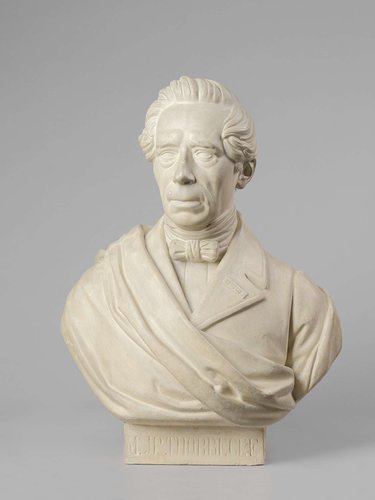
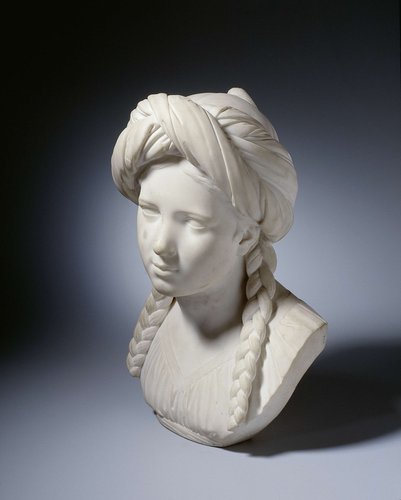
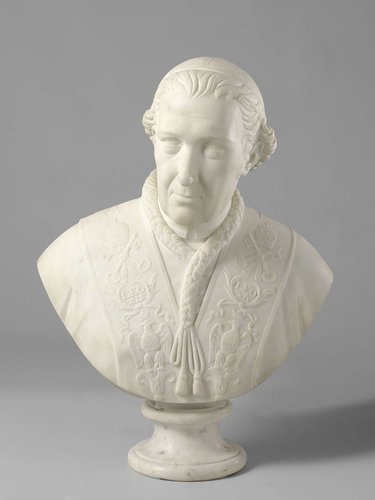
Royer's first major royal commission involved creating portrait busts of the entire Dutch royal family. Working in marble, he produced idealized yet recognizable likenesses of William I, Queen Wilhelmina, their children, and other family members. These busts, displayed in royal palaces and government buildings, served both artistic and political purposes—they made the royal family visually present throughout the kingdom and established a standardized, dignified image of the monarchy.
The portrait busts demonstrated Royer's technical mastery. He skillfully rendered individual physiognomies while maintaining the idealized, timeless quality valued in neoclassical portraiture. The smooth carving of marble faces, the careful articulation of period hairstyles and clothing, and the dignified poses all reflected his Roman training and understanding of classical prototypes.
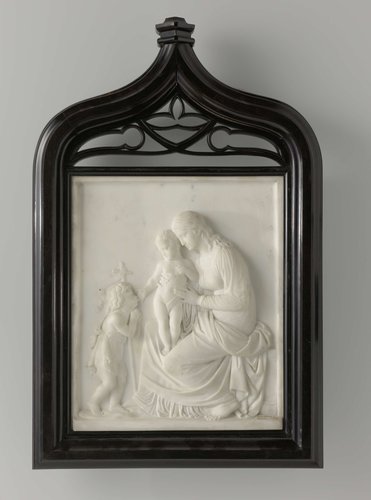
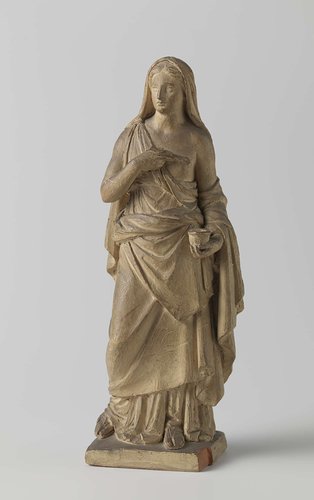
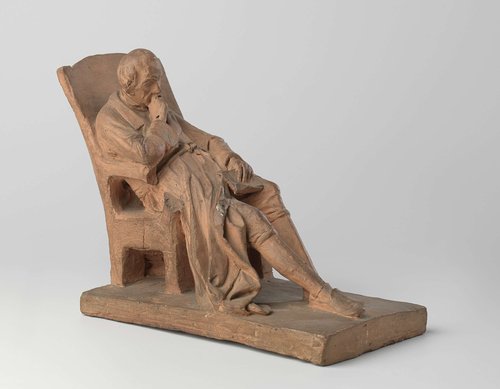
Beyond royal portraits, Royer received commissions for funerary monuments, decorative sculptures for public buildings, and private portrait commissions from wealthy Dutch families. His reputation as the kingdom's leading sculptor became firmly established during this period.
In 1840, Royer's institutional position was further elevated when he was appointed director of the Royal Academy of Art in Amsterdam. This position gave him authority over the training of the next generation of Dutch sculptors and reinforced his aesthetic preferences as official standards. He would hold this influential educational role while continuing his own artistic production.
The 1840s through 1860s saw Royer create his most historically significant works: the monumental public statues of Dutch national heroes. These commissions reflected the nineteenth-century enthusiasm for public commemoration and the specific Dutch need to create visual symbols of national identity and historical continuity.
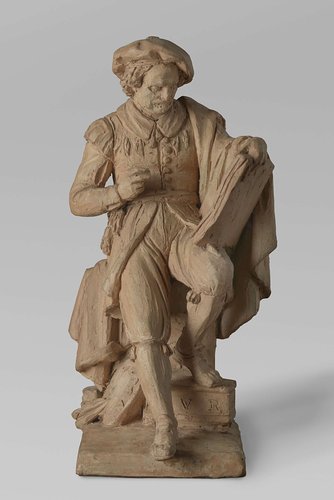
His statue of Rembrandt, erected in Amsterdam, placed the great seventeenth-century painter in a contemporary urban context, making him a living presence in the modern city. The statue depicted Rembrandt in period costume, palette and brushes in hand, embodying artistic genius. It became a focal point for Dutch cultural pride and established a precedent for honoring artists with public monuments.
Equally significant was his statue of Joost van den Vondel, the great seventeenth-century Dutch poet and playwright, also erected in Amsterdam. This monument honored Dutch literary achievement and reinforced Amsterdam's position as the cultural capital of the Netherlands.
Royer's statue of William the Silent (William of Orange) in The Hague held particular political importance. William, the leader of the Dutch Revolt against Spain in the sixteenth century, was the foundational figure of Dutch independence. By creating a monument to William in The Hague, the seat of Dutch government, Royer gave physical form to national origin myths and legitimized the contemporary Orange monarchy's historical claims.
The statue of Michiel de Ruyter in Vlissingen (Flushing) commemorated the great seventeenth-century admiral who had secured Dutch naval supremacy. This monument celebrated Dutch maritime heritage and military prowess, themes central to national identity for a country whose prosperity and independence had been secured by sea power.
These public monuments employed a consistent aesthetic approach. Royer presented his subjects in period costume but with idealized, timeless features. The poses conveyed dignity and authority without dramatic gesture. The bronze and stone figures, elevated on pedestals, dominated their urban settings and commanded respectful viewing.
Contemporary recognition of Royer's preeminence was reflected in the epithet 'Canova of the Netherlands,' which explicitly compared him to the greatest European sculptor of the previous generation. This comparison acknowledged both his technical mastery and his cultural importance to Dutch national identity.
Royer continued working until his final years. He died in Amsterdam on June 5, 1868, at age 74, having spent nearly five decades as the dominant figure in Dutch sculpture. His death marked a generational transition, as younger sculptors began to question neoclassical aesthetics and develop new approaches more responsive to realist and naturalist currents in European art.
Artheon Research Team
Last updated: 2025-11-09
Biography length: ~2,156 words
Wikidata/Wikimedia Commons