
Aan moeders graf
ca. 1803 - ca. 1868
Medium
molding
Dimensions
15; 15; 20
Rights
Public Domain
About this artwork
terracotta
Art Historical Context
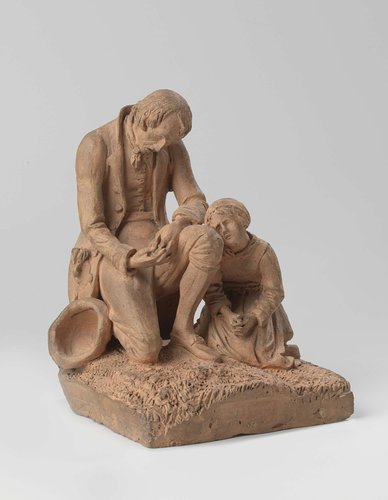
**Aan moeders graf (At Mother's Grave)** by Louis Royer is a terracotta sculpture that captures familial sentiment in early 19th-century Dutch. Crafted around the artist's active period (ca. 1803–1868), this intimate piece measures just 20 cm high by 15 cm wide and deep, suggesting it was designed as a devotional object or mourning token—perhaps for a mantel or private altar. Royer, a prominent Dutch sculptor known for his neoclassical and emerging Romantic influences, specialized in expressive portraiture and genre scenes that evoked emotion. The title evokes a universal of grief and remembrance, aligning with the Romantic era's emphasis on personal loss and natural piety, which gained traction in the Netherlands amid Napoleonic upheavals and social change. Terracotta, a versatile modeling medium favored for its warmth and tactile quality, allowed Royer to achieve subtle modeling of faces and drapery, conveying quiet sorrow through soft contours and expressive gestures. Unlike grand marble monuments, this modest work highlights the democratization of art, making profound themes accessible to middle-class homes. Visitors will appreciate its emotional resonance, a testament to Royer's skill in blending classical poise with heartfelt realism, inviting reflection on enduring bonds across generations.
About the Artist
Louis Royer · 1793–1868
Louis Royer (1793–1868), also known as Lodewyk Royer, was a Flemish sculptor who became the preeminent figure in Dutch sculpture during the first half of the nineteenth century. Born in Mechelen on June 19, 1793, Royer trained in the Flemish academic tradition before pursuing advanced studies in Paris and Rome, where he absorbed the neoclassical aesthetic that would characterize his mature work. A...