Ctrl K
1770–1852
Occupations
**Charles Balthazar Julien Févret de Saint-Mémin** (1770–1852) was born on March 12 in Dijon, France, into a prominent noble family of art collectors and bibliophiles. His father, Bénigne-Charles Févret de Saint-Mémin, served as a conseiller au Parlement de Bourgogne, while his mother, Victoire-Marie de Motmans, hailed from a creole family in Saint-Domingue. Educated at the École Militaire in Paris, he graduated around 1785–1788 and briefly served as an enseigne in the Gardes-Françaises under Louis XVI. With the outbreak of the French Revolution, Saint-Mémin fled with his family first to Switzerland—where he began learning engraving—and then in 1793 to New York City, abandoning plans to reclaim his mother's plantation in Saint-Domingue amid its slave revolt. In America, initial ventures like vegetable farming failed, compelling him to develop his artistic talents out of necessity; he associated with fellow French émigré artist Thomas Bluget de Valdenuit and introduced the physionotrace, a mechanical profiling device invented by Gilles-Louis Chrétien in 1786.
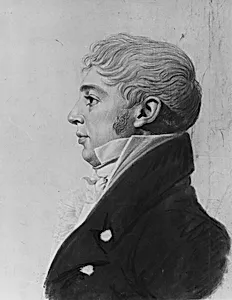
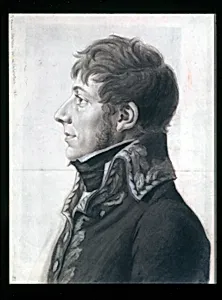
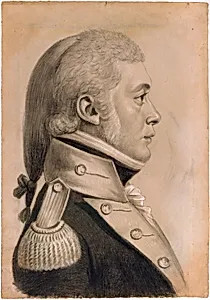
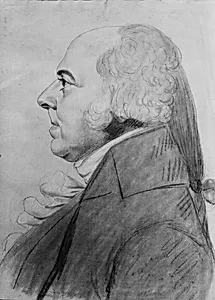
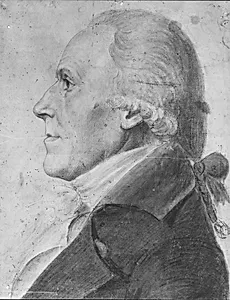
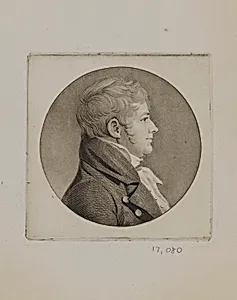
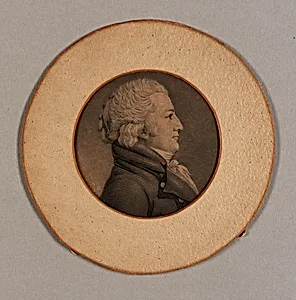
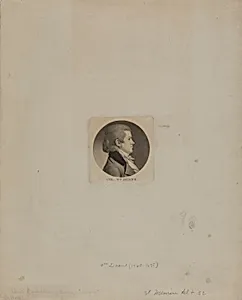
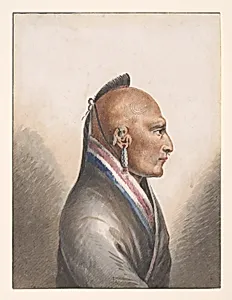
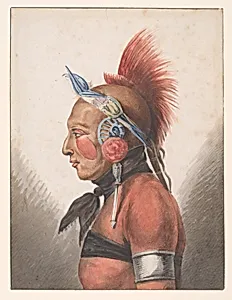
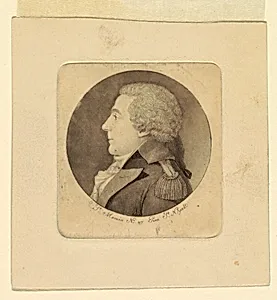
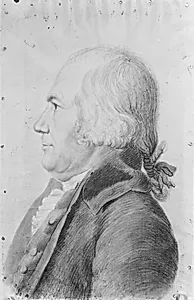
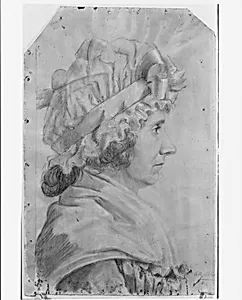
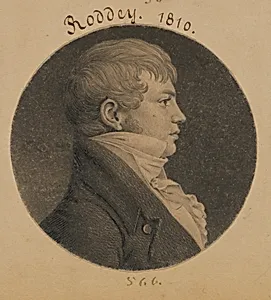
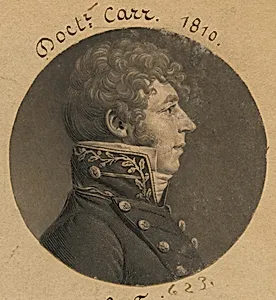
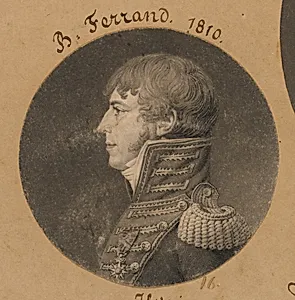
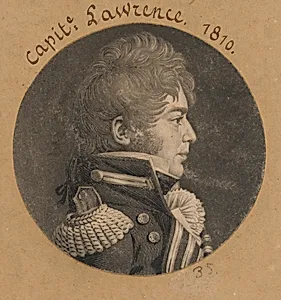
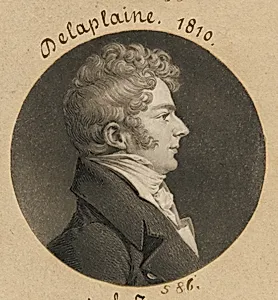
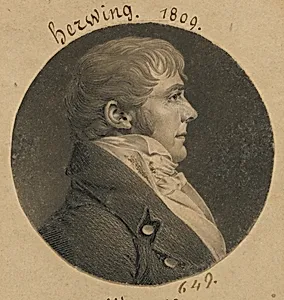
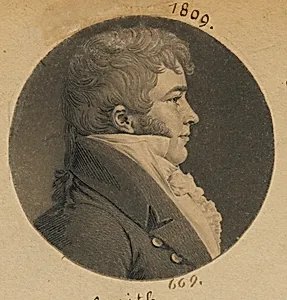
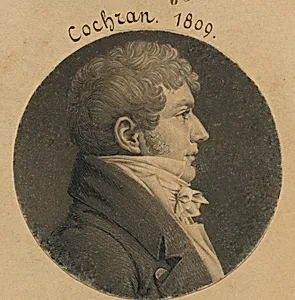
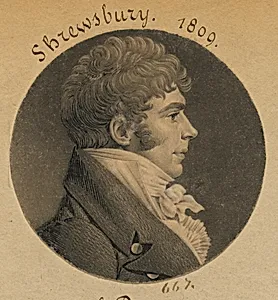
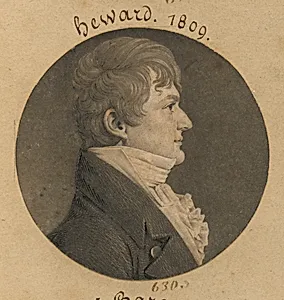
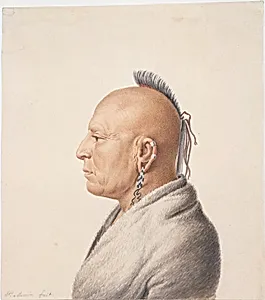
From 1793 to 1814, Saint-Mémin thrived as an itinerant portraitist across Philadelphia, Washington, Baltimore, and New York, producing hundreds of neoclassical profile portraits of American elites, politicians, and Native American leaders. His technique involved tracing a sitter's silhouette with the physionotrace for exact outlines, which he then engraved, hand-colored in watercolor, and sometimes elaborated with ink washes for striking realism and detail. Notable works include *Payouska (Pawhuska), Chief of the Great Osage* (1804), *Unidentified Osage Warrior Wearing Bird Headdress* (1807)—a highlight of his depictions of Indigenous figures—*Meriwether Lewis in Frontiersman's Regalia* (1806–1807), *Paul Revere* (drawing from 1804), *John Marshall* (1808), *Thomas Jefferson*, *George Washington*, and *Shahaka (Sheheke), Chief of the Mandans* alongside his wife *Yellow Corn* (both 1806–1807). These small-scale gems captured the early republic's diverse society with unflinching precision, blending European sophistication and American frontier vitality.
Returning to France in 1814, Saint-Mémin was appointed conservator and director of the Musée des Beaux-Arts de Dijon in 1817, a role he held until his death on June 23, 1852. His legacy endures as one of the most memorable chroniclers of Federal-era America, with his profiles—preserved in institutions like the New-York Historical Society, Library of Congress, and Metropolitan Museum of Art—offering invaluable glimpses into luminaries and cultures at the nation's dawn. Self-taught yet masterful, Saint-Mémin bridged Old World aristocracy and New World innovation, etching his place in transatlantic art history.
Wikidata (CC0); Getty ULAN (ODC-By)