Ctrl K
1699–1734
Occupations
Samuel Donnet (ca. 1698–1734) emerged as a skilled copper engraver in the bustling Hanseatic city of Danzig (present-day Gdańsk), where he was active from 1699 until his death. Baptized on October 10, 1698, in the city's Frisian Church—a hub for Dutch and Flemish immigrants—he married on January 6, 1699, and fathered a son named Samuel. His brother, Johann Donnet, was also a copper engraver who outlived him, working past 1749. Likely of Dutch or Frisian descent through the Mennonite-influenced Frisian community, Donnet's early training remains undocumented, suggesting he may have learned the craft within family circles or local workshops.
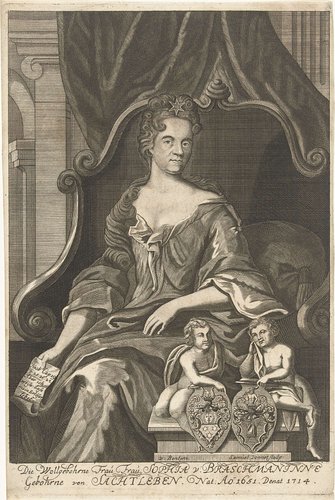
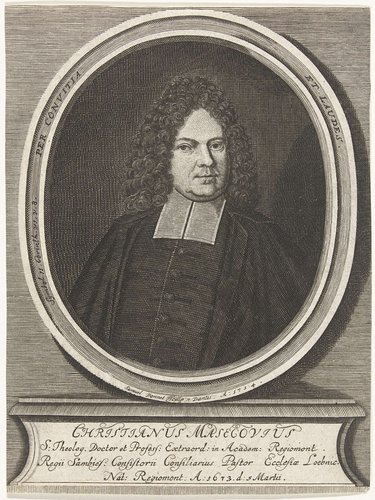
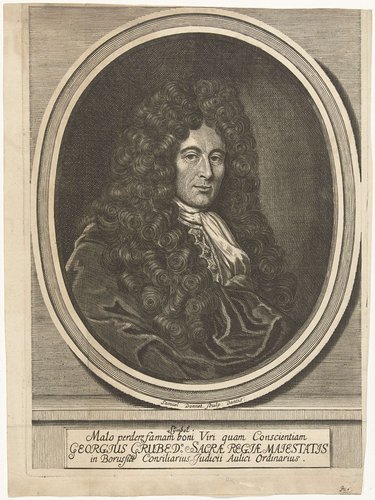
Donnet specialized in meticulous copperplate engravings that captured the intellectual and civic pulse of early 18th-century Danzig. His style blended precise line work with dramatic shading, suited to portraits, topography, and genre scenes in the Northern Baroque tradition. Among his portraits are those of physician Christian Bucky, theologian Christian Masecovius (1714), Prussian official Georg Grube, and noblewoman Sophie von Braschman (1651–1714). Everyday life appeared in works like *Three Peasants Drinking and Smoking in a Barn*, while scientific illustrations included the anatomical *Museum Gottwaldianum*.
Donnet's topographical output preserved Danzig's landmarks and history, including detailed views of St. Mary's Church and a harrowing depiction of the Great Plague of 1709, which claimed tens of thousands of lives. He contributed maps, such as one of the Gdańsk surroundings and another in Christoph Hartwig's *Landesbeschreibung der dreyen Werdern* (1722), along with ex-libris and book illustrations. Signing his plates "Samuel Donnet sc.," these engravings served both artistic and documentary purposes.
Though overshadowed by more renowned contemporaries, Donnet's legacy endures as a chronicler of Danzig's golden age under Polish-Lithuanian rule. His prints offer vivid glimpses into urban life, plague horrors, and scholarly pursuits, influencing local graphic traditions through his brother and descendants. With only a handful surviving in collections—including three in ours—Donnet exemplifies the vital role of regional engravers in European art history.
Wikidata (CC0)