Ctrl K
1521–1575
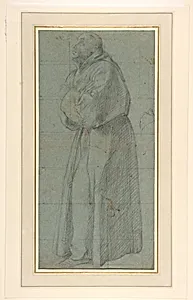
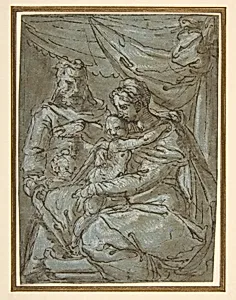
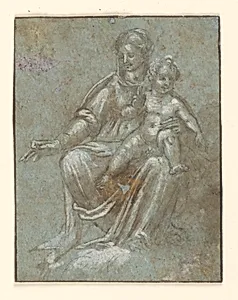
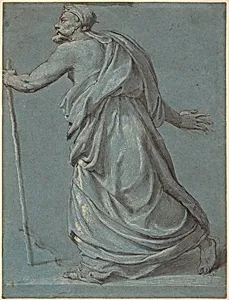
**Girolamo Siciolante da Sermoneta (c. 1521–1575)** was an Italian painter active primarily in Rome during the mid-16th century. Born in the hill town of Sermoneta south of Rome, he benefited from lifelong patronage by the Caetani family, the local lords who commissioned several of his early works.
He trained initially under Leonardo Grazia da Pistoia (also known as Leonardo da Pistoia) and then served as an assistant to Perino del Vaga, one of Raphael’s followers. This placed him firmly within the Roman Mannerist tradition. Siciolante joined the Accademia di San Luca in 1543 and later presided over it (1554–1556). His earliest securely dated work is the 1541 altarpiece *Virgin and Child with Saints Peter, Stephen, and John the Baptist*, painted for the church of SS. Stefano e Pietro at Valvisciolo and now in the Castello Caetani.
Siciolante began as a Mannerist painter but gradually shifted toward a more restrained, monumental style influenced by Michelangelo and, from the 1560s onward, by the reformist naturalism of Girolamo Muziano. Major commissions include the *Holy Family with Saint Michael* (1545–46) in Piacenza, the *Madonna with Six Saints* (1548) for San Martino Maggiore in Bologna, and a large *Crucifixion* altarpiece (1550s) for the Spanish national church of San Giacomo degli Spagnoli in Rome (later moved to Santa Maria in Monserrato). He contributed frescoes to the Sala Regia in the Vatican, painted cycles such as the *Life of the Virgin* for San Tommaso dei Cenci, and executed works for Santa Maria in Aracoeli, Santa Maria della Pace, and Santa Maria Maggiore.
His mature style combined elegant, powerfully conceived figures with clear compositions and a brilliant palette, qualities that appealed to Counter-Reformation patrons seeking clarity and decorum. Though many of his frescoes, including those at the Palazzo Baronale in Cisterna di Latina, were later destroyed, Siciolante’s altarpieces and drawings remain in major collections and testify to his successful navigation of the transition from High Mannerism to a more naturalistic Roman idiom.
All 3 artworks loaded