
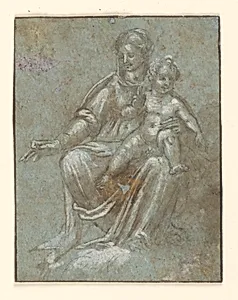
Virgin and Child
Classification
figures
Department
Smithsonian Collection
Museum
Smithsonian American Art Museum
Credit
Gift of the Estate of Harry G. Friedman
Accession Number
1966-2-17
Rights
Public Domain
About this artwork
Research in Progress
Art Historical Context
Girolamo Siciolante, an Italian artist active during the sixteenth century, created this depiction of the Virgin and Child, a subject that held deep spiritual meaning for Renaissance audiences. The theme of Mary tenderly holding the infant Jesus was among the most cherished in Christian art, symbolizing maternal love, divine protection, and the promise of salvation. Works like this one often served as objects of private devotion or as focal points in church settings, inviting viewers to reflect on the human and sacred dimensions of the holy family. Although the precise medium of this piece remains under study, its classification as a figure study highlights Siciolante’s interest in expressive human forms. The artist’s career unfolded amid the rich artistic traditions of central Italy, where painters balanced idealized beauty with emotional depth. Now part of the Smithsonian American Art Museum’s collection through the generous gift of the Estate of Harry G. Friedman, the work continues to offer visitors a window into the enduring appeal of this timeless subject. Research on the piece is ongoing, inviting further discovery about its creation and journey to American shores.