
Ctrl K
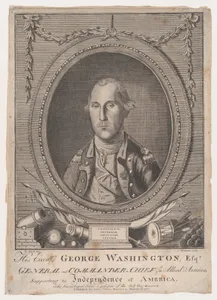
1748–1817
**Charles Willson Peale (1741–1827)** was a leading American portrait painter, naturalist, and museum founder whose work helped shape the visual record of the Revolutionary era. Born in Chester, Maryland, he initially trained in practical trades such as saddlemaking before turning to art in the 1760s. He studied briefly under the portraitist John Hesselius in Maryland and later under John Singleton Copley in Boston. In 1767, friends funded his travel to London, where he studied for three years under the expatriate American painter Benjamin West.
Peale worked firmly in the Anglo-American portrait tradition, producing lifelike, dignified images that captured the character of his sitters. Upon returning to the colonies, he painted his first life portrait of George Washington in 1772 and went on to create numerous additional likenesses of the general, as well as portraits of other Revolutionary leaders including Benjamin Franklin, Thomas Jefferson, and Nathanael Greene. He served briefly in the Continental Army alongside Washington before settling in Philadelphia, where he established one of America’s earliest museums, combining art, natural history specimens, and educational displays; this institution later influenced the founding of the Pennsylvania Academy of the Fine Arts.
Among his most significant works are the series of Washington portraits (including the 1772 Virginia colonel image and the 1779 post-Battle of Princeton depiction) and his ambitious self-portrait *The Artist in His Museum* (1822), which shows him unveiling his collections. Peale’s legacy endures through his prolific documentation of early American figures, his pioneering museum efforts that promoted public education in art and science, and his influence on subsequent generations of artists and institutions dedicated to preserving the nation’s cultural heritage. His portraits remain central to collections documenting the founding of the United States.
All 1 artworks loaded