Ctrl K

1744
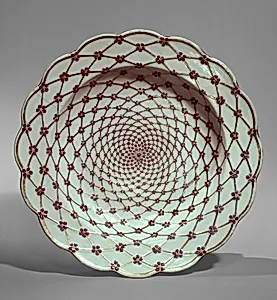
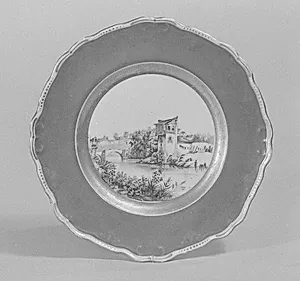
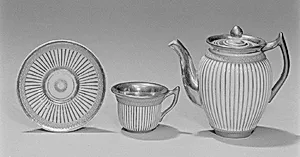
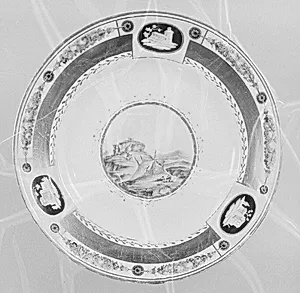
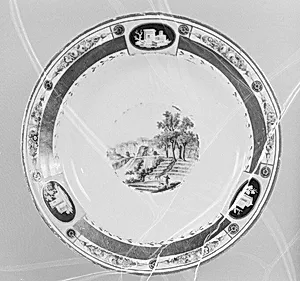
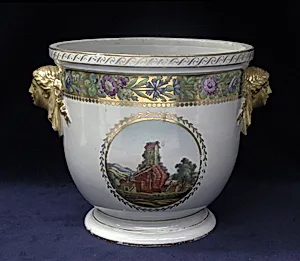
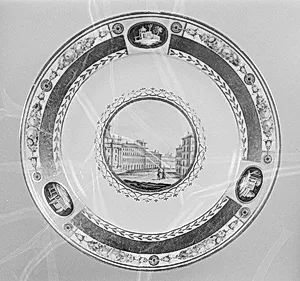
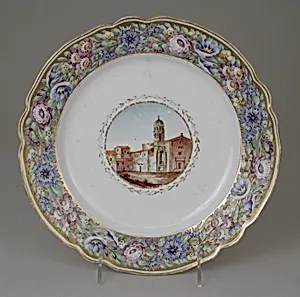
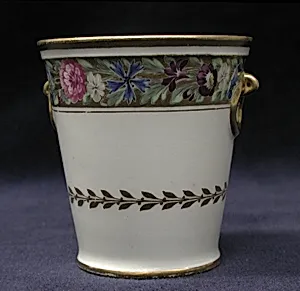
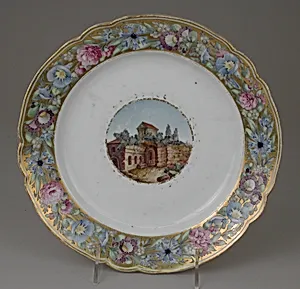
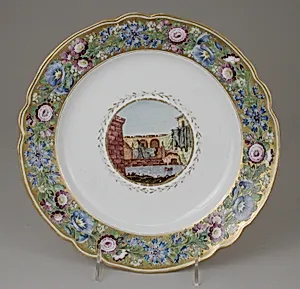
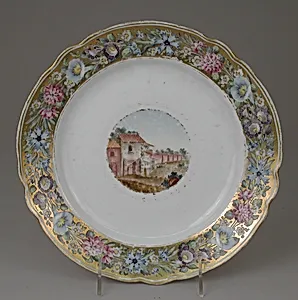
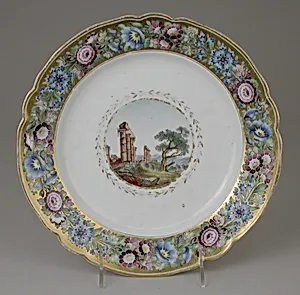
The Imperial Porcelain Manufactory in Saint Petersburg, founded in 1744 by Dmitry Ivanovich Vinogradov under the decree of Empress Elizabeth Petrovna, marked Russia's entry into porcelain production as the third such enterprise in Europe after Meissen and Vienna. Vinogradov, a mining engineer educated in Saxony, developed the nation's first hard-paste porcelain formula using local materials, drawing inspiration from Meissen techniques and Chinese forms. Early output focused on wares for the Romanov court and diplomatic gifts, including a bowl dated 1749 and plates from an imperial service produced between 1756 and 1762. Under Catherine the Great's patronage from 1762, the factory—renamed the Imperial Porcelain Manufactory in 1765—entered its Golden Age, producing ornate dinner services, snuff-boxes she personally selected, and Neoclassical vases with painted historical scenes from the 1780s.
The 19th century brought further refinement, with masters invited from Berlin's Royal Porcelain Factory and Sèvres under Alexander I, ushering in High Classicism and Empire styles. Nicholas I personally oversaw innovations like durable fire gilding and large porcelain plaques replicating Hermitage masterpieces by Leonardo da Vinci and Raphael. Around 1780, the factory launched a renowned series of figures depicting Russian national types and ethnic minorities, such as the Female Shaman, Fisherman, Lapplander, and Ice Cream Seller. Under Alexander III, it crafted grand services like the "Alexandrinsky" and "Tsarskoye Selo" for the 1900 Paris World Exhibition, blending Russian motifs with Art Nouveau whimsy, stylized plants, and underglaze landscapes.
Renamed the Lomonosov Porcelain Factory in 1925 during the Soviet era, it adapted to propaganda wares before excelling in Socialist Realism with artists like Anna Yatskevich, who debuted the iconic cobalt net pattern in 1949—featuring blue interlocking lines and gold accents evoking Catherine's designs. Privatized in 2002 and reverting to its imperial name in 2005 under owner Nikolai Tsvetkov, the manufactory endures as a beacon of hand-painted ceramics, reviving 18th-century services while fostering contemporary sculptures and vases. Its legacy lies in elevating Russian porcelain to European prominence, supplying imperial palaces and now global collectors with enduring symbols of technical mastery and artistic evolution.