Ctrl K
1764–1780
**Tawaraya Sōri (c. 1764–1780)** was a Japanese painter active in the late Edo period who worked in the decorative Rinpa style associated with the Tawaraya school.
Little is recorded about his early life or training, but he continued the elegant, ornamental traditions of Rinpa painting that emphasized bold patterns, gold backgrounds, and natural motifs drawn from classical Japanese aesthetics. His output focused on screens and hanging scrolls featuring seasonal subjects rendered with fluid brushwork and vibrant color.
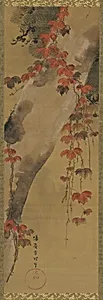
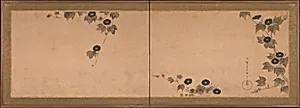
Among his surviving works are the two-panel folding screen *Morning Glories* (Metropolitan Museum of Art) and the six-panel screen *Autumn Maple Trees* (Harvard Art Museums and other collections), both exemplifying the school’s luxurious, nature-inspired compositions. He is also credited with designs for an illustrated book on ikebana arrangements.
Sōri’s studio and artistic name were later assumed by the young Katsushika Hokusai around 1794, linking the painter directly to the development of later ukiyo-e and Rinpa-influenced art. Though his career was brief, his decorative screens remain prized examples of late-eighteenth-century Rinpa revival and are held in major museum collections worldwide.