Ctrl K
1769–1831
Thomas Hope (1769–1831) was born in Amsterdam into the illustrious Hope family of Scottish-Dutch merchant bankers, Hope & Co., as the eldest son of Jan Hope and Philippina Barbara van der Hoeven.) Following his father's death in 1784, the family amassed vast wealth from banking and art collecting, with Hope inheriting a passion for antiquities nurtured amid his parents' opulent estates like Groenendaal Park. Amid the Batavian Revolution, he and his brothers fled to London in 1794, where he settled at Duchess Street off Portland Place. At eighteen, Hope embarked on an extensive Grand Tour spanning Europe, the Levant—including Turkey, Egypt, and Syria—and beyond, immersing himself in classical architecture, sculpture, and civilizations. These self-directed studies shaped his design ethos, fueling collections of artifacts like the Hope Dionysus and vases from Sir William Hamilton.)
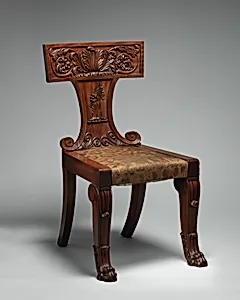
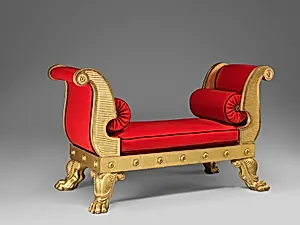
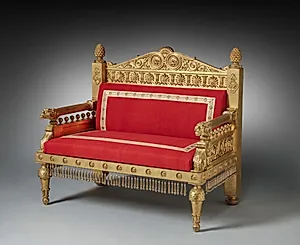
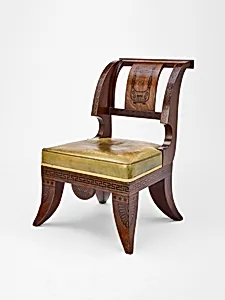
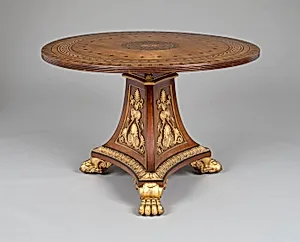
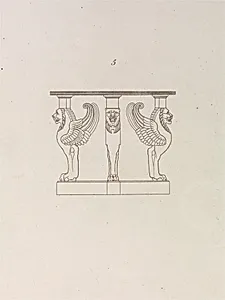
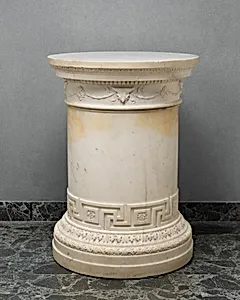
Hope pioneered the Regency style, blending Neoclassicism with eclectic motifs from ancient Greece, Rome, Egypt, and even Rococo flourishes, often termed "English Empire." He transformed his Duchess Street home—originally by Robert Adam—into a public showcase from 1804, featuring an Egyptian Gallery with yellow-green walls and black-gold accents, a Statue Gallery, and the Aurora Room with mirrored reflections of classical statues. In 1807, he acquired Deepdene House in Surrey, adding an Italianate tower and a mausoleum (1818). His seminal book, *Household Furniture and Interior Decoration* (1807), showcased engravings of his designs, including pier tables (c. 1800), chairs (c. 1807), and vases (1802–03), advocating purity in form and influencing upholstery trends. Further publications like *Costumes of the Ancients* (1809) and the novel *Anastasius* (1819) demonstrated his antiquarian depth.)
A generous patron, Hope commissioned sculptures such as Bertel Thorvaldsen's *Jason with the Golden Fleece* (1803) and worked with John Flaxman. Married in 1806 to Louisa de la Poer Beresford, he fathered sons including Henry Thomas Hope and Alexander James Beresford Hope, both arts patrons. His legacy endures in Regency Revival and Art Deco, with furnishings in museums like the V&A and Metropolitan Museum. Though his collections dispersed in 1917 auctions and homes demolished, Hope's vision reformed taste, opening elite design to the public and inspiring generations.)