Ctrl K
1771–1848
**Thomas Seymour (1771–1848)** was a leading American cabinetmaker of the Federal period, renowned for his refined neoclassical furniture produced in partnership with his father, John Seymour. Born in Axminster, Devon, England, Thomas trained in the English joinery tradition before immigrating to the United States with his family. He worked initially in Portland, Maine, and then established himself in Boston, where father and son formed a highly successful partnership around 1794–1816. Their workshop became celebrated for its exceptional craftsmanship, precise proportions, and elegant details that blended English training with American tastes.
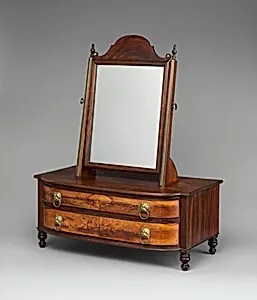
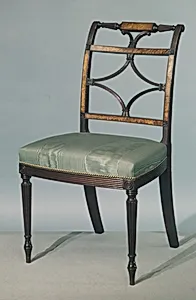
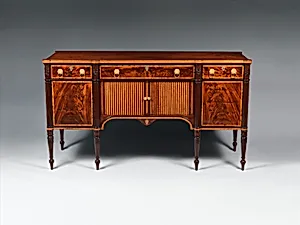
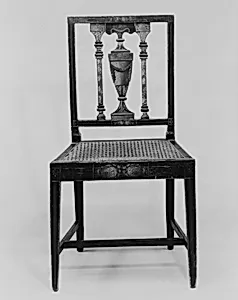
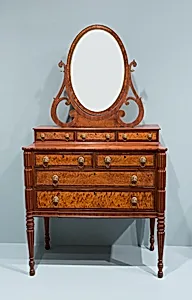
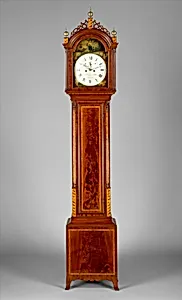
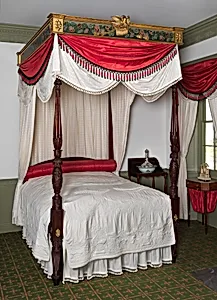
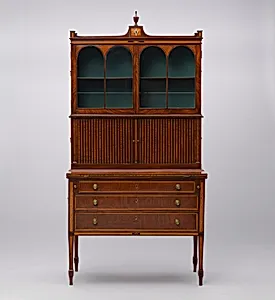
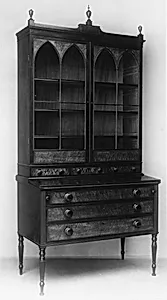
Seymour worked firmly within the Federal school tradition, producing pieces characterized by mahogany and satinwood veneers, delicate inlays, brass fittings, and tambour doors. The Seymours elevated Boston furniture making to a level comparable with the finest English and Philadelphia work of the era, emphasizing clean lines, symmetry, and subtle ornamentation suited to the neoclassical aesthetic popular after the American Revolution. Their output included desks, chests of drawers, side chairs, and card tables that combined functionality with sophisticated design.
Among the most notable works associated with Thomas Seymour are tambour desks and chests of drawers from the early 1800s, as well as side chairs dated circa 1805–1810, many of which survive in major museum collections including the Metropolitan Museum of Art and the Art Institute of Chicago. These pieces often bear the hallmarks of the Seymour workshop—such as distinctive inlay patterns and construction techniques—and demonstrate Thomas’s growing independence and innovation within the partnership.
Thomas Seymour’s legacy endures as one of the foremost figures in early American decorative arts. His furniture exemplifies the transition from colonial to Federal styles and continues to influence collectors and scholars. With numerous documented and attributed works in public and private collections, he remains a benchmark for quality and design in Boston cabinetmaking of the period.