Ctrl K
1864–1901
Movements
Occupations
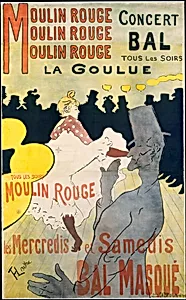
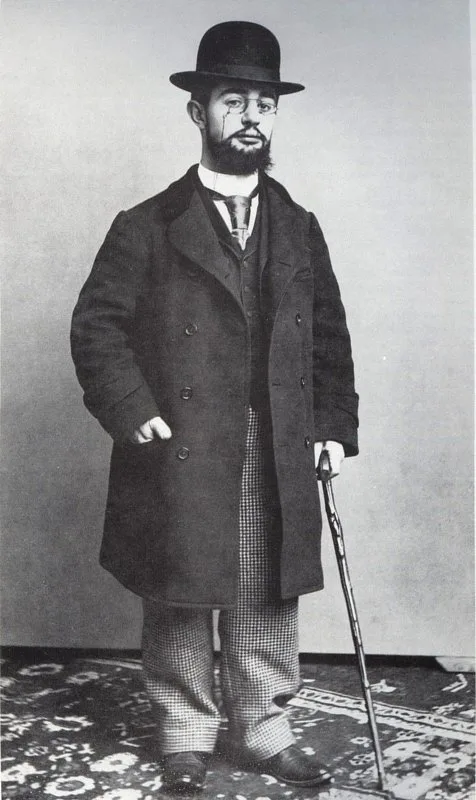
Henri Marie Raymond de Toulouse-Lautrec-Montfa (1864-1901) was a French Post-Impressionist painter, printmaker, and illustrator whose innovative poster designs revolutionized graphic art and advertising in late 19th-century Paris. Born into an aristocratic family at Albi in southern France, Toulouse-Lautrec's privileged lineage traced back to the Counts of Toulouse and extended uninterrupted to the time of Charlemagne. However, the family's tradition of inbreeding—his parents were first cousins—resulted in congenital health conditions that profoundly shaped his life and art. At ages 13 and 14, he fractured both thigh bones in separate accidents, breaks that never properly healed due to what modern physicians believe was pycnodysostosis, sometimes known as Toulouse-Lautrec Syndrome. As an adult, he stood barely five feet tall with a normally proportioned upper body but short, stunted legs, walking with great difficulty using a cane. Despite—or perhaps because of—his physical challenges, Toulouse-Lautrec immersed himself in the vibrant, bohemian nightlife of Montmartre, the artistic quarter of Paris. His career, lasting just over a decade from 1891 to 1901, coincided with two revolutionary developments: the birth of modern printmaking and the explosion of café-concert and cabaret culture. He found artistic subjects and personal affinity among the dancers, singers, prostitutes, and social outcasts who populated the district's legendary venues, particularly the Moulin Rouge. His 1891 poster for the Moulin Rouge, featuring the dancer La Goulue and the boneless acrobat Valentin le Désossé, made him famous overnight when 3,000 copies were pasted across Parisian streets. The poster's bold, flat colors, dynamic compositions, and integration of text with image elevated commercial lithography to fine art and established him as one of history's greatest poster designers. Toulouse-Lautrec's artistic style synthesized influences from Impressionism, Japanese ukiyo-e prints, and the work of Edgar Degas, whom he greatly admired. His technique featured expressive contour lines, flat areas of vivid color, asymmetrical compositions, unusual cropped viewpoints, and an element of caricature that captured the energy and movement of his subjects. He mastered color lithography and innovative techniques like crachis (ink spattering), producing nearly 400 prints and 31 posters alongside 737 paintings, 275 watercolors, and over 5,000 drawings in his brief career. His sympathetic yet unflinching portrayals of prostitutes, entertainers, and the demimonde revealed both artistic genius and personal identification with society's marginalized figures. Tragically, alcoholism and syphilis led to his mental and physical collapse; he died at age 36 at his mother's estate in 1901. His legacy profoundly influenced Art Nouveau, Expressionism, and the entire trajectory of modern graphic design—inspiring generations from the Vienna Secession to Andy Warhol.
Born November 24, 1864, at the Château du Bosc in Albi, southern France, to Count Alphonse de Toulouse-Lautrec-Montfa and Countess Adèle Zoë Tapié de Celeyran, first cousins from ancient aristocratic lineages.
Spent childhood at family estates enjoying aristocratic pursuits of hunting, horseback riding, and art collecting, though frequent illnesses often confined him to bed where he drew prolifically.
At age 13 (1878) fractured his left femur falling from a chair; at 14 (1879) fractured his right femur in a fall into a ravine. The bones failed to heal properly, likely due to pycnodysostosis, a rare genetic disorder linked to familial inbreeding.
His legs stopped growing while his torso developed normally, resulting in adult height of approximately 4 feet 11 inches (1.5 meters) and severe mobility impairment requiring a cane.
Encouraged by family friend René Princeteau, a deaf painter of horses and military subjects, began serious artistic training around 1878-1881.
Moved to Paris in 1882 at age 18 to pursue art professionally. Studied briefly under Léon Bonnat, a rigidly academic painter who harshly criticized his drawing as 'atrocious' and discouraged deviation from classical principles.
Transferred to the more liberal atelier of Fernand Cormon in 1883, where he studied for five years. Cormon encouraged students to explore Paris for artistic subjects, leading Toulouse-Lautrec to discover the cafés, cabarets, and nightlife of Montmartre.
At Cormon's studio, formed lifelong friendships with fellow students Vincent van Gogh, Émile Bernard, and other avant-garde artists who would become the Post-Impressionist generation.
During this formative period, absorbed influences from Impressionism (particularly Edgar Degas), Japanese ukiyo-e prints (Hokusai, Hiroshige), and the urban realism of contemporary Parisian life.
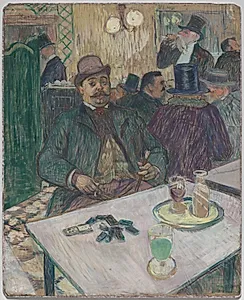
Established himself in Montmartre, the bohemian artistic quarter of Paris, taking studios and frequenting its legendary cabarets, dance halls, and brothels including Le Chat Noir, Le Mirliton, and the Moulin Rouge.
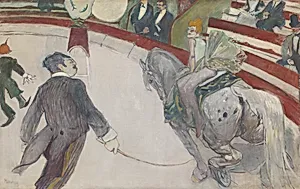
Created his first major independent painting in 1888, 'The Cirque Fernando,' demonstrating characteristic Impressionist techniques—flattened picture space, unusual viewpoints, cropped compositions—combined with his own bold, caricatural style and non-naturalistic color.
Began systematic documentation of Montmartre's nightlife, sketching entertainers, dancers, and habitués in rapid drawings on-site, then developing these into paintings and prints in his studio the following day.
Developed close relationships with the district's performers, particularly Jane Avril, Aristide Bruant, La Goulue (Louise Weber), Valentin le Désossé, Yvette Guilbert, and May Milton, who became recurring subjects.
Attracted to the openness and lack of pretension in Montmartre society, where his physical appearance provoked less judgment than in aristocratic circles; he found solidarity with dancers, singers, and prostitutes who also lived at society's margins.
In 1891, received commission to design promotional poster for the Moulin Rouge cabaret, marking his entry into the medium that would define his career and revolutionize commercial art.
Created his first lithographic print and poster in 1891: 'Moulin Rouge: La Goulue,' featuring the dancer La Goulue and performer Valentin le Désossé in bold silhouettes against vibrant backgrounds. The poster, nearly two meters high, was pasted across Paris in 3,000 copies, making Toulouse-Lautrec instantly famous.
The revolutionary poster used only four colors (black, yellow, red, blue) on separate lithographic stones, with additional hues created through layering—demonstrating masterful understanding of color lithography's possibilities.
Influenced by Japanese woodblock prints, developed distinctive graphic style featuring flat color areas, strong contour lines, asymmetrical balance, cropped compositions, and dynamic diagonal movements.
Pioneered techniques including crachis (ink spattering achieved by shaking a brush over a sieve or running a knife along bristles), creating atmospheric mists and textures that resembled early airbrushing.
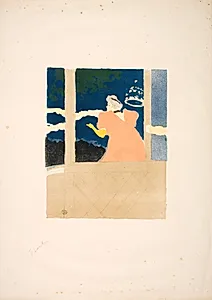
Between 1891 and 1895, created his most iconic posters for Parisian venues and performers: 'Aristide Bruant dans son cabaret' (1893), 'Divan Japonais' (1893), 'Jane Avril' (1893), and series depicting Yvette Guilbert and Loïe Fuller.
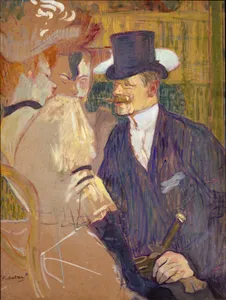
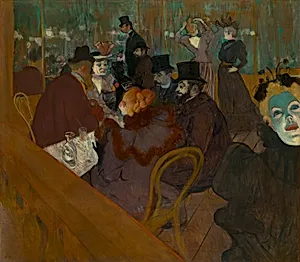
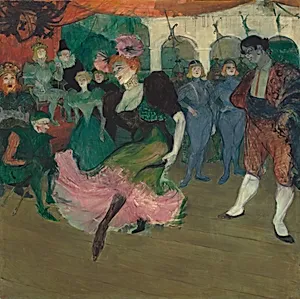
Painted his masterpiece 'At the Moulin Rouge' (1892-1895, Art Institute of Chicago), a complex group portrait showing himself with cousin Gabriel Tapié de Celeyran among cabaret regulars, with Jane Avril, La Goulue, and the eerily green-lit face of May Milton at right edge.
Elevated commercial poster from mere advertisement to high art form, with collectors tearing his posters from walls. His integration of text and image, bold compositions, and celebrity-making portraits established modern graphic design principles.
Produced approximately 31 posters and 368 prints total during this golden age of poster art, contributing to what became known as the Belle Époque poster craze.
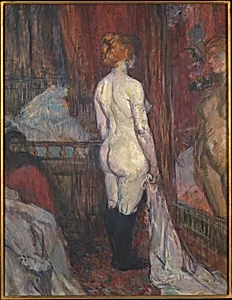
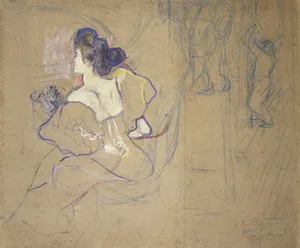
Increasingly lived in Parisian brothels, particularly the maisons closes (licensed brothels) on rue des Moulins and rue d'Amboise, where he kept rooms and created intimate, psychologically penetrating portraits of prostitutes.
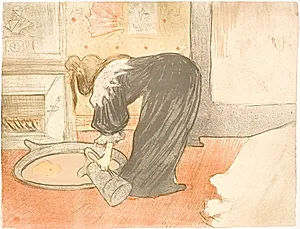
Produced the series 'Elles' (1896), ten lithographic prints depicting daily life in brothels with unprecedented honesty and empathy, showing women washing, dressing, and resting—humanizing rather than objectifying his subjects.
Created the painting 'Au salon de la rue des Moulins' (1894), considered a masterpiece of his brothel genre, showing prostitutes waiting for clients with psychological depth and compositional sophistication.
Chronic alcoholism, exacerbated by absinthe consumption and possible syphilis, increasingly affected his health and mental state through the late 1890s.
In February 1899, suffered complete mental and physical breakdown from alcoholism, experiencing hallucinations and delirium tremens. His family had him committed to the Folie Saint-James sanatorium in Neuilly-sur-Seine.
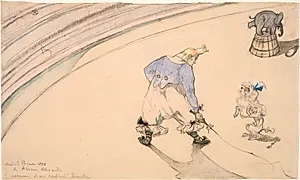
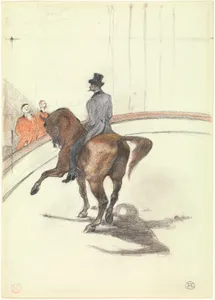
During three months of institutionalization, created 39 circus drawings from memory, demonstrating his undiminished technical skill and proving his sanity to doctors and family, which led to his release in May 1899.
Attempted to recover at family estates in the south but could not overcome his alcoholism. His health rapidly deteriorated through 1900-1901.
Suffered a stroke in August 1901 and was paralyzed. Died September 9, 1901, at age 36 at his mother's Château Malromé estate in Saint-André-du-Bois, attended by Countess Adèle and close friends.
Left an extraordinary legacy: 737 canvas paintings, 275 watercolors, 363 prints and posters, 5,084 drawings, plus ceramics and stained glass, created in barely fifteen years of professional work.
Artheon Research Team
Last updated: 2025-11-28
Biography length: ~1,247 words
Wikidata/Wikimedia Commons