Ctrl K
1869–1927
Tsukioka Kōgyo (1869–1927), born Hanyū Bennosuke in Tokyo's bustling Nihonbashi district as the second son of an innkeeper family, navigated a path from humble origins to mastery in Japanese printmaking. After his father's early death, he was raised by his mother's Sakamaki family and apprenticed in pottery painting under his uncle, a ceramics exporter in Yokohama. He briefly attended the Tokyo School of Fine Arts in 1883 before teaching the craft in Fukushima Prefecture at age fifteen. In 1887, Kōgyo entered the atelier of ukiyo-e master Tsukioka Yoshitoshi—who had married his mother Taiko in 1884 and adopted him—learning the fundamentals of painting and receiving the name Toshihisa. He further studied with Ogata Gekkō in 1889, mastering flower-and-bird motifs, shading, and silk painting, earning the name Kōgyo, and trained under Japanese-style painter Matsumoto Fūko, who bestowed the name Kohan. Following Yoshitoshi's death in 1892, Kōgyo succeeded as head of the Tsukioka school in 1911, adopting his mentor's surname.
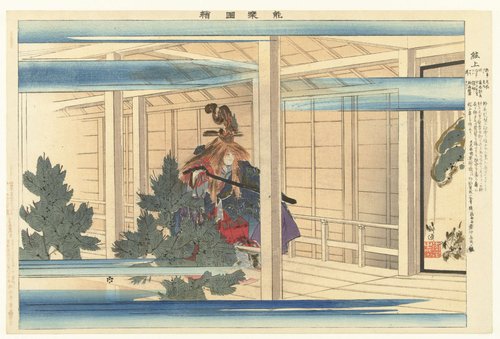
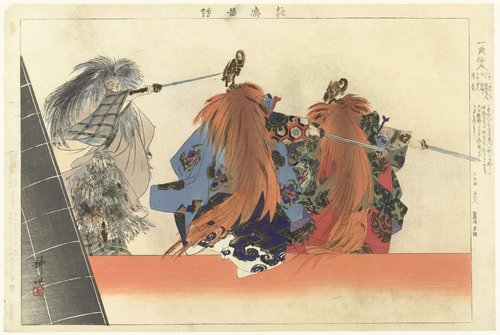
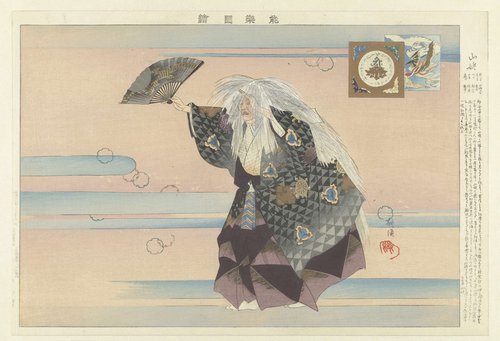
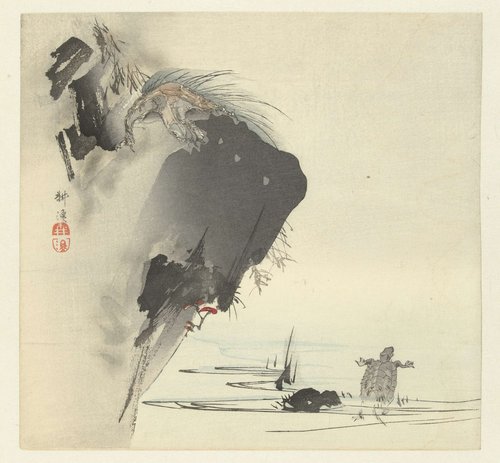
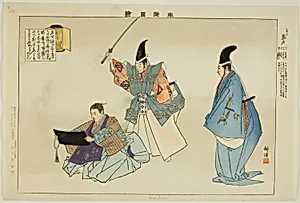
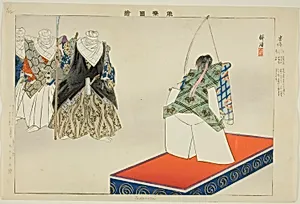
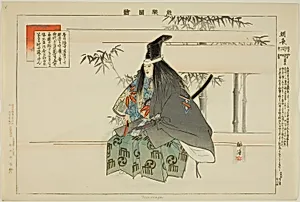
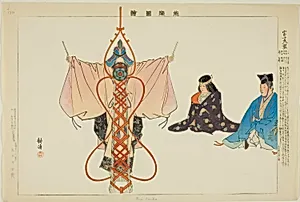
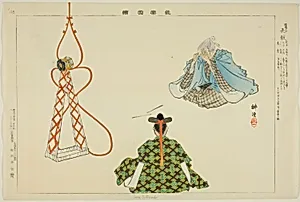
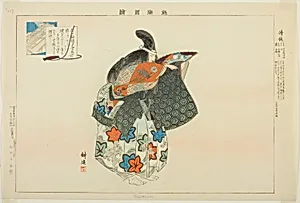
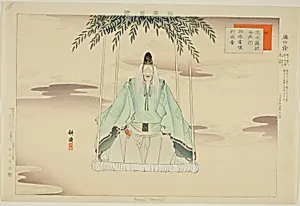
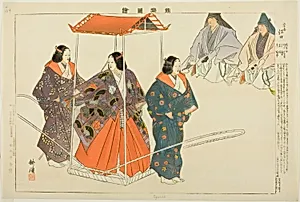
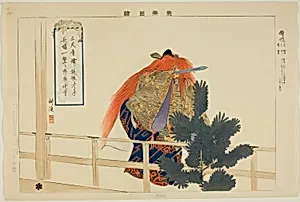
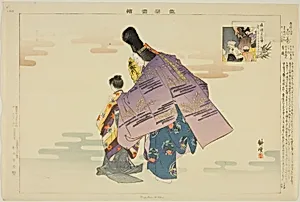
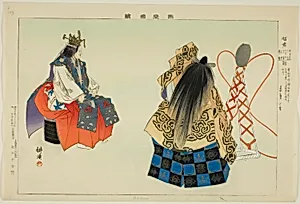
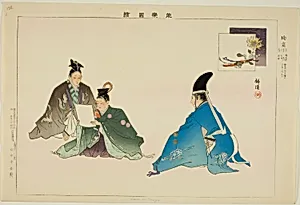
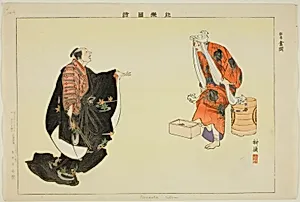
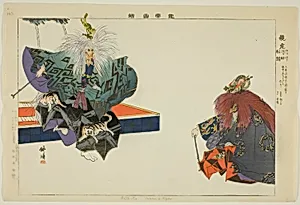
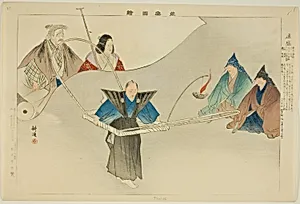
Kōgyo worked in the ukiyo-e tradition but distinguished himself as the preeminent graphic artist of nō and kyōgen theatre, capturing performances with vigorous, painterly woodblock prints and paintings that revived interest in these classical arts amid Meiji modernization. His style emphasized rich colors, dynamic compositions, and intricate details of masks, costumes, and stagecraft, often in large-scale formats. Major works include paintings like *Dōjōji* (1899), *Hagoromo* (1901 and later versions), and *The Empress Viewing Nō*, acquired by the Meiji Empress for the Imperial Household. Print series abound: *Nōgaku zue* (261 prints depicting 220 nō plays, 27 kyōgen, ca. 1897–1902); *Nōgaku hyakuban* (122 sheets for 100 plays); *Nōga taikan* (200 prints); and *Kyōgen gojūban* (collaborating with daughter Gyokusei). He also depicted Sino-Japanese War scenes (1894–95) and won acclaim for *The Horse Market at Kiso* at the 1915 Panama-Pacific Exposition.
Kōgyo's prolific output—over 700 prints, 70 paintings, and countless illustrations for magazines like *Fūzoku gahō*—spanned more than three decades until his death, popularizing nō globally through exhibitions with the Bijutsu Kyōkai and Jitsugetsukai, where he later judged. His works grace institutions worldwide, with the University of Pittsburgh holding the largest complete Noh series outside Japan, cementing his legacy as a bridge between traditional theatre and modern visual culture.