Ctrl K
1317–1349
Ugolino da Siena, also known as Ugolino di Nerio, was a pivotal figure in the early Sienese school of painting, active in Siena during the 1320s. Born around 1317, he came from a family of artists: his father, Nerio, and brothers Guido and Muccio were also painters, embedding him within a lineage that contributed to Siena's vibrant artistic community. Documented in Siena in 1325 and 1327, Ugolino's career coincided with the flourishing of the Sienese school, which blended Byzantine influences with emerging Gothic elements under masters like Duccio di Buoninsegna.
Ugolino worked firmly in the Sienese school tradition, characterized by luminous colors, gold grounds, and intricate narrative details that emphasized devotional intensity. His style shows heavy influence from Duccio, the father of Sienese painting, evident in the graceful figures and decorative patterns of his panels. His training remains sparsely documented, but his stylistic affinities place him within Duccio's orbit, bridging the master's Byzantine-rooted elegance with the innovations of contemporaries like the Lorenzetti brothers.
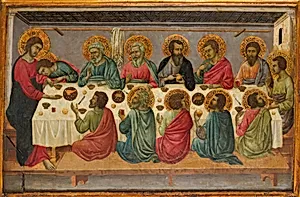
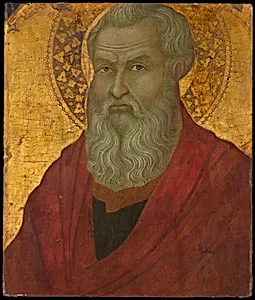
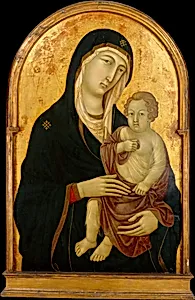
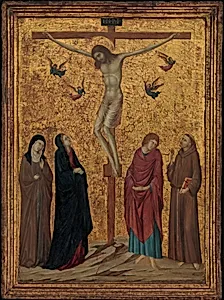
Ugolino's masterpiece is the large altarpiece commissioned for the church of Santa Croce in Florence, likely completed in the mid-1320s. This dismembered polyptych survives in fragments across major collections, including the National Gallery in London (with scenes like the Fall of the Rebel Angels) and the Art Institute of Chicago. These panels showcase his skill in crowded, dramatic compositions, such as the Crucifixion and saints flanking the Virgin, rendered with emotive gestures and rich polychromy.
Though his life was brief—possibly ending around 1329—Ugolino's legacy endures as a linchpin in Siena's golden age of painting. His works exemplify the school's tenacity amid Tuscany's economic shifts, preserving a refined, spiritually charged aesthetic that influenced later artists like Simone Martini. Today, his panels invite viewers into the devotional world of 14th-century Italy, a testament to Siena's artistic independence from Florence's rising naturalism.
(Word count: 312)