
The Last Supper
ca. 1325–30
Medium
Tempera and gold on wood
Dimensions
Overall, with engaged (modern) frame, 15 x 22 1/4 in. (38.1 x 56.5 cm); painted surface 13 1/2 x 20 3/4 in. (34.3 x 52.7 cm)
Classification
Paintings
Department
Robert Lehman Collection
Museum
Metropolitan Museum of Art, New York, NY
Credit
Robert Lehman Collection, 1975
Accession Number
1975.1.7
Rights
Public Domain
Tags
Art Historical Context
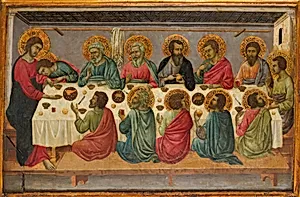
Ugolino da Siena's *The Last Supper*, created around 1325–30, captures a pivotal biblical moment in a compact tempera and gold panel, now housed in the Metropolitan Museum of Art's Robert Lehman Collection. Measuring just 13½ x 20¾ inches on its painted surface, this intimate work exemplifies the Sienese Gothic style, where artists like Ugolino—active in Siena during the early 14th century—blended Byzantine influences with emerging Italian naturalism. The gold ground, a hallmark of medieval panel painting, bathes the scene in ethereal light, symbolizing the divine realm and elevating the apostles gathered around Christ. Painted in tempera, a labor-intensive egg-based medium that allowed for luminous colors and fine details, the artwork depicts Christ and his male disciples—often venerated as saints—in a solemn Eucharistic rite. Ugolino, a follower of the master Duccio di Buoninsegna, contributed to Siena's vibrant altarpiece tradition, where such narrative panels adorned church furnishings. This piece reflects the era's devotional fervor amid Italy's pre-Renaissance artistic flowering, inviting viewers to contemplate themes of betrayal, sacrifice, and community. Its survival and modern framing highlight the fragility of these treasures, preserved through centuries to remind us of Siena's role in shaping Western religious art. A quiet gem for contemplation!