Ctrl K
1845–1870
Utagawa Yoshikazu (active circa 1850–1870) was a Japanese ukiyo-e woodblock print artist who came of age during one of the most dynamic periods in Japanese history — the twilight of the Edo period and the dawning of the Meiji era. Born and active in Edo (present-day Tokyo), he trained under the celebrated master Utagawa Kuniyoshi, one of the towering figures of the Utagawa school renowned for his dramatic warrior prints. That apprenticeship rooted Yoshikazu firmly in the classical ukiyo-e tradition.
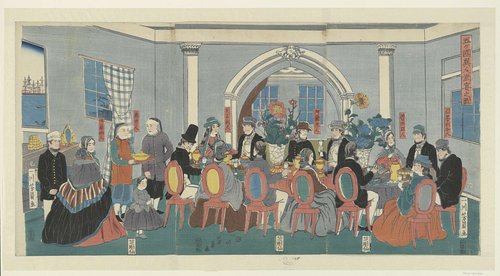
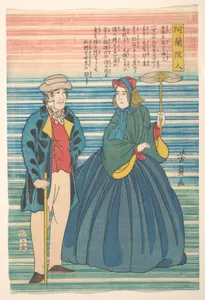
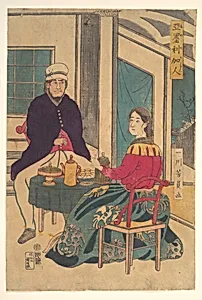
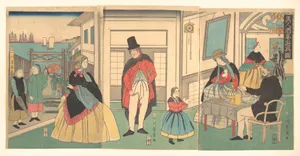
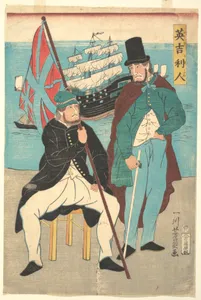
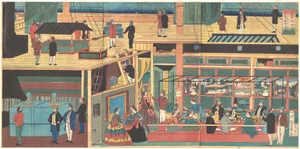
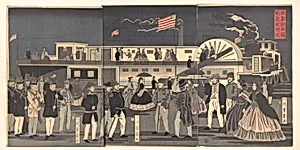
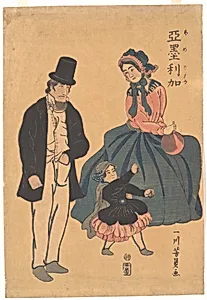
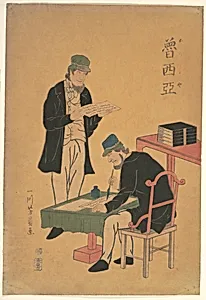
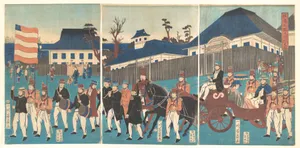
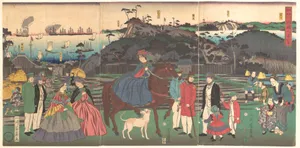
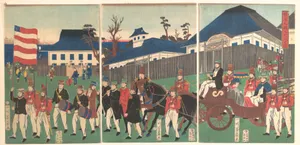
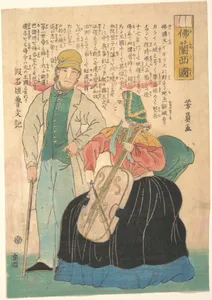
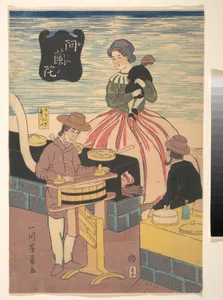
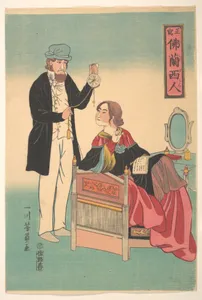
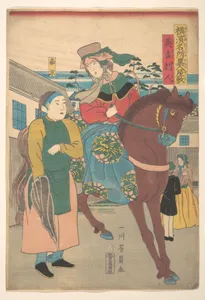
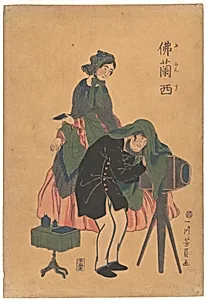
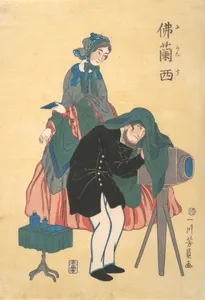
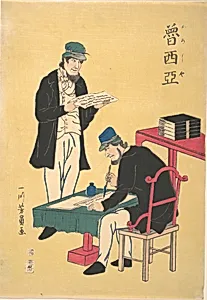
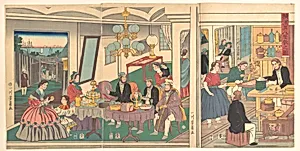
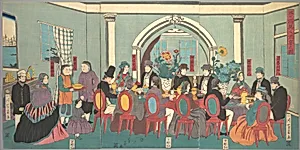
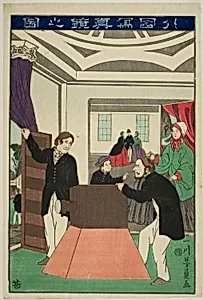
Yoshikazu worked across a wide range of ukiyo-e genres — including musha-e (warrior prints), kacho-ga (bird-and-flower compositions), and illustrated fiction — but he found his most distinctive voice in a newly emerging genre called Yokohama-e. When Japan opened the port of Yokohama to Western traders and diplomats in 1859, ukiyo-e artists rushed to capture the exotic spectacle of foreign life. Yoshikazu was among the earliest and most prolific contributors, producing vivid depictions of Westerners, their customs, clothing, and technology.
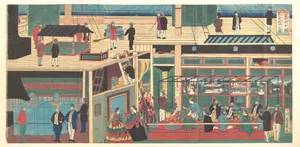
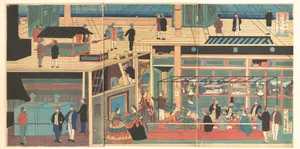
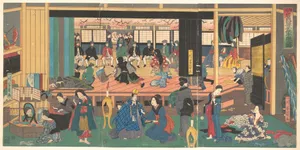
His most celebrated works include several triptychs depicting scenes at the Gankirou, the largest pleasure house established for foreign residents in Yokohama's Miyozaki quarter. Works such as "Foreigners Enjoying Themselves in the Gankirou" (c. 1860–1861) show Westerners feasting, dancing, and socializing alongside Japanese courtesans — rendered with lush polychrome printing techniques and a compositional complexity that reflects both traditional ukiyo-e conventions and a fascinated Japanese perspective on Western social life.
Yoshikazu's legacy rests on his role as a cultural interpreter at a moment of profound national transformation. His Yokohama-e prints are primary visual documents of how Edo-period Japanese society encountered and processed the sudden arrival of Western civilization. His works are held in major collections worldwide, including the Metropolitan Museum of Art.