Ctrl K
1790–1790
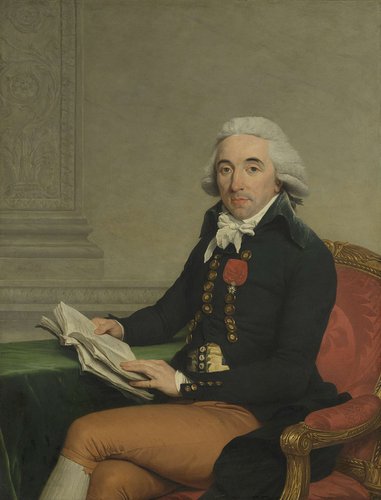
François-André Vincent was a leading French neoclassical painter of the late eighteenth and early nineteenth centuries. Born in Paris in 1746 as the son of the portraitist and miniaturist François-Élie Vincent, he followed a traditional path for artists of his era by training in the academic system.
Vincent rose to prominence as a leader of the neoclassical movement in French art, producing history paintings and genre scenes that emphasized clarity, moral themes, and classical ideals. He was appointed master of drawings to Louis XVI in 1790 and became a professor at the Académie royale de peinture et de sculpture in 1792, positions that placed him at the center of official artistic life in Paris.
Among his notable works is *The Drawing Lesson* of 1777, which exemplifies his skill in depicting everyday scenes with neoclassical restraint. He maintained a successful career through the Revolution and into the Napoleonic era, exhibiting regularly at the Salon and contributing to the shift away from Rococo excess.
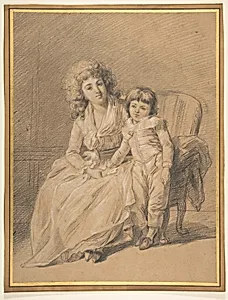
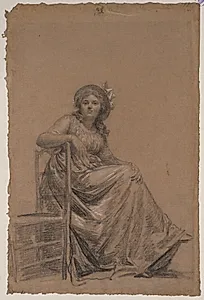
Vincent’s legacy lies in his role as a bridge between generations of French painters; although later overshadowed by Jacques-Louis David, he helped establish the academic foundations of neoclassicism that influenced subsequent artists and institutions. His drawings and paintings remain in major collections today, reflecting a lifetime dedicated to the ideals of the French Academy.