
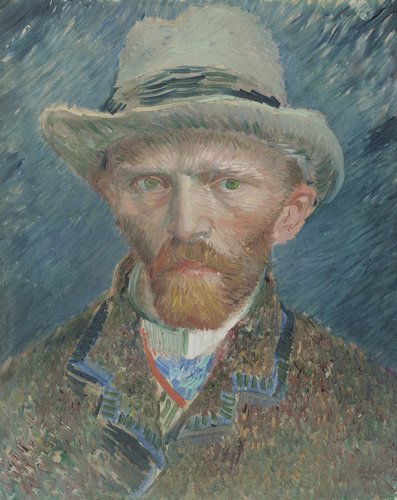
Zelfportret
1887
Medium
cardboard
Dimensions
34; 8; 42
Rights
Public Domain
About this artwork
height 42 cm x width 34 cm
Art Historical Context
Vincent van Gogh's *Zelfportret* (Self-Portrait), created in 1887, the artist's introspective gaze during his transformative Paris period. At just 42 cm high by 34 cm wide and 8 cm deep, this intimate work on cardboard reflects Van Gogh's resourcefulness amid financial struggles, as he often turned to affordable supports when canvas was scarce. Housed in the prestigious Rijksmuseum in Amsterdam, it exemplifies his prolific output of over 30 self-portraits, which served as both personal exploration and artistic experimentation. Rendered in Van Gogh's emerging Post-Impressionist style, the piece likely showcases his bold, expressive brushstrokes and vibrant color palette, hallmarks of his emotional intensity. The use of cardboard—a humble, non-traditional medium—highlights the artist's innovative approach, allowing for direct, spontaneous application of paint. This self-portrait stands as a poignant testament to Van Gogh's relentless self-scrutiny, bridging his Dutch roots and French influences during a pivotal year of stylistic evolution. Visitors to the Rijksmuseum can appreciate how this modest yet powerful work reveals the human side of a genius, inviting reflection on creativity born from constraint.
About the Artist
Vincent van Gogh · 1853–1890
Vincent Willem van Gogh (1853-1890) stands as one of the most influential figures in Western art history, despite a career spanning merely a decade. Born in Groot-Zundert, Netherlands, to a Protestant pastor's family, van Gogh's path to artistic greatness was anything but conventional. His early adulthood saw him working as an art dealer for Goupil & Cie, a language teacher, and a fervent missiona...